






Review: Meyer Sound Ultra-X80
The latest addition to the point-source Ultra-X range makes its presence felt. Mark Woods points a pair in the right direction.

By Mark Woods
17 April 2026
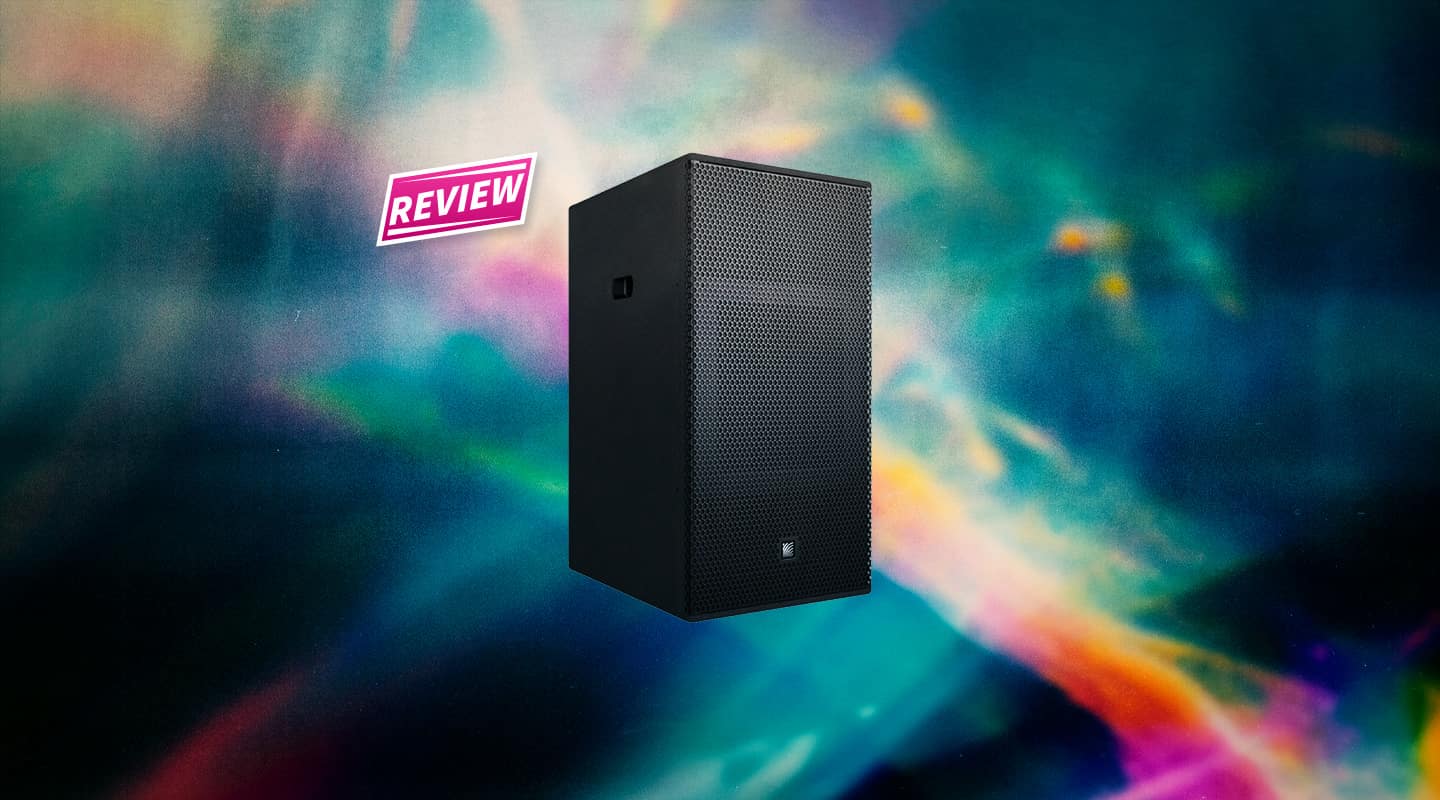
Meyer Sound Ultra-X80 is the latest and greatest addition to the Ultra-X range of premium live sound loudspeakers. The design follows the same formula as the ultra-successful Ultra-X20/X40 models but this is a significantly bigger loudspeaker – the most powerful point source speaker Meyer Sound has made – for bigger stages.
Cohesive sound quality is fundamental to the Ultra-X series success, and that starts with the concentric driver configuration. The Ultra-X80 uses two high-excursion, neodymium-magnet 12-inch drivers, mounted on a concave waveguide. Mounted between them is the central, rotatable, Constant-Q waveguide for the four-inch diaphragm, high-frequency compression driver. Applying array techniques to the 12-inch drivers and coupling them with the back of the horn delivers co-axial point source performance with Meyer Sound fidelity and exceptional directional control.
ROUND THE TRAPS
The trapezoidal birch plywood cabinet is finished with a low-glare textured surface that looks professional while blending into the surroundings, while the powder-coated grille is designed for acoustic transparency. Inside the cabinet, Meyer Sound Intelligent AC automatically selects the operating voltage, and conditions the power by controlling voltage peaks and interference. Meyer Sound proprietary DSP controls, protects and optimises the input signal to deliver the frequency response, phase coherence and impulse response that contribute to the perceived sound.
The two-channel, lightweight Class-D amp onboard is a new super-efficient design made for the Ultra-X80, with elements taken from Meyer Sound’s large-scale Panther system. The UItra-X80 goes hard. The Peak/Burst power is quoted as 2400W total (into 4Ω LF and 8Ω HF loads). Maximum continuous power is quoted as 900W, for a maximum linear peak SPL of near-on 141dB – making this product subjectively twice as loud (10dB) as the Ultra-X40.
POINT ’N’ SHOOT
Dispersion for the Ultra-X80 is quoted as a focused 95°(H) x 40°(V) and that pattern is maintained down to below 400Hz. The pattern is remarkably tight and easily heard by walking round the enclosure, this is not so critical in single-speaker small gigs but it makes them ‘point ’n’ shoot predictable’ in multi-speaker setups. The Ultra-X82 is a 50° x 40° narrow throw version.
The rear panel is professionally minimal – no mic inputs, level adjustments or EQ presets here. The analogue input and Loop Out use XLR three-pin TOP (True Outdoor Protection) sockets. AC power arrives via a Neutrik powerCON True1 TOP socket. Meyer Sound uses the open AVB standard for network management. Separately, under the Milan AVB protocol, certified devices from Meyer Sound and a range of other manufacturers can be remotely controlled by its Nebra software. Both the AVB and Milan connections are made through the Neutrik etherCON TOP RJ45 connector on the rear panel.
GO LARGE
The main physical difference between the Ultra-X80 and the Ultra-X40/20 models is the size. As a younger man, I’ve had my stadium-show years but these days I mainly manage small/medium gigs, which is why I was so instantly attracted to the Ultra-X40. I bought a pair when they were first released which are a mainstay. I run them either on their own (they have a pole mount), or with a couple of little subs – they make a very nice one-man system that will easily fit in a wagon. Meanwhile, the Ultra-X80s make an even better system but the 464 x 864 x 644mm size and 62.6kg weight moves them beyond a one-man job to transport, and this is not a product that’s designed with a pole mount.
The point I make, is that the Ultra-X80 is probably overkill for small to medium-sized gigs but for medium/large shows it’s a lightweight option compared to other comparable high-end speakers, equivalent arrays and most legacy boxes. They work well stacked on top of subs, while the integrated rigging points (12 x M8) provide for a range of flying/mounting configurations, including connection to Meyer Sound’s MHR-T1 Hoist Ring Kit and the MUB-T1 U-bracket. The rotatable horn allows for horizontal orientation when required.
NEED TO KNOW
Meyer Sound Ultra-X80
Powered Loudspeaker
ROOM TO MOVE
I tested a pair of Ultra-X80s in a number of rooms: one is a newer venue that needs a bigger system, the other an established venue that could use an update. One venue was a little narrow to be an ideal candidate for the Ultra-X80 (but still performed admirably) while the other’s dimensions were much closer to being a perfect candidate for an Ultra-X80 test drive. I’ll focus on the right-sized room.
VOICING OPINION
Frequency response is quoted as 55Hz–18kHz (±6dB). The Ultra-X80s share the same overall voicing as the Ultra-X40/20s. As you’d expect, they work seamlessly with my Ultra-X40s but also, as you’d expect, they have another gear as you raise the volume. The bass frequencies are strong with enough lows for them to be used unassisted in many situations. They’re not subby but for full-range, full-volume music they’ll be used with separate subs anyway. During muy initial tests, my first impression of the system was the vocal projection: it was bright and effortlessly loud over the band. These are loud speakers, you can’t, or shouldn’t, stand too close to these when they’re up and pumping, but I found the lack of distortion makes the volume not only ‘acceptable’ but quite appealing. At no point did it feel like the Ultra-X80s were doing much more than just cruising.
It’s the effortless power and a strong presence that makes the Ultra-X80s sound new, modern and just right
ROYAL TREATMENT
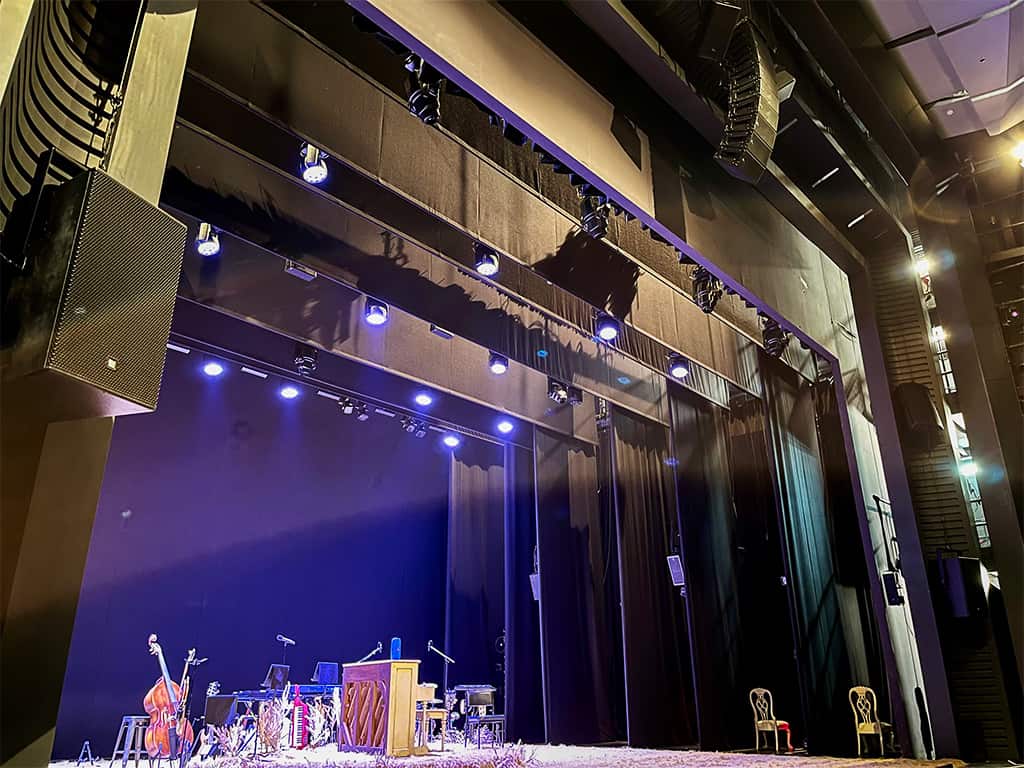
The Theatre Royal Castlemaine is my main venue and testing ground. It was impractical to take the house system down (2 x Meyer Sound MSL4s plus UPA infill, 2 x 650P subs per side) but I was able to replace the MSL4/UPAs on one side with a single Ultra-X80. Crime & the City Solution was playing with Matthew Colin mixing. He was keen to have a listen, and even though it was somewhat uneven in the room (with the mismatched L/R combo) it sounded good at the FOH desk, so he was happy.
The show made for a good A/B comparison: the MSL4s usually sound great in the room but presented as old and tired while the Ultra-X80s were crisp and clear – listening to flash new gear can be bittersweet like that. It’s the effortless power and a strong presence that makes the Ultra-X80s sound new, modern and just right. I spent most of the show encouraging anyone I thought might be interested to have a listen to each side and compare.
There aren’t any immediate plans to upgrade the PA of the Theatre Royal but the quality of the Ultra-X80s certainly made an impression. A small line array system would definitely be in the short list of replacement rigs but I’d choose the Ultra-X80s for their precision and clear presence. Small arrays are okay but I find most of them sound smeary compared to point source systems, and they’re prone to distortion trying for high levels. The Ultra-X80s are a guilty pleasure at high volume.
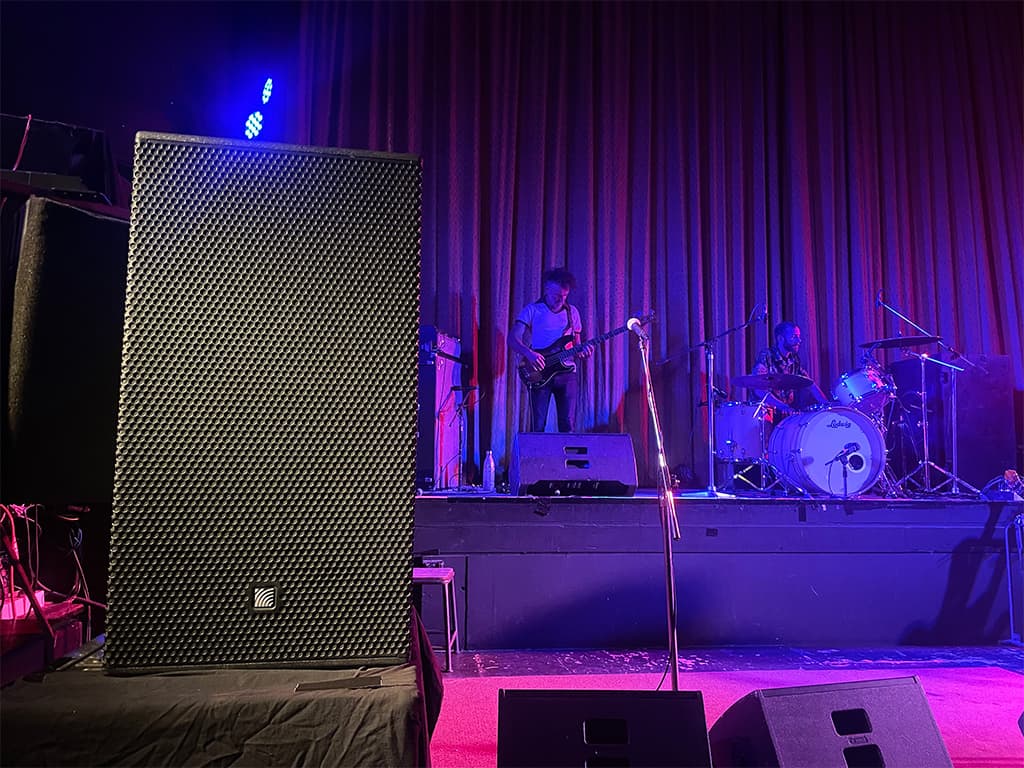
The Ultra-X80 in the Theatre Royal Castlemaine.
POWER, THROW, PREDICTABLE COVERAGE
Ultra-X80s are serious, professional speakers and will be bought by professional organisations wanting the best, so they can offer the best. Sound reinforcement providers and touring companies will find the power/size ratio means fewer boxes in smaller spaces, with consistent, high-quality sound that pleases their customers, whether they’re the main PA or a fill option. Large venues and churches that want the best house system, sports grounds, places with difficult acoustics that need power, throw and predictable coverage, will all enjoy them.
The Ultra-X Series is part of a broad product renewal for Meyer Sound and sets a new standard for high-end point-source speakers. Meyer Sound speakers have proven to be highly reliable and, judging by those legacy products, the Ultra-X Series will be the standard for decades.
Classic modern design. State of the art.






RESPONSES