






Review: Behringer Wing Compact & Rack
The Wing is back in black, and now joined by a Compact and Rack version.

By Mark Woods
22 January 2025
Review: Mark Woods
Sold as the next model up from the best-selling Behringer X32/M32 consoles, the Behringer Wing has won customers with its combination of price, power and improved sound quality. The Wing has been around a long time in digital audio land, about five years, so the newly released Wing Compact and Wing Rack versions bring fresh attention to the name and create a range of Wing consoles to suit different audio environments.
WING: ORIGINAL RECIPE
The original Wing is a mid-sized 28-bus console with 24 faders and plenty of Behringer family processors and plug-ins. Lots of connection/expansion options enable it to simultaneously mix 48 channels from an impressive maximum of 382 inputs/360 outputs. Designed to handle large channel counts and complex routing the Wing uses distributed and networked I/O to handle multiple destinations with the ability to switch between configurations on the fly.
The size of the original Wing has worked well in installations/venues/churches but I’m yet to see any touring bands carrying one. The Wing Compact is the current preferred size for a touring FOH mixer so that may change. You can also mix bands on the Wing Rack, and it’s even easier to transport, but it’s more of a multi-purpose audio tool, great for jobs like on-stage monitoring systems, live recording/streaming or corporate/theatrical settings with large channel counts and complex routing.

NEED TO KNOW
Digital connections abound in all Wings. Compatible with X32 stage boxes, there are 3 x AES50 SuperMAC ports providing 48-in/48-out channels each. Stereo AES/EBU in/out, USB-A four-channel in/out. An expansion slot has a Wing-Live dual 32-channel SD card for up to 64 channels of recording, or the slot can be used for a further 64 channels via Dante, MADI or SendGrid connections. It’s also a 48-channel USB/MIDI audio interface with MCU and presets for most common DAWs.
If that’s not enough there’s also Behringer’s own (and very nifty) StageConnect system. Introduced with the Wing, StageConnect (SC) allows for up to 32 channels of bi-directional audio through a single XLR cable. The host device provides 18V to power the SC devices that transmit 48kHz/24-bit audio with latency less than 0.05ms.
StageConnect works with Midas DN48XX-series interfaces that connect to a Wing with a mic lead (a DMX cable is recommended for long runs), and the inputs and outputs automatically appears as I/O options on the Wing. I’ve been using the Midas DN4888 eight-in/eight-out. It’s a super convenient way to expand a system to get extra input channels and/or returns to IEMs or powered wedges and makes a handy dropbox around stage. Also available is Midas DN4816-I (16 in) and DN4816-0 (16 out) versions.
StageConnect also works with devices like Midas HUB4 and HUB4 Pro monitor systems. These supply up to four DP48 personal monitor systems and 48 channels of 48k/24-bit audio. The DP48 is a dual 48-channel/12-group mixer that allows two performers control over their own mixes, that can then be sent to IEMs or speakers. It will take road crew or the smartest person in the band to set up initially, but they’ll love the control it gives them.
WING COMPACT
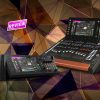
The Wing Compact is the ideal size console for small-medium sized live shows. It’s heavier than it looks (16kg) and feels strong enough for gigging. The big screen tilts up for easy viewing; 13 faders is enough; the Page and Mix buttons are within easy reach – it’s a comfortable place to mix. The touchscreen is easy and fast. The faders are the only thing that feel less than primo – seems like the only smooth fader these days is a virtual one.
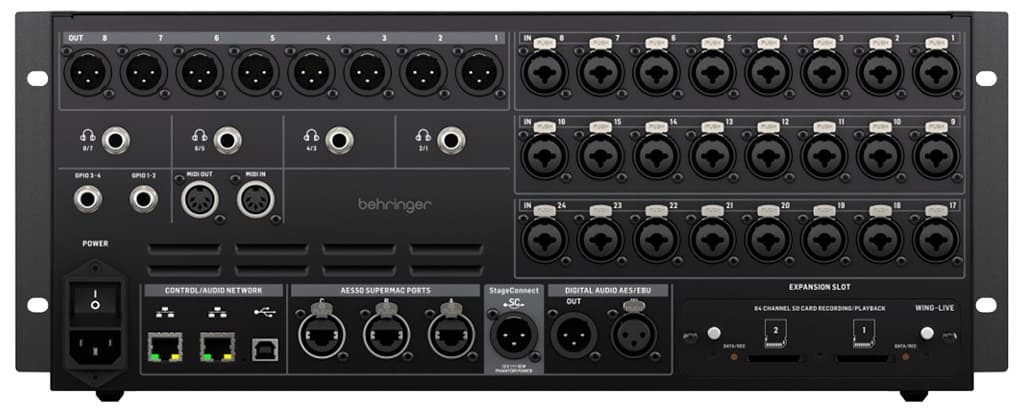
Round the back there’s the same 8 x XLR analogue outputs as the full-size Wing but the Compact ups the input count to a more useful 24 local XLR analogue inputs, significantly increasing its flexibility as a touring desk, project recording system or replacement house desk in a venue.

WING RACK
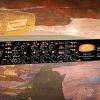
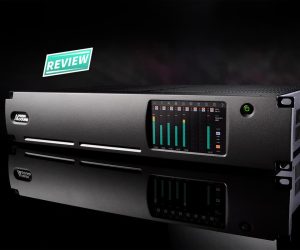
The Wing Rack is a 19-inch rackmount version with the same 24 x XLR inputs/eight outputs. It’s 4RU, so the screen is quite big (10.1-inch) and the fold-out front panel angles up for comfortable access to the screen and user control section. There’s a headphone socket with selectable source on the front panel. Round the back there’s another four headphone sockets, their flexibility is somewhat limited by being tied in pairs to Aux sends 1-8 but they’d still be handy for IEMs and/or recording. The Rack can also be used on a table but generally it will be iPad driven via the (slowish) Wing Copilot app. Mixing Station works and it’s faster.
TAKING WING
All Wings are easy enough to configure with some introductory instruction, or the Quick Start guide, but have their own ways of doing some things. The routing treats all analogue and digital inputs as Sources, configured as either mono, stereo or M/S. Sources can be named, gained, phantom powered etc before being assigned to an input channel or directly to an output. All 40 input channels can handle mono or stereo signals from your choice of a Main or Alt Source. Channels are mixed to four main outs, eight matrix and 16 aux outs, all with processing.
Once connected/routed, both the Compact and Rack Wings are enjoyable to operate, rich in processing options and there’s plenty to discover. The stock eight-band plus Tilt EQ is clear and fast for quick EQ tweaks. I like the wide range of slopes on offer for the high and low bands, helpful when running subs from an aux eg. the stock channel comp and expander are plain looking but have all the basic controls. The stock channel EQ and dynamics can be replaced by plug-ins drawn from lists of simulations of classic analogue rack devices. There are half a dozen EQs and some 20 dynamics plugs, all with their own character and colourful GUIs. You’ll have hours of fun auditioning them at rehearsal or soundcheck.
There are even more on-board FX processors with dozens of effects from reverbs to pitch correction and mastering plug-ins. Effects get inserted across channels or buses. There’s Premium and Standard effects with some limitations around how many Premium effects can be used simultaneously, presumably to save processing power.
There are half a dozen EQs and some 20 dynamics plugs, all with their own character and colourful GUIs. You’ll have hours of fun auditioning them at rehearsal or soundcheck

FLY THROUGH
The Wing has been part of the shift in Behringer’s identity from cheap ’n’ cheerful to keenly priced pro gear. It has gained a reputation for its ability to handle and distribute a wide variety of analogue/digital sources reliably. Combined with comprehensive on-board processing and a range of compatible devices the Behringer Wing can take charge of complicated productions. The Wing Compact and Wing Rack versions are practical packages for applications requiring a smaller or remote console. There’s nothing comparable for the price and I expect they’ll fly off the shelves.






Touring band sound guy here. We’ve just gone digital with the Wing full size. I love the large desk to work with but there are issues that you’ve mostly covered in your article. There is a lot of unused space on the full size mixer. Large faders, spacing not to touch the wrong one at a critical time, legible scribble strips, DAW section, a wheel encoder that’s truly useful when you need a wheel, and lots of processing power for internal effects are all great. Great in the studio, great in a booth, not as much on a small table which can sometimes happen. My biggest initual turn-off to touring with a Wing full size is really a blessing in disguise – the lack of local XLR/¼” inputs. Sure, it would be nice if Behringer made a Wing Compact with all of the full size amenities (and imo they should, and at the same time add four channel strips to the full size mixer without taking away from bus faders or increasing its size, but I digress). There are times in small venues that simply plugging 12 channels into the back of the mixer would reduce what we’d need to haul to the show, which is what I was used-to on the analog board. The Wing Compact solves the “I need more than 8 local inputs with faders that fits in a space that I’m used to” issue nicely.
However, going from a 16 channel analog snake or a bunch of long and expensive XLR cables that take time to set up and put away nicely to a 16+8 stage box like a Midas DL 16 is life-changing in a very good way. Instead of needing to own two or three heavy snakes of varying lengths to match the venue size, as well as having extra mic cables in case the venue is a little too small for a snake but the run is too long for the usual mic cables, one needs only the stage box, a length of Cat-5e etherCON cable and enough cables for mic-ing the drums and backline; vocals are handled wirelessly with a few local inputs on the Wing. Setup time drops to almost nothing, the mixer hasn’t become unwieldy, and I can run the stage box cable pretty much anywhere without it being overly visible or in the way of someone’s feet. Now, we can locate the mixer, a light controller, and the person running them in better locations in the venues with less gear, less visible cabling, and producing better shows with less effort. Well done, MT.