

• Latest Issues
  • Reviews
  • Tutorials
    • Microphones
    • On The Bench
    • Thinking Outside the Box
    • View From The Bench
  • Features
    • Acoustics
    • Broadcast
    • DIY
    • Field Recording
    • Game Sound
    • Interview
    • Live Sound
    • Mastering
    • Mix Masters
    • Music Business
    • Name Behind the Name
    • Post Production
    • Recording
    • Studio Focus
    • Technical
  • Regulars
    • Fresh Produce
    • Top 5
    • Top 5 Live
    • Top 5 Template Tools
  • Videos
  • Free Stuff
  • By Gear
    • Audio Accesories
    • Audio Mixers
    • Headphones + IEM
    • Interfaces
    • Location Sound
    • Microphones
    • MIDI Controllers
    • Mobile/iOS
    • PA Systems
    • Software + Plug-ins
    • Studio Monitoring
    • Studio Outboard
    • Synthesizers + Keyboards
  • By Interest
    • Acoustics
    • Broadcast
    • DIY
    • Field Recording
    • Game Sound
    • Live Sound
    • Mastering
    • Music Business
    • Name Behind the Name
    • Post Production
    • Recording
    • Technical
    • Thinking Outside the Box
  • By Brand
  • Subscribe
  • Contact Us
  • Advertise
Previous
Issues 101
0 SHARE
Read Next: Hotone’s Foot on the Pulze
  • Home
  • /
  • Regulars
  • /
  • Top 5 Live
  • /
  • Top 5 Live: God Is An Astronaut

Top 5 Live: God Is An Astronaut

AT catches up with Torsten Kinsella to run through the five most indispensable components of the band’s live sound.

By Joe Matera

25 February 2025

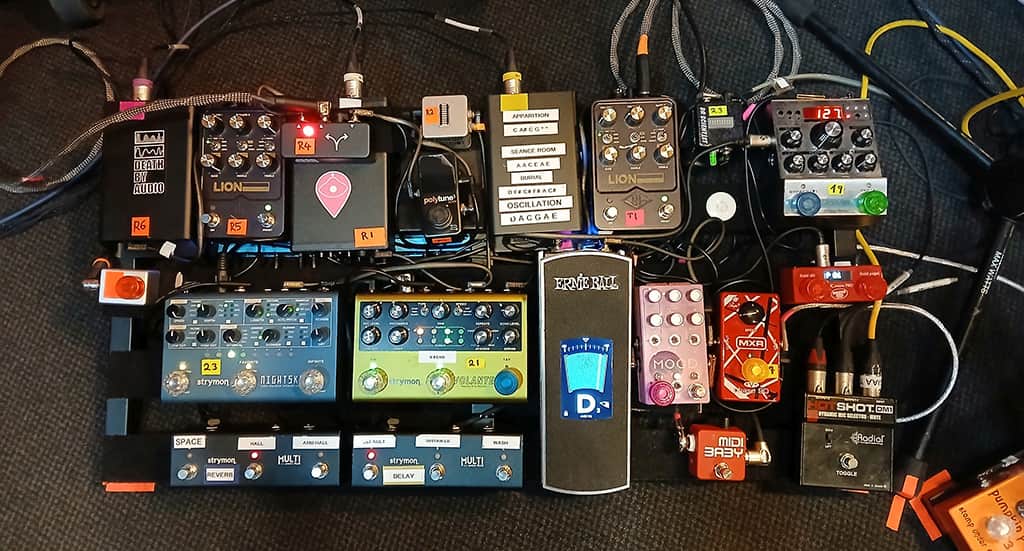
Since first forming in 2002, Irish post rock instrumental group God Is An Astronaut has released a dozen studio albums to date. Their latest album ‘Embers’, sees the group, comprised of twin brothers Torsten Kinsella (guitars) and Niels Kinsella (bass), and Lloyd Hanney (drums) – continue to build and expand upon their sonic tapestry of evocative and mesmerising instrumentals. The complexity of their recorded output features multi-instrumentation, and layers of sounds and textures the group masterfully recreate in the live environment within the constraints of their three-person line-up. Using solely their instruments and supplemented by an array of pedals, microphones and backing tracks which are only utilised in regards to enhancing the sounds.

Hugely popular in Europe and the US, the group finally toured Australia for the first time in February and AudioTechnology was invited to go behind the scenes with Torsten Kinsella at their Melbourne show.
SIMPLICITY THE KEY

“We simplify things significantly, for our live shows, focusing on the core elements that make each track work,” explains Torsten Kinsella on how the group approaches their live shows. “While some additional sounds are added to backing tracks to preserve the essence of the recordings, we have one strict rule: the main focal point of the track must always be performed live. This ensures that the backing track remains a supporting element rather than taking centre stage.”

Another core element in the group’s live sound and performances is the group’s longstanding sound engineer. “Having an engineer who understands our sound is absolutely essential – balance is everything,” affirms Kinsella. “Our front-of-house engineer, Zack Dutton Hanney, instinctively knows when to push each instrument and ensures that the focal points of the music are always front and centre. He seamlessly integrates the backing ambient textures into the overall mix, keeping them as a supportive layer rather than allowing them to compete with the live performance.

“Beyond mixing, Zack’s expertise as a system tech is equally important. He ensures the PA is properly aligned, with sub bins and tops aligned and working in harmony, and he fine tunes the system to deliver a mix that is powerful, melodic, and clear. Getting this right is half the battle in achieving the best possible live sound.”

Here Kinsella lists his five essential items that are integral to their live sound and which was given full expression at their Australian shows.
COLES 4038 RIBBON MICS (DRUM OVERHEADS)

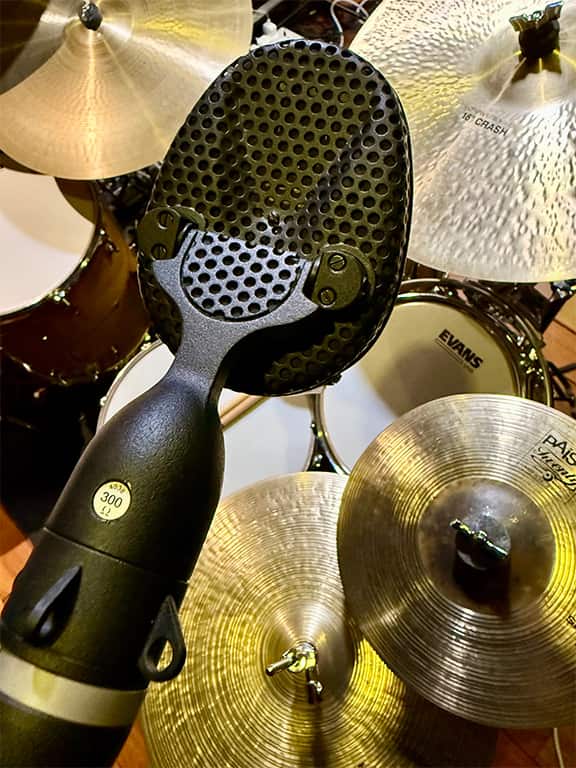
“These are my absolute favourite ribbon mics for drums. I use them to capture the full, natural sound of the entire drum kit, with close mics gently reinforcing the details.

We took a risk by applying this recording approach to our live shows, and it worked incredibly well. The drums felt more fluid, organic, and dynamic— far from the over-processed, gated sounds you’d typically expect in a live setting.”

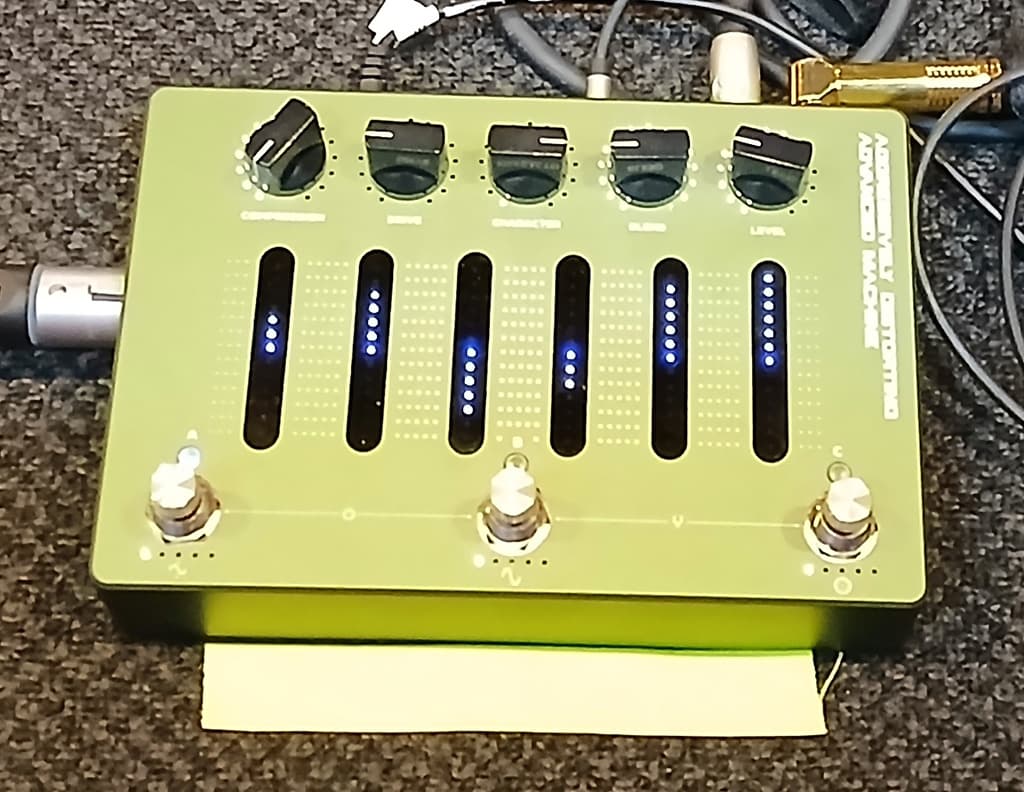
DARKGLASS ADAM (BASS GUITAR)

“This pedal has become an essential part of our bass setup, both live and in the studio. It’s a preamp pedal with built-in cabinet IRs, allowing us to load our own impulse responses from an Ampeg SVT Heritage amp and cab.

“The distortion and fuzz tones are fantastic, with perfectly tuned crossovers. We have it set up with three switchable sounds: clean, overdrive, and a monstrous fuzz. It’s versatile, powerful, and a game-changer for bass tone.”

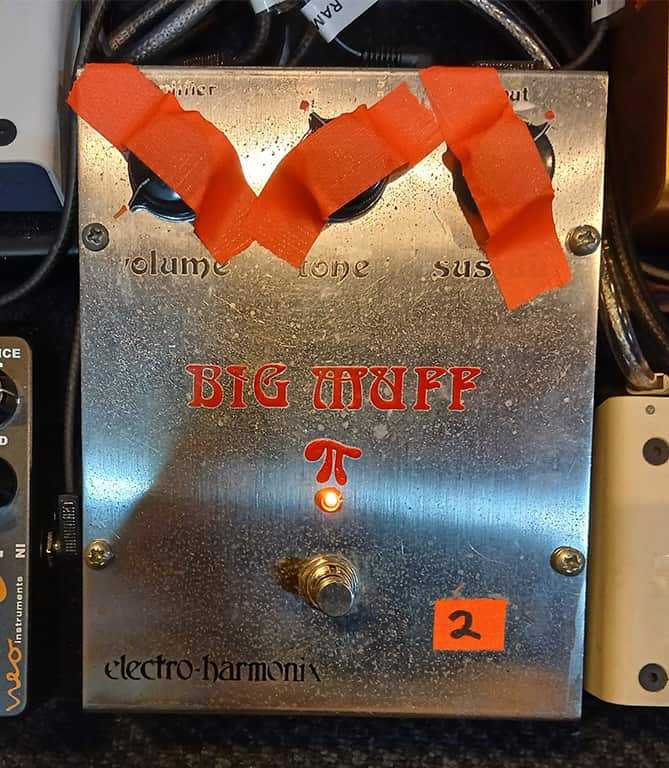
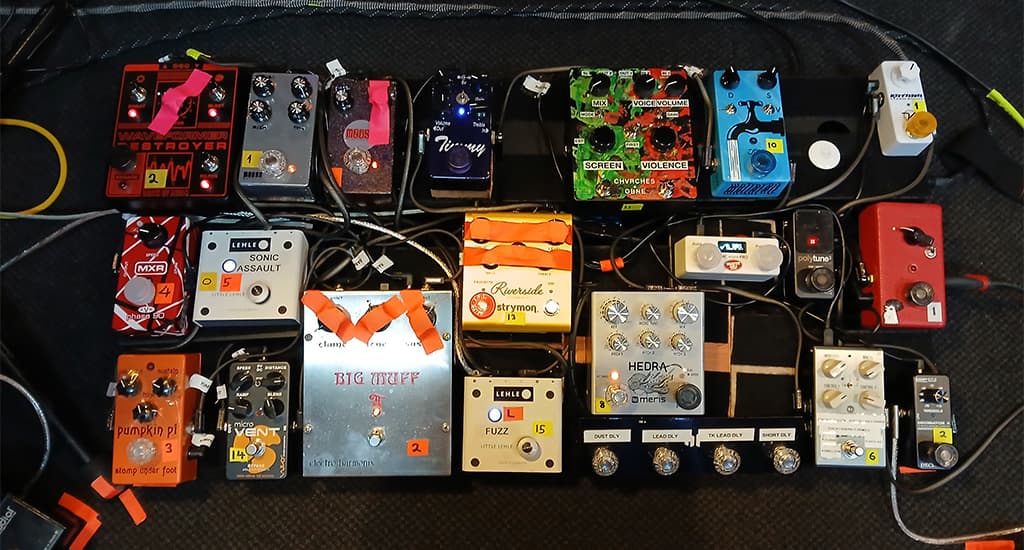
EHX RAMS HEAD BIG MUFF (GUITAR)

“I have an original early ’70s Rams Head Big Muff — likely a 1974 V12 with 2N5133 transistors. These pedals can be inconsistent, but I got lucky with this one — it’s perfection.

“I also use a Stomp Under Foot Pumpkin Pi Big Muff on my board, and Matt [from Stomp Under Foot] built a clone that’s nearly identical. Wren and Cuff’s ‘The Good One’ is an excellent alternative, but there’s something special about the original. The fuzz has the perfect grain, with just the right amount of midrange presence.”

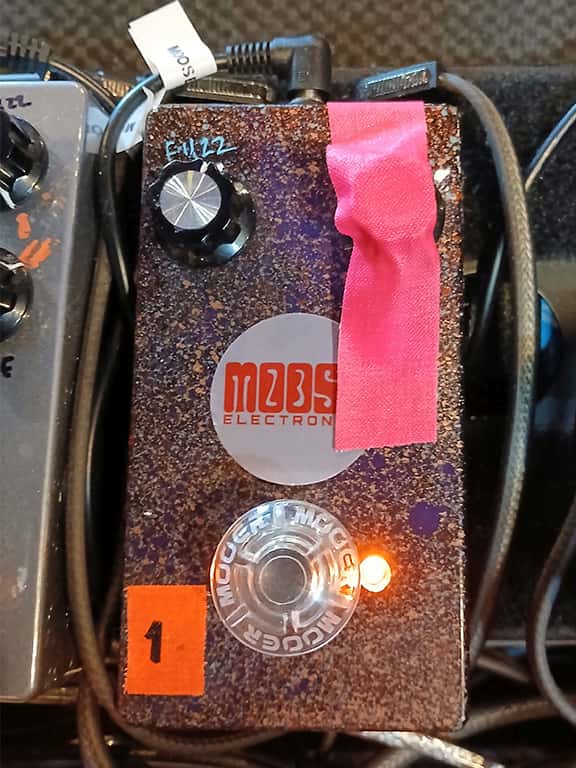
MOOSE ELECTRONICS MAESTRO FUZZ CLONE

“Moose Electronics is, without a doubt, the best pedal builder to come out of Ireland. You can check out its full range at moosetwentythree.com, but if I have to pick just one, it’s Moose’s custom-made Maestro Fuzz clone.

“I own an original, and this recreation captures all its magic — plus more. It has a better balance of mids and treble, with a gorgeous bottom end. Moose has an incredibly refined ear and knows exactly what a pedal should sound like.”

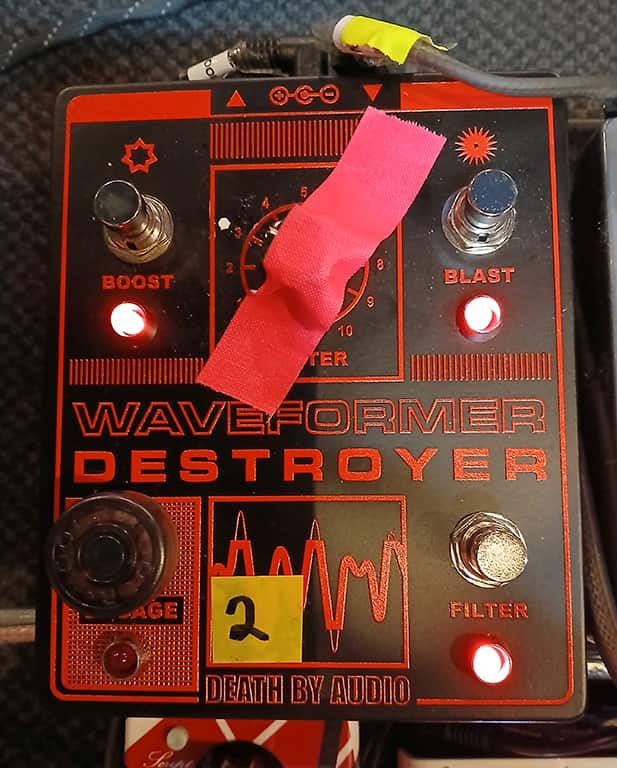
DEATH BY AUDIO WAVEFORM DESTROYER

“Last year, we played a festival where A Place to Bury Strangers [American Psychedelic rock group] was performing on another stage. The wall of noise was massive, and I later found out that their frontman, Oliver Ackermann, also makes pedals under the moniker Death by Audio.

“I picked up a few of them, and the Waveform Destroyer was exactly what I had been searching for. Just when you think it can’t get more aggressive or chaotic, his pedal push things even further. It has become a crucial part of our dynamics, adding a whole new dimension to our sound.”

RESPONSES

Leave a Reply Cancel reply

Your email address will not be published. Required fields are marked *

More for you

Filter by
Post Page
Fender Guitar Pedal Feature Interview Audio Mixers Field Recording Reviews Issue 99 Live Sound Issue 96 Headphones + IEM Headphones Audio-Technica Game Sound Issue 93 Free Stuff VSTi & Sample Banks Regulars Top 5 Issue 91 FX & SIMs News
Sort by

Stomp on Godzilla

19

Producing Robyn’s Sexistential

10

True Sound with Lectrosonics

10

Review: Fender American Ultra II Stratocaster

10

Sound for Sunset Boulevard

10

Narukami Ultra-High-End Headphones

10

Mixing AAA Videogames

10

Full Bucket Music: Nabla ∇

10

Top 5: Bonnie Knight

10

Full Bucket Music: Fury-800

10

Ignite Amps: NRR-1

10

Steve Levine Uncovers Inspiration With Rhodes’ New MK8

10

preview
preview

Free! Get AudioTechnology magazine sent straight to your inbox every month

This field is for validation purposes and should be left unchanged.

preview
  • Latest Issues
  • Reviews
  • Tutorials
  • Features
  • Regulars
  • Videos
  • Free Stuff
  • By Gear
  • By Interest
  • By Brand
© 2026 AudioTechnology magazine.