




Max Cooper Interview
Max Cooper and his label Mesh ‘explores the intersection between music, art and science’. He describes the motivations behind his latest, On Being, and how his loft studio works for him.

By Paul Tingen
4 March 2025
Artist: Max Cooper
Album: On Being
Photos: Ella Mitchell
‘On Being’, the new album by electronic musician Max Cooper, features striking song titles like ‘I Am In A Church In Gravesend Listening To Old Vinyl And Drinking Coffee,’ and ‘When I Am Alone. In My Thoughts. I Am Crushed.’ The press release for the album notes that Cooper, rather than creating music based on his own internal process, drew inspiration from expressions from his audience, ‘to understand what it is truly like to be human right now.’
‘On Being’ clearly involves some big, ambitious concepts, and from his attic studio in south London, Cooper explains how and why the album came into, well, being. “Like so many people, I also used to make music and then find titles afterwards. But since I started my own record company, Mesh, in 2015, I’ve tried not to make music like that. Instead, I’ve been trying to find ideas and projects to make music for. So I’ve written a lot of music for projects I’ve done with visual artists, for example.
“When making my previous album, ‘Unspoken Words’ (2022), I was interested in what can be communicated with music that can’t be put into words. As part of that project I had a sub-project with Ksawery Komputery, using ideas by Wittgenstein, who wrote a lot about the limitations of language. We were syncing Wittgenstein quotes to music to create a real-time generative music video.
“Then we thought, ‘let’s allow the audience to put in their own words as well, so they can integrate in the music video in real time.’ I linked this idea back to the album, asking the audience things like, ‘What would you like to express which you cannot in everyday life?’ and ‘What is it like to exist inside your head?’ We created a website for the album, asking people to upload their answers, and left it for some months. When I came to look at it I was faced with this huge collection of really powerful, honest, visceral texts about the full range of human emotions. It hit me really hard.”
FINDING WORDS
Eventually, the idea came to Cooper to use the quotes as the “starting point” for a new album. “I spent a couple of years just reading through and looking for musical connections. Is there something in this quote I can do justice to musically? If I did find such a quote, I’d sit at a synth with that quote in mind, and I’d try to deliver it. Or sometimes I’d be working on a musical idea, and I’d go through the database to find a quote that really connected with that idea. Then I’d be like, ‘how do I further the music to fit that quote?’ So it was a two-way thing, but very much driven by this collection of quotes.
“Another question I asked myself was whether a quote pushed me in an interesting direction musically that I wouldn’t have arrived at otherwise. It’s another reason why I love working with quotes, visual projects, scoring, or science ideas, or whatever. It always makes me do something different than I would do otherwise. There’s never a chance of a creative block. There always are way more ideas to work with, whether it’s human input or input from nature, or science, or whatever. There’s this endless stream of beautiful structures and idea and feelings, and I love working with them.”
‘On Being’ is released on Cooper’s Mesh label, which has as its motto, “Exploring the intersection between music, art and science,” which seems apt. The artist elaborates on his process and the outcomes by giving details of some of the specific tracks on the album.
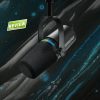
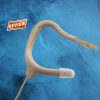
“The first piece is the title track, ‘On Being,’ and it’s based on some chords played by viola player Felix Gerbelot that I recorded during a soundcheck for a Terry Riley reworks project in Paris a few years ago, using the DPA 4560 binaural mic I had with me. I didn’t know what it was going to be for, but it had a very particular feeling to it. This was an example of the music coming into being before the quotes. It is a really beautiful, poignant piece, that carries a lot of different emotions for me, which is why I used it as the summary of the album.
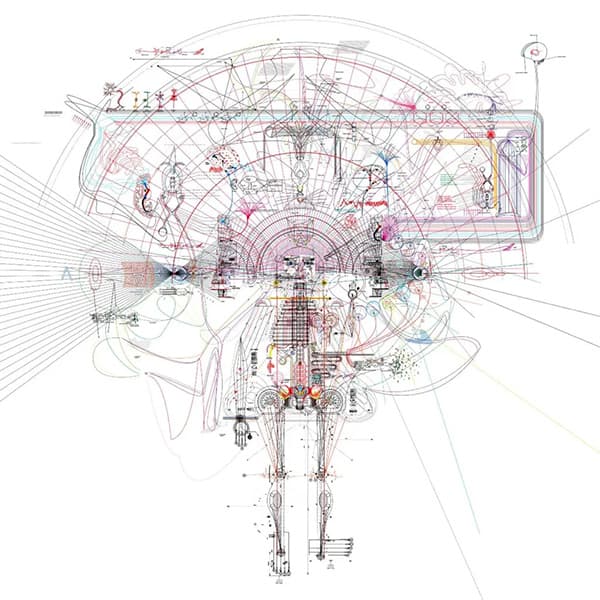
“Every other piece of music on the album is related to a specific quote, sometimes the whole quote, sometimes sections of the quote. There’s a website for the album that shows the full quotes and the context, and how the music connects to the quote. Together with Ksawery Komputery and Minjeong An, who did the album artwork, I also created a physical installation with the walls and floor covered in the quotes. You can again upload your own quote and integrate it into the system.”
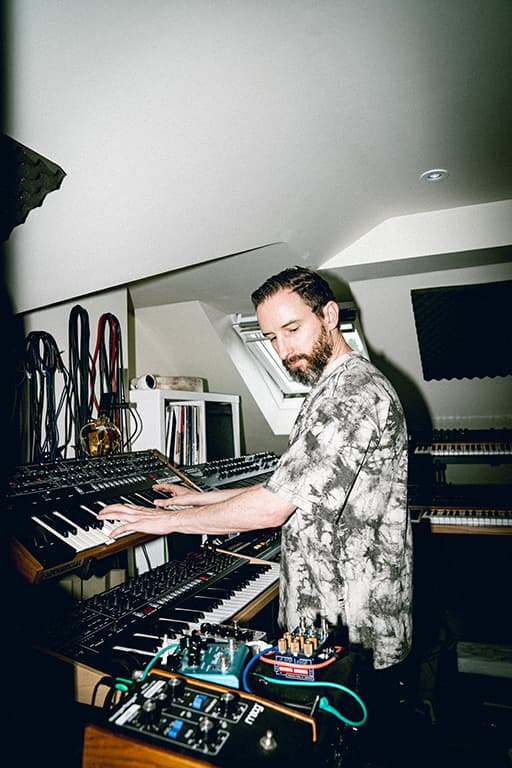
Max Cooper relies on hardware synths such as the Roland Juno 6, Sequential Trigon 6, Moog One and Minotaur, and Arturia PolyBrute for inspiration.
CO-LABORATORY
Cooper did not only collaborate with his audience on ‘On Being’, but half the tracks are collaborations with featured artists, for example with Void & Vista co-founder Aneek Thapar on ‘I Exist Inside This Machine’.
Cooper explains, “The full quote is, ‘I exist inside this machine for a short while. Constrained by its structure, somehow feeling that I am more, but unable to comprehend. Then I am gone. What should I make of this?’ To connect with the idea of being inside of a machine, Aneek and I experimented primarily with sending drums through his modular system, and got these really glitched industrial, chaotic sounds.”
On ‘You Couldn’t Love Me Enough and I’ve Spent My Whole Life Making Up for It’, Cooper worked with Belgian producer and visual artist Niels Orens. “Niels and I had quotes in front of us, and we were trying to make motifs, structures that would fit them that connected. I found a beautiful patch on the Prophet 6, also using some pedal saturation and detuning, and this was the palette. Niels then had the seed of an idea, and after several rounds we had the starting riff. I later put a lot of time into the drums and bass, running them through my pedals and effects until I had something that was twisted enough to fit the quote and the music.
“I was using my regular gear. The newness was in the power of the emotional messages. Like the quote, ‘When I Am Alone. In my thoughts, I am crushed’ pushed me into making a more extreme type of sound than I’d done before. When I saw that quote, I thought of [French electronic musician] Aho Ssan, who is an amazing artist in the noise realm. I love noise, and I love that ambient power of aggression it can give you, but I’ve never managed to push things as far as I did with that one. Aho and I did a live improvisation using Void & Vista’s Folds, a virtual instrument for Native Instruments’ Kontakt Player. I got down the basic feelings and sent that to him and he sent back a bunch of chaotic synth parts.”
PEACE EXISTS?
‘Peace Exists Here’ is an example of Cooper reinterpreting the very meaning of a quote. “The original was a bit more troubled: ‘Life is meaningless. Nothing matters. Peace exists here. And yet the world is never ending. I cannot catch my breath. Stress comes from the deadlines that we place on ourselves.’ There was this little safe space within this quote, so I was trying to create this safe space in music, something beautiful to get lost in, a place for escapism. That meant relying on techniques and sounds that I’ve used a lot in the past. Music is my beautiful, surreal safe space, where I feel I can escape the regular world, the troubles of everyday life. So there’s some newness in there and there’s plenty of the comfort of familiarity.
“I like the surrealism of being lost in the world of synthesis. I do a lot of binaural panning, so when you listen with headphones or a good spatial field, you get this feeling of things being above you and around you. There’s no real-world equivalent of the space that you can construct with these techniques. My music is mostly instrumental, because having a vocal grounds things more in everyday reality, it humanises the music more, which is great when you want to do that, but I love going into this free-flowing escapist space beyond reality.
“That being said, the song ‘My choices are not my own,’ feature vocals by [British alt soul-singer] Tawiah, and she was amazing. I love that track. Most people submitted their quotes to the website anonymously, but a few left their name, so I was able to get in touch with them. One of them was May Kaspar, who became a credited lyricist on this track. Tawiah chose the lyrics, and her vocals really pushed that piece into that old jungle-ist style, with breakbeats. It came from her style of singing, which made me think of classic rave songs.”
a vocal grounds things more in everyday reality, it humanises the music more, which is great when you want to do that, but I love going into this free-flowing escapist space beyond reality
COHESIVE WHOLE
Eventually, Cooper had an entire body of work, and arrived at the challenge of creating a cohesive album. “There were many quotes that I loved and tried to make pieces of music for, but where it just didn’t work. You have to have a lot of failures in order to get something that works. But the ones that did work are all on the album. ‘On Being’ was the first piece that I did, and the last piece of the album was the last, based on the quote, ‘I have a feeling that something is missing and I don’t know what it is’. As I was trying to finish the record, I decided to make a piece of music about that very process. So the first and the last pieces are the first and the last parts of the creation, but the tracks in the middle are not in chronological order.
“Instead, I ordered the tracks on the album in a way that I felt would ease people into the idea. If I had started off with the track, ‘When I Am Alone. With My Thoughts. I Am Crushed,’ probably 95% of people wouldn’t make it past track number one. I was trying to design a listening experience, similar to when playing a show. You have to make people feel comfortable before you scare them, or before you give them something they may not like. Of course, there was ample opportunity for going into the darker realms because of some of the quotes in the database. Having those extreme quotes and those extreme emotional states pushed me into musical extremes as well, which I loved.
“This threw up a question for me: when a quote is really extreme and negative, do you make a piece of music that’s extreme and negative, or do you make a piece of music that is maybe extreme, but somehow also therapeutic? Do you make a piece of music to help with the condition that is being presented, or do you make the piece of music that purely represents the condition? I decided that I wanted to make music that would be helpful. I hope that there’s a reflective and therapeutic and perhaps even cathartic aspect to my musical representations of certainly the more difficult quotes.”
Max Cooper is a sucker for a good FX pedal to munt his sound. Special mention goes to the:
WMD Geiger Counter, Moogerfooger, Chase Bliss Dark World reverb, Chase Bliss Generation Loss, Fairfield Circuitry Meet Maude analogue delay, Strymon Delay, Chroma Console Multi-Effector, and Hologram Electronics Microcosm.
AUSSIE ROOTS. BREAKING BARRIERS
If all this sounds unusually deep and meaningful, a quick look at Cooper’s background explains some of the philosophical, scientific and art aspects of his work, and why it sits right on the boundary between popular and art music. Max Cooper was born in 1980 in Belfast in Northern Ireland as the son of two Australian parents, and grew up during the violence there, called The Troubles.
“There was a lot of aggression and fighting between Catholics and Protestants, and every person was identified as one side or the other. But because of my Australian background, I didn’t fit on either side. When I found clubs, I was suddenly in an environment where these barriers disappeared, and people interacted in a much more free manner. That really helped me, and became an important part of my development. It gave me a love of club culture, and electronic music.
“Later I studied computational biology and did a PhD, and worked for a bit as a geneticist at University College of London. I like thinking about things – I love nature and philosophy – and I like to bring these into my music as well. For half my gigs I’m playing in concert halls or art galleries, and for the other half I do dance music gigs, sometimes turning up at 5:00 a.m. in some sweaty techno club. I very much like to integrate these two sides.
“I think there’s a lot of merit to all sides. In the past electronic music wasn’t always taken as seriously as an art form, in relation to say classical music or jazz or even rock. But in recent years, those barriers have broken down – there are more and more electronic music that it is featuring in what were traditionally classical music halls, or jazz festivals, and I enjoy presenting it to those other audiences.”
When I play these hardware synths, they have an inherent association of quality for me. I can get beautiful resonant overtones out of them that I just can’t achieve with software
SPATIAL STUDIO
Clearly judging that it was worth leaving a financially secure high-flying science career, Cooper went full-time into music around 2010, and quickly made a name for himself. He released his first EP, ‘Conditions One’, in 2012, and his widely acclaimed debut album, ‘Human’, in 2014. He also became known for working with various permutations of spatial audio and for live shows that feature a strong visual component.
He’s performed at the Glastonbury Festival, Fuji Rock Festival, the ADE in Amsterdam, and countless other places, and, of course, set up Mesh. “I wanted to set something up that explores all the things I’m interested in, science and arts and storytelling and music. I also wanted to be free of needing to make music fit a genre for a particular record label. I wanted to direct things myself, and do audiovisual projects, and focus on the idea of making music to represent something more than music, whether it’s a quote or a visual or science idea or a painting, or whatever.”
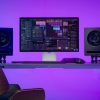
Today, Cooper lives in south London, where he has a state of the art recording studio. “I have a 7.1.4 system. My main monitors are the Genelec One 8351B, and each has a big Genelec W371A sub underneath it. I’d say the only issue with the Genelecs is that they risk sounding too good. I love loads and loads of layers for more texture and more complexity, and then sometimes when I listen on another system, it sounds a bit too much. I also have big bass traps and panelling in my room, and because it’s also an irregularly shaped loft with different surface angles, the acoustics are pretty good.
“I started off using Cubase in 2004, and discovered Ableton a few months later, and I have been using it ever since. The earlier versions were quite simple, but they have just kept developing and developing it, which is nice. My interface is a Focusrite Scarlett 12 in and 12 out, with ADAT I/O for extra outputs to feed into another audio interface – that way I have enough channels for the spatial audio. I don’t do spatial mixes myself. For that I work with other mixers, who use Nuendo or Pro Tools. ‘On Being’ was mixed by Richard Burki in Nuendo at his Future Phonic Studios in Amsterdam.
“All my early releases were done entirely in the box, because I didn’t have money for synths. I bought my first synth in 2010, the Moog Minotaur. I love it. Over the years, I have kept buying synths and pedals. I love having lots of devices everywhere that I can put my hands on. They each have their own character. So I now have lots of synths in one part of my studio, and my desk is full of desk synths and pedals.
“My main sound sources today are the Sequential Prophet 6 and 8, and the Novation Summit. I also have a Roland Juno 6, a Sequential Trigon 6, a Moog One and Minotaur, and an Arturia PolyBrute. For treatments I have many boxes on my desk, like the WMD Geiger Counter, Moogerfooger, Chase Bliss Dark World reverb, Chase Bliss Generation Loss, Fairfield Circuitry Meet Maude analogue delay, Strymon Delay, Chroma Console Multi-Effector, Hologram Electronics Microcosm, and more.”
HARDWARE SYNTHS FOR TEXTURE
According to Cooper, the hardware in his studio forms the bedrock of his musical process. “I’d say that 90% of the sounds on the album come from hardware synths. It’s a culturally ingrained thing, having grown up listening to Pink Floyd and Radiohead and classic ’80s film scores. When I play these hardware synths, they have an inherent association of quality for me. I can get beautiful resonant overtones out of them that I just can’t achieve with software. I play these synths badly, but playing gives me a feeling of direct expression. I usually run the synths through five to 10 different pedals. And then there’s yet more processing in the box. I do lots of spectral processing and granular processing and all the rest of it.
“So my first step in creating music tends to be out of box, just playing the synths, trying to get some basic feelings down. Chord progressions are usually at the core, they allow me to deliver the emotions. In general I like accessible chord progressions and melodic structures. My parents were really into classical music, and my mom was a music teacher. I was always surrounded by classical music. That’s why I’m a sucker for a beautiful chord progression. I’m always searching for that harmonic world that captures the feeling I’m after. Once I’ve got that, I live to improvise over it.
“I also have big signal chains in Ableton. I use Max for Live, predominantly for the modulation thing, which has now been standardised, which is great. I love setting up synths that wander around a bit, which can make the timbre really expressive. I like that organic feel where you’re not quite in control of things. It’s a semi-generative approach. If I want simple low-frequency elements, I’ll often use Operator, the FM synth in Ableton. Hardware synths are not so good at delivering a really clean sub-bass signal – they’re always wandering around a bit, so instead I use the Operator. If 90% of my sounds come from hardware synths, then about 10% are from Ableton synths and other soft synths, like Folds by Void and Vista, Sonic Charge’s Synplant 2, and so on.”
STUFF AT THE WALL
Unsurprisingly, Cooper uses some visual art analogies to further describe his creative process. “I have a print of a Jackson Pollock painting here. Throwing paint at the wall is my process. I have an idea, and all the synths are turned on and everything’s happening at the same time. I’m tweaking all the knobs and everything. There’s absolute chaos. It doesn’t sound good. It sounds terrible. Then I slowly chip away, taking away bits, sculpting to get to a form. That’s why I often say I’m more of a sculptor. That said, my arrangements still end up with 200 layers of different sounds!
“In electronic music timbre is dominant. Timbre became a fully-fledged member of the musical structure. Often there’s no harmony and no melody. Rhythmically, techno can be really simple. But what you have is a vibe, a feeling that comes from the timbre. While I like a beautiful chord progression and simple melodic forms, a lot of the interest comes from the texture. I love the micro detailing, the micro rhythms and the timbre side, with lots of unusual electronic processing and unusual synthesis techniques that have a constantly moving timbre.
“Minimalist classical composers in the past like Philip Glass didn’t realise they were preempting a lot of how electronic music can be structured. It’s the challenge of how you can make the simplest possible musical form interesting. How can you take something that maybe on first glance seems not interesting, but then put subtle modulations and subtle ideas in there that do make it interesting. The idea of looping, for example. That’s very much the ethos of techno music and a lot of electronic music and something I still very much have on board.”








RESPONSES