




Review: Allen & Heath Qu-5D Digital Mixer
The wildly popular (but aging) Qu series gets a kick in the guts with improved processing power and features.

By Mark Woods
19 December 2025
Allen & Heath has been offering good sound at reasonable prices since analogue days and it’s in peak form right now. The large-scale dLive and mid-size Avantis mixers are on riders, SQ’s are popular in the touring middle ground, while the CQ range of compact mixers is taking over the small portable market. The classic Qu series, its best-selling mixers, have been popular with bands, venues, festivals and production suppliers for near-on 10 years – a good time for a refresh.
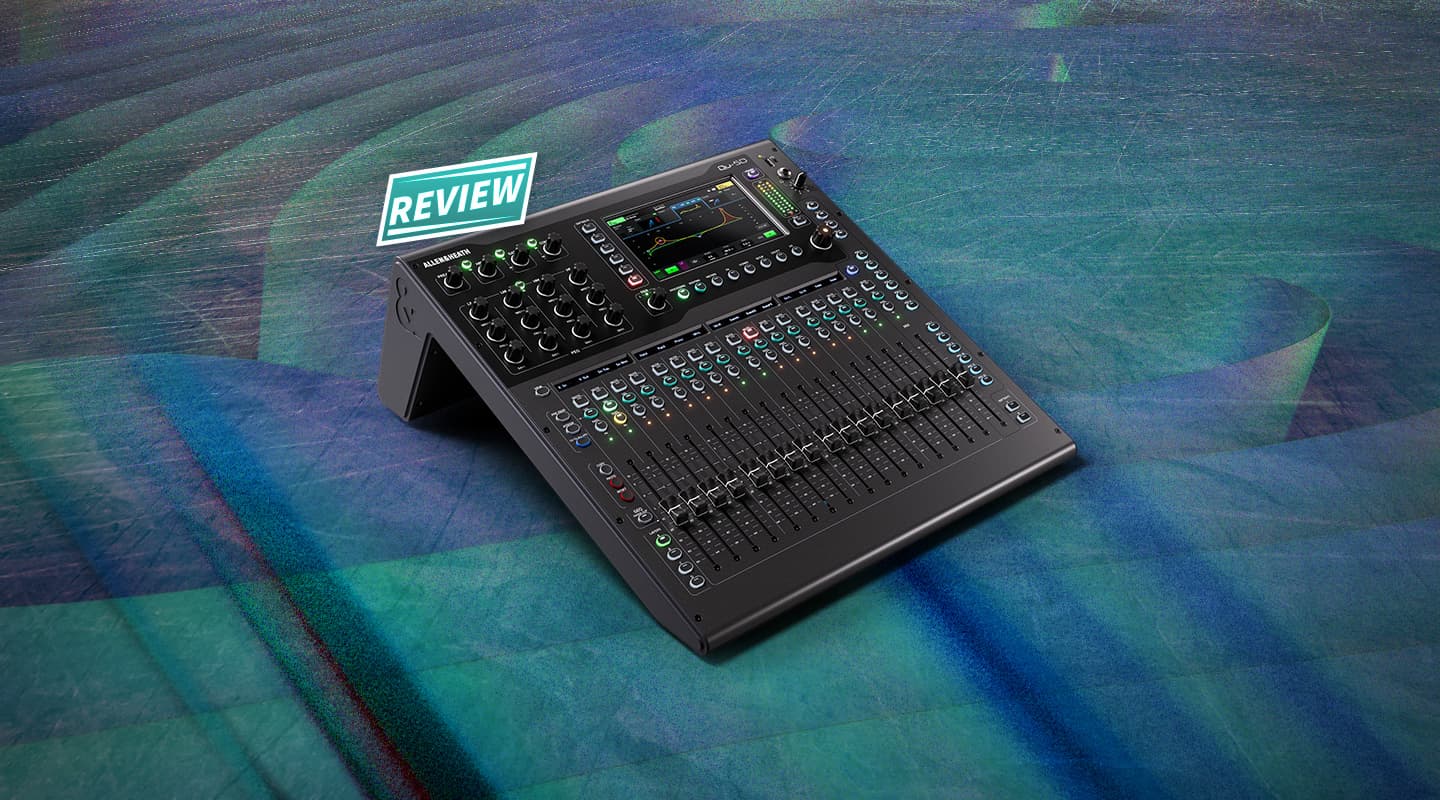
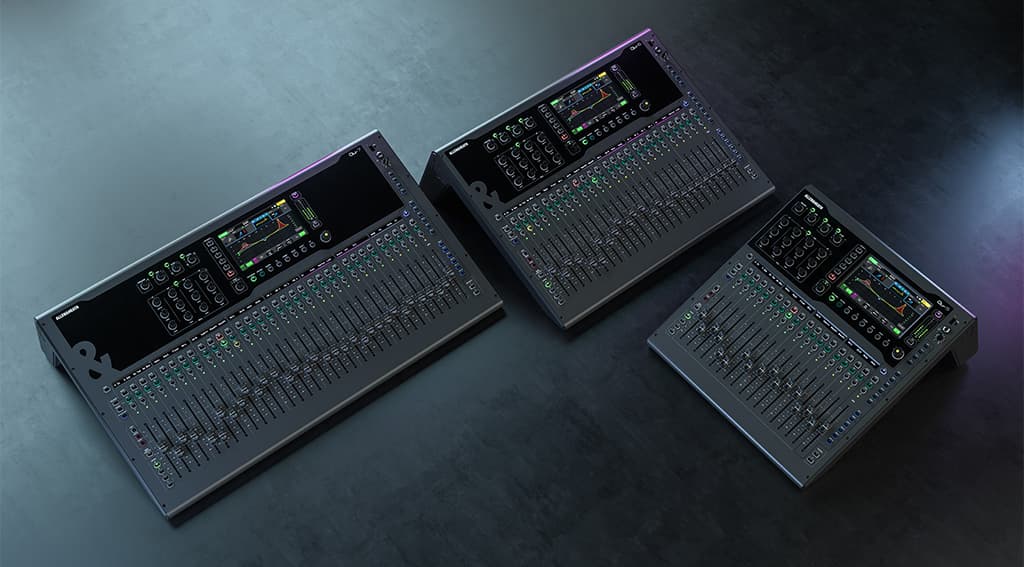
The new Qu-5/6/7 series updates the successful but aging Qu-16/24/32 Classic Series with much of the tech and workflow improvements from the last decade. The new Qu’s retain the distinctive ‘L’ shaped design that naturally angles the mixer towards the operator and the layouts still have a familiar A&H feel – layers on the left, mixes on the right, EQ top left, screen top right with screen keys below. The Qu-5 is physically like the classic Qu-16 – the same rack-mountable 19-inch size, 16 local XLR ins/12 outs and 17 faders, but the design is modern, clean and free of any decorations – everything is focussed on function.
Under the bonnet there’s a new type of engine. The 48kHz FPGA core processor has been replaced by the more powerful, faster 96kHz XCVI processors, from the SQ/dLive series. Mix channels go from 22 to 38. The Qu-5 has 16 local XLR ins/12 outs, the Qu-6 has 24 ins/16 outs, the Qu-7 32 ins/20 outs. All models gain AES3 digital outputs. The S-Link socket connects to a family of expanders, in my case the DX168 stagebox, plus there’s 16×16 Dante channels on board the Dante-equipped versions. Buses include 12 mixes, four matrix and six FX engines. There’s 32×32 USB-C audio, MIDI and 32-track recording to USB-C or SD card.
FESTIVAL STRESS TEST
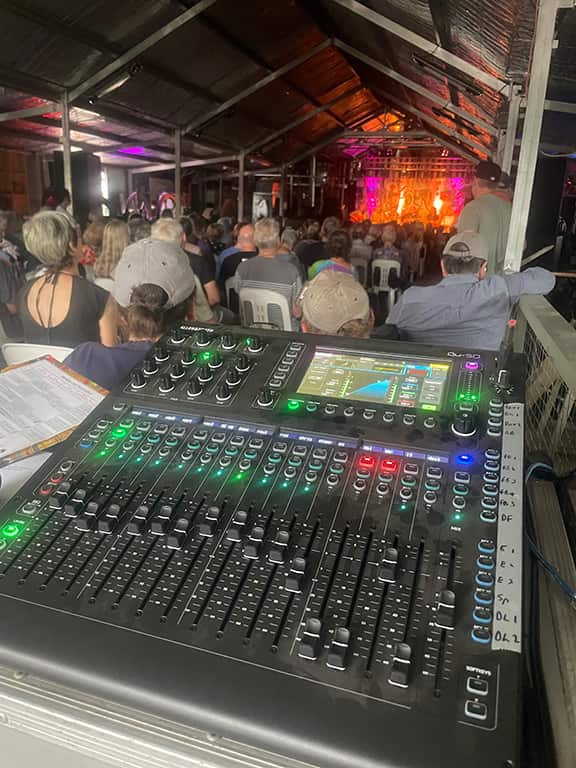
There’s nothing like a four-day folk festival for familiarising yourself with a new mixer. The Maldon Folk Festival celebrated 50 years in 2025 and sold out quickly. The main room saw 10 acts a day, short changeovers, channel counts from two to near 30, and monitors run from the FOH. None of the operators had seen the Qu-5D before the event. First impressions: the surface is a practical workplace, the seven-inch screen is responsive and a better size than the classic Qu’s five-incher. The controls you want are right at hand. The faders are fairly smooth and move well, the new knobs are chunky with a pleasing resistance. The OLED scribble strip and clear labelling everywhere inspires confidence, this is a good mixer for operators of varying abilities.
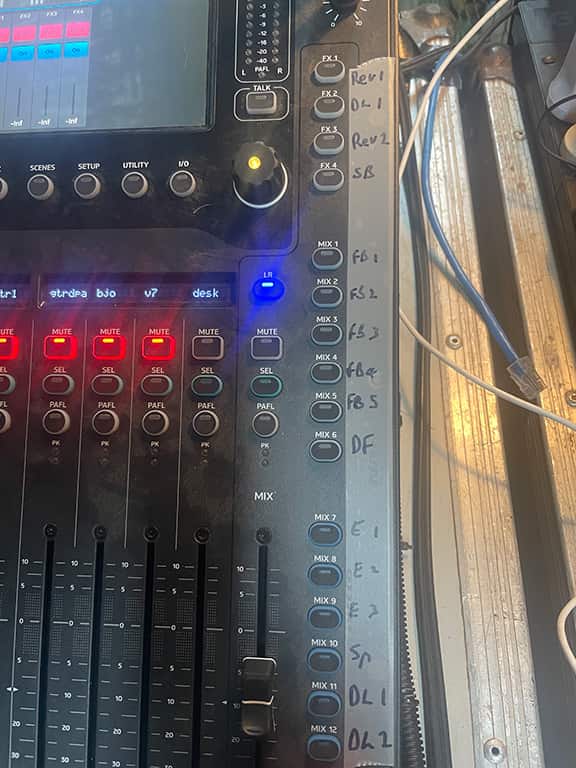
For this show the first 16 channels from stage were via an analogue multicore. Using A&H’s proprietary S-Link expansion port (up to 128×128) to add the DX168 (16 in/eight out) stagebox transformed the basic 16 in/12 out Qu-5 into a powerful 32 XLR input system with 20 XLR outputs, flexible patching and a small footprint. The first six mix outs are mono. We used them for wedges, conveniently connected from the DX168 outputs on stage. Mix Outs 7 to 12 are stereo buses. We used them for IEMs and delays.
It was good to see how the guest operators took to the Qu-5 with only the briefest instructions, and a strip of electrical tape to label the mix outs. Headline act Claymore’s mixer Robert Iurato knows what he’s doing and had the band’s 28 channels together in no time once we’d patched them for him. He’d been looking forward to trying a Qu-5, such is A&H’s current reputation. “Helpful and forgiving”, was his comment at the end.
NEED TO KNOW

A&H: HERE TO HELP
‘Helpful’ is part of the new Qu’s appeal. AutoGain can help set your input gain, best done with the channel down to avoid surprises as it turns itself up. Also from the CQ range, the FBA feedback assistant is clever tech, most appreciated by bands mixing themselves from stage, and handy at the Karaoke bar or other situations where the mic may be unreasonably hot. It detects feedback frequencies and automatically turns them down, with a clear display of what it’s doing. You can keep the settings, or not, you can modify them or make them temporary if you think the performer just accidentally pointed the mic at the foldback speaker one time.
Presets in the Library provide starting settings for different vocals and/or instruments. The ‘CH To All Mix’ button, familiar to SQ users, is particularly helpful. When held, it puts all the selected channel’s mix levels onto the faders for fast level setting. The ‘View’ button temporarily displays the channels source, rather than its name, on the scribble strip while the screen displays the mix names. I/O patching is much improved. Groups can go to groups. Mixes have various pick-off points including pre or post EQ. Strip Assign allows for convenient placement of channels anywhere on the mixer.
The classic Qu sound quality was half the reason they became popular – value being the other. The new Qu’s feature the latest AnalogiQ preamps that deliver higher resolution and lower noise. In a direct comparison, the Qu-5 is quieter than my CQ18-T and sounds slightly better – it’s hard to quantify why but something in the transient response seems improved or faster. The more powerful 96kHz XCVI core processors also improve the new Qu’s ability to handle summing in complex mixes, and that contributes to the perceived sound. Several operators used the Qu-5D while I had it and their comments always started with “it sounds great…” before listing other features.
TOUR OF THE STRIP
Channel and Mix processing includes all the expected controls. Whether you use the touchscreen or physical knobs is up to you, either way the controls are well calibrated, and adjustments are predictable. The EQ is un-coloured but I’d like colour indicators in the physical EQ knobs to match the EQ bands on screen, I kept grabbing the wrong one. The choice of slopes on the variable HPF is much appreciated. The standard comps have everything you need. I like the parallel compression option, and the gates are effective, enhanced by integrated sidechain options. Effects are selected from the library and loaded into a virtual rack of six FX units, then run as sends/returns or inserted across channels or mixes. Out of the box the library has a choice of common standard effects processors, sourced from the iLive/SQ series.
For those who demand more, the XCVI processing can host add-on, zero-latency, DEEP processors, from the dLive series. For a modest fee you get more advanced reverbs/delays, emulations of colourful hardware comps, modulators and dynamic/multiband controllers. It’s hard to judge how faithful emulations are to the original hardware versions without having them, or going to a lot of trouble, but that’s not the point, the front panel and controls are familiar for those who used the originals, and they all have their own sound or way of working. It’s not the unlimited DAW-style plug-in mixing, with several virtual devices across each channel and output, that some mixers have become, but it gives you a lot of choice when refining/maximising the sound for each source, especially for touring acts, who have the time, repeatable situations and IEMs.
The 48kHz FPGA core processor has been replaced by the more powerful, faster 96kHz XCVI processors, from the SQ/dLive series
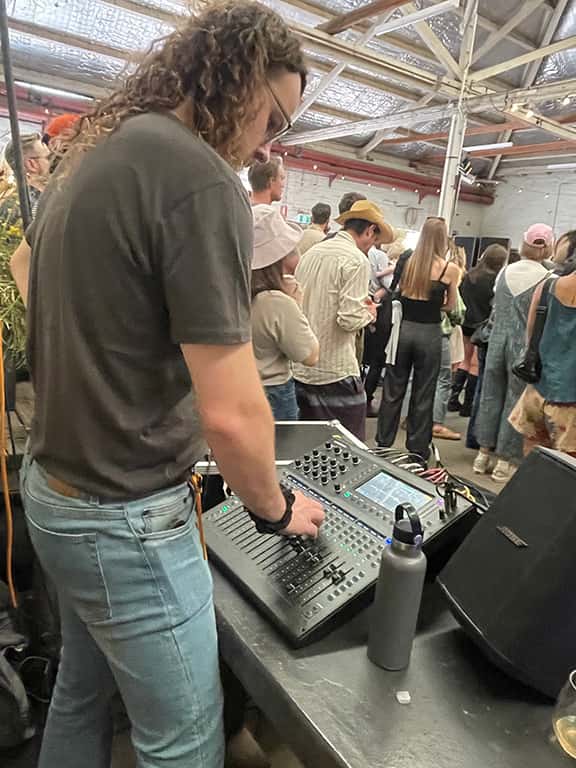
The Qu-5D in the wild at the Maldon Folk Festival: “Helpful and forgiving”.
FAITHFUL REPRODUCTION
Folk festival sound is more about raw sound quality and faithful reproduction of the source. The wide range of inputs combined with varying degrees of looseness (oh yeah, it was doing that last night too) and nervous energy can make the short changeovers challenging, especially if there’s more than a few people in the act. The ‘CH To All Mix’ button was the most appreciated control on the console during the changeovers, making short work of setting the individual performers monitor levels. When I was mixing, I gave the de-esser a fair workout – sibilance is a common issue with exposed vocals in acoustic settings – but didn’t feel the need to go much beyond subtle measures of the standard EQ and comps.
The next weekend was different. The Town Folk Festival in Castlemaine is a new but already successful annual event – it’s not folk music, it’s a festival for ‘town folk’ with alt/pop/groovy bands. These acts lend themselves to processing and the Qu-5 lets you build up a full, polished sound by the end of the first song if you know what you want. Howler’s Luke Woollett was along to mix opening act Jerome Blaze and did just that. His comment at the end was “sounds great, easy to use first time, good reverbs”. As the event progressed the Tube Stage warmer appeared on nearly every channel, the younger operators took to that and the ADT doubler, and it was hard to know which compressor emulation or multiband comp to try on the vocals next. Festivals are fast and fun for auditioning plugins, by the end of a tour you’d know just what you liked on each channel.
THE MORE YOU GET…
The more you get the more you want. The OLED scribble strips on the channels are great, so good, in fact, they make me want them beside the Mix buttons, instead of the old electrical tape and marking pen. The chromatic level indicator LEDs from the SQ series are a good idea – customisable, space efficient and good for detecting the presence of a signal… but not great at pinpointing its exact level. Not a huge deal, there’s input level meters on the screen and PAFL, but there is spare room above the faders for a ladder display.
The only real omission for me is the lack of a wi-fi antenna. My A&H CQ18T has a built-in antenna and it’s sometimes the reason I choose to use it over other mixers. It saves travelling a router and makes a good reliable connection. I’ve done shows where a multicore is not possible and I’ve been reliant on the iPad, and that connection has saved my bacon. Once you’ve got the Qu connected, the new Qu-MixPad app allows remote control and there’s a Qu4You app for musicians to adjust levels themselves.
PERFECT MATCH
The new Qu-5D proved to be an ideal mixer for the shows I do, as it would be for any number of small/medium venues/shows/festivals that need a powerful but friendly console. The larger Qu-6 or 7 mixers are more suited to venues or tours that need the extra channels/faders but as the live audio world moves towards each band carrying their own mixer (because of the IEMs mainly), small flyable mixers are increasingly appealing. The Qu-5 weighs under 13kg but feels solid and should be ok to travel in a good hardcase.
My focus is live shows, they come and go, but the new Qu series mixers also make excellent recording interfaces for capturing shows. The classic Qu doesn’t have an SD card and, depending on the model, limited to 18-32 channels at 48kHz. The new Qu USB-C allows 32-channel recording and playback to a DAW with low latency monitoring. The on-board SD card will record 32 channels, the USB-A will record/playback stereo. The Qu-5D offers 16×16 networking.
The new Qu does it all. The Qu-5D is a fully pro mixer you can travel in your carry-on luggage but it’s simple enough for the proverbial (and literal) church volunteer to operate. I look at mixers from a live music viewpoint, but these are neat enough for corporate, theatrical or educational applications. Connectivity/expansion options are excellent, Dante can integrate the Qu into larger systems, and there’s an on-board 32-channel auto mic mixer. Mix, record and livestream at the same time if that’s your thing.
Allen & Heath is riding a wave of popularity by delivering exciting products at the right time and price. The new Qu series comprehensively updates the old Qu range and should see it remain as a top seller. The new Qu mixers offer much of the quality and functionality of their big-show consoles at a price I think people will be happy to pay. There are still differences in the build and functionality of the higher end consoles that some users and the big tourers will want, but for most shows, most of the time, the new Qu will do nicely.






RESPONSES