




Glen Scott: Recording Eric Bibb’s One Mississippi
Grammy-nominated blues artist, Eric Bibb’s latest, One Mississippi, is one of the best-sounding blues albums of recent years. Audio engineer, Glen Scott, speaks to us from his studio in Sweden to describe how it was done.

By Paul Tingen
16 February 2026
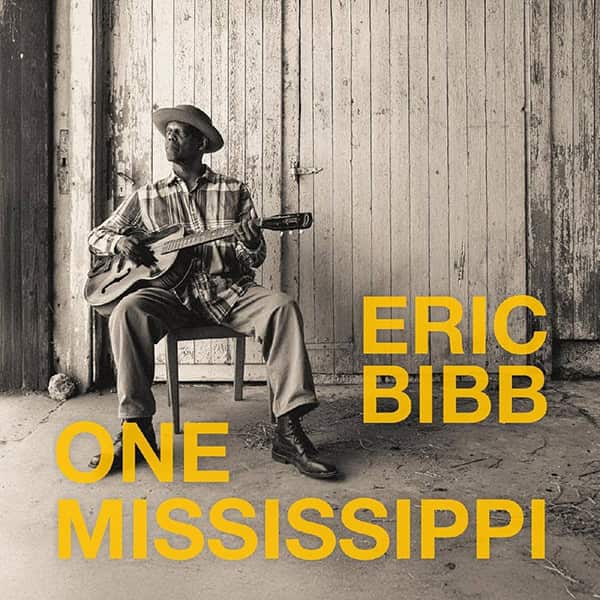
Artist: Eric Bibb
Album: One Mississippi
The 25th studio album of the Grammy-nominated American blues artist Eric Bibb, One Mississippi, is one of the best-sounding blues albums of recent years. The instruments and Bibb’s voice have a silken clarity that caress the ears, and are placed in very natural-sounding depth and space. Glen Scott was the producer, mixer, and main engineer, and he clearly thought long and hard about the kind of sound he wanted to achieve:
“Compared with previous Eric Bibb albums I’ve worked on,” remarks Scott, “One Mississippi leans even further into intimacy. The guiding principle was to make the listener feel as though they’re in the room with Eric, hearing the air around the vocal, the fingers on the strings, and the natural dynamics of each performance. The analogue chains were used not to add polish, but to enhance that honesty and sense of presence.”
Released on Scott’s label Repute Records, One Mississippi was largely recorded and wholly mixed at Scott’s brand new Hackspett Studios, located in Uppsala, an hour north of Stockholm, Sweden. Scott designed the place himself, and with One Mississippi he made “a conscious decision to treat the main room itself as an instrument. It’s 67sqm, with four-metre high ceilings, and allowed me to naturally define Eric’s voice and guitar in the mix, while the Kii 3 monitors gave me the confidence to work intuitively and commit to sounds early.”
STUDIO HACKSPETT
Hackspett is a hybrid studio, with a considerable amount of outboard gear complementing Scott’s DAW of choice, Logic. Both the studio, and One Mississippi, incorporate important lessons learned by Scott over several decades, in many different roles. The multi-facetted nature of Scott’s activities can be gleaned from his credits on One Mississippi, which include not only engineer, mixer, and producer, but also string and brass arrangements, keyboards, guitars, bass, drums, percussion, co-writer on most songs, and even A&R. To trace the origins of the vast know-how Scott brought to the table, it pays to go back to his beginnings, in a church in north London.
“I started out playing drums in my dad’s church when I was nine. Two years later the organ player left, and I was thrown into the organist role. I’ve always played several instruments, and would later work extensively as a session musician, mostly on keyboards. I also wrote a song with my cousin called ‘I Want To Blow’, that ended up on an album by Haji Ahkba, trumpet player for James Brown and Van Morrison. This was in 1992, and it was my first production.
“The studio became my first love. I adore gear and the technical aspects of making music, and the impression that pure sonics make on me. I have an older cousin, Nicky Brown, who is well-known in the UK music scene, and we’d spend hours listening to the sonics of records in his bedroom. It really made me aware of how sound and production can influence the outcome of song. Later, in my 20s, I signed to MCA Publishing, and my publisher suggested I do some writing with a young Swedish producer who had just arrived in London, Martin Terefe. He was using a system called Soundscape, what I also ended up using for many years, because it sounded amazing.”
FROM SWEDEN WITH LOVE
Scott has recorded a number of solo albums, including Without Vertigo (1999) and his most recent effort Trust The Dawn (2009), but he has over the near four decades of his career mostly been active as a session musician, writer, engineer and producer, with credits including Dr. Robert, Marc Almond, Heather Nova, Ron Sexsmith, James Morrison, Craig David, Mary J. Blige, Backstreet Boys, James Blunt, and Shawn Mendez.
Scott started his association with Eric Bibb in 2005, when he was musician, engineer, co-writer, and producer on Bibb’s album A Ship Called Love. Scott has since worked on another 14 Bibb albums, including Jericho Road (2013), which won the Best Album prize from the Academy of Jazz (Paris, France), and Migration Blues (2017) and Ridin‘ (2023), which both received a Grammy nomination for Best Traditional Blues Album.
Scott and Terefe started working together in 1994, and the two set up a studio called Gas Station in west London. Following this, Terefe created a studio complex called Kensal Town, where Scott had his own studio. He left in 2017 to embark on a tour with Yusef Islam aka Cat Stevens and also took the opportunity to build a garden office/studio at home in his North London home to be able to be closer to his family. Scott’s connection to Sweden, already present because of his association with Terefe, become stronger when he played on some records by Swedish artist André de Lang, which in turn led to Scott working with well-known Swedish singer Sarah Dawn Finer. A new relationship with a Swedish woman, who he ended up marrying, further deepened his bond with Sweden.
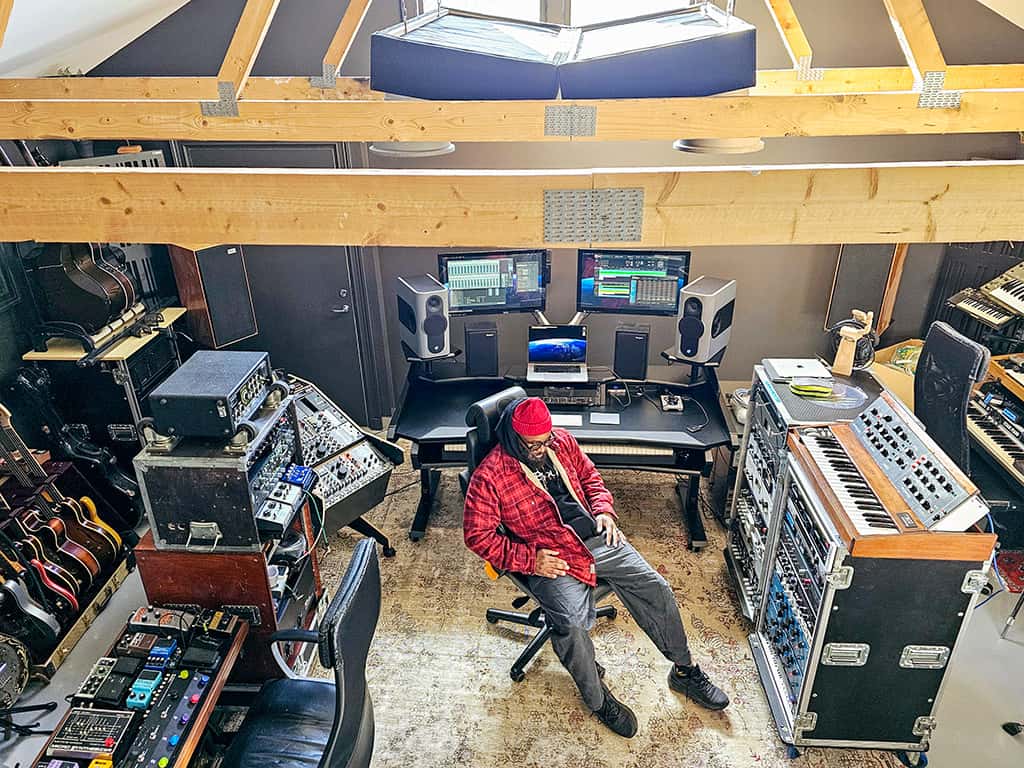
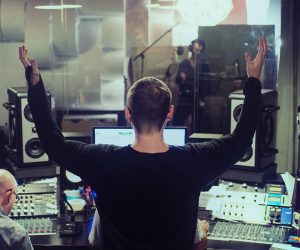
Another view of Scott’s studio space with the GIK bass traps in the corners and the acoustic ‘cloud’ overhead.
CONVERSION
Scott moved permanently to Sweden in 2024, leading to the establishment of Hackspett Studios in 2025. “This is my fourth studio. It really helped when designing this place that I knew exactly what to do in terms of acoustics and dimensions, having learned from previous experiences and mistakes. The space here is a converted garage, part of the house we bought. When I first walked in, I noticed that the floor was concrete. I loved that, because recording drums on a concrete floor results in great low end. The second thing was that there was a low ceiling; so I climbed up to see how much space there was above that. I noticed beams and the potential for the space to be four metres high. I immediately thought, ‘great, the ceiling’s gotta go.’ I got builders to put insulation and plasterboard against the new, higher ceiling, to make sure there weren’t too many reflections from there.
“Overall, I did very few treatments to the room. I have some GIK Acoustics bass traps in the corners and on the back wall and a cloud above my workspace, but that’s pretty much it. There was very little that was bad in this room. Also, where I positioned my workspace and my Kii Audio Three monitors, with equipment racks immediately to my left and right, played a massive part. This is how I have always set up since Kensal Town, to make sure the studio is as functional as possible. I have a 1970 Beverley’s drum kit in a corner, as well as a Gebruhder upright piano and various analogue keyboards, guitars and basses in the room. Several iPads, and a Behringer P16-HQ Personal Monitoring Mixer allow me to operate Logic from any place in the studio, such as from my drum station or keyboard station.”
ONE MAN STUDIO
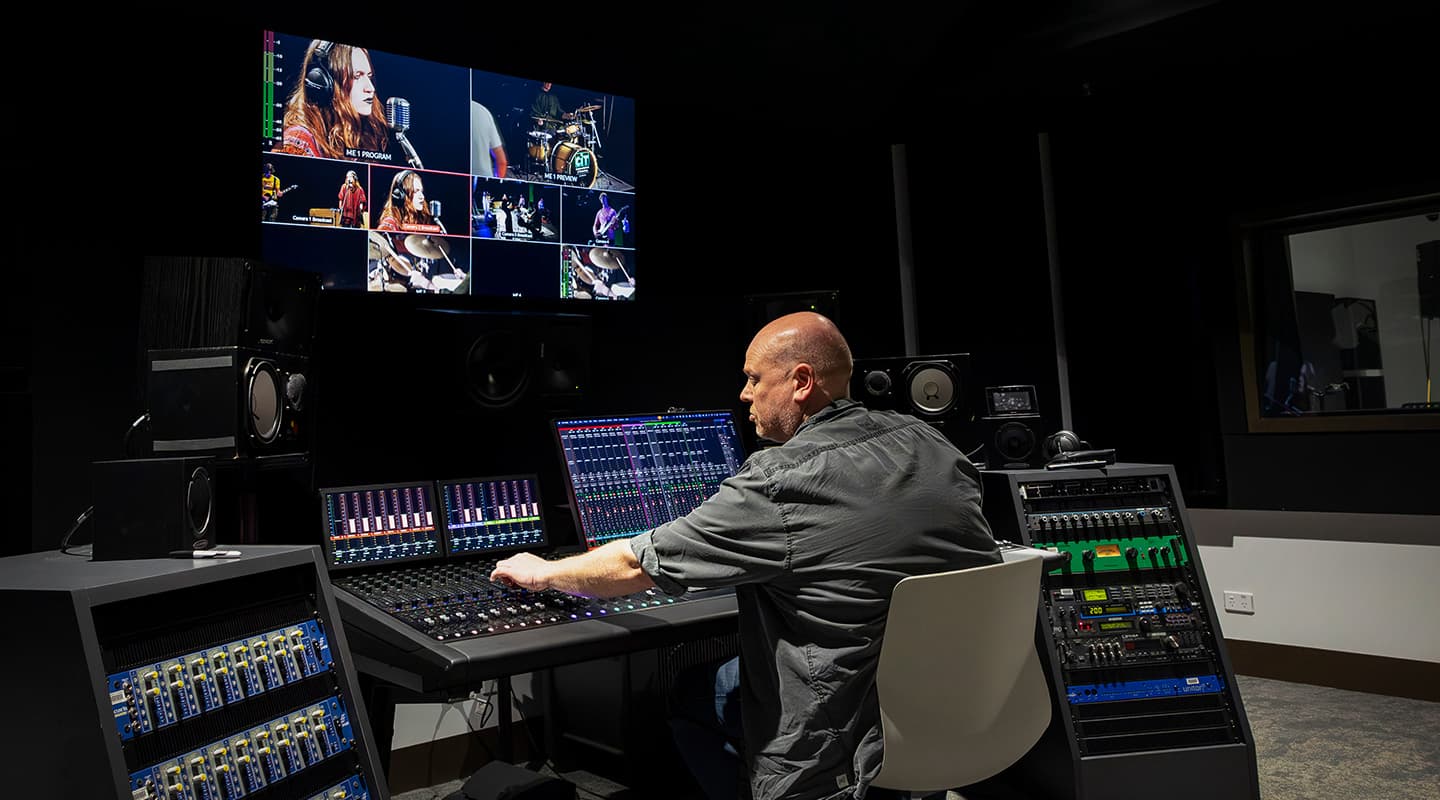
“This is essentially a one-man studio,” continues Scott. “I need to be able to, when I have an idea, execute it quickly and efficiently. When sitting in my sweet spot, with my wonderful Kii Three monitors in front of me, I want as many things as possible within easy reach. I don’t want to go far to adjust things. The Kii Three’s are key. Before I used to A/B ProAcs, Auratones, and Focals, but I don’t need to do that with the Kii’s. Totally amazing. The Kii’s are on Iso Stands and then on my Studio Desk Producer LX. It elevates, which is great for when I want to work standing up. It has a keyboard tray, on which I have a Studiologic Sl88 Grand. My guitar pedals are under the table, and my guitar rig is connected to my Kemper, which goes via S/PDIF into my AD/DA converter, which is the Antelope Galaxy 32.
“I really enjoy setting up studios and wiring them up. This studio is all connected with network cables. I’m using Catherine North Electronics AES-72-2O to DB25-M adapters, which allow me to eliminate D-sub cables. From my Galaxy 32, Cat6 network cables are going backwards and forwards around the room, which saves in cabling and cost, without degrading the audio quality. In the Apple Mac, you can link several external AD/DA interfaces together to create an ‘aggregate device’ that communicates to one DAW. You do that by using the audio MIDI setup in your OS. So slaved to my Galaxy 32 are Universal Audio 16, RME Digiface USB, and Ferrofish A16 interfaces. All my outboard goes through these as well, as my Flock Audio Patch 64, into Logic so I can use them in real time. The Ferrofish works via MADI as a listening device, connecting to the Behringer P16, which is a great monitoring listening system.
“Connected to the Galaxy is my 16-channel Orbit 5057 Rupert Neve Orbit summing mixer, which goes into a VintageMaker custom 8-channel Master Switcher, in which I have the Louder Than Liftoff Silver Bullet Mk2 tone amp, Audioscape E Series bus compressor, and two Audioscape EPQ-A Pultec-style tube EQs. I have an artist deal with Audioscape, so I have a lot of equipment from them. As outboard, I have an Audioscape 76F Rev F Fet compressor/limiter, an AS-2A Opto compressor LA 2 copy, and a ASA-6A Tube Vari-Mu compressor, which I used on Eric’s voice. I also have an IGS One levelling amplifier, Avalon VT-737SP tube channel strip and VT-474SP stereo tube-discrete Class A spectral-opto-compressor with a musical six band program equalizer, a large selection of 500 series pre-amps, EQs and compressors, and more.”
Where I place these mics depends on the guitar he brings – he’s got around 60 of them – the sonic I want to accentuate, and what he plays


Erir Bibb surrounded by Glen Scott’s guitar mic setup, including two Extinct Audio BM9 ribbons, a Sennheiser MD421, and a 12 Gauge Gold 12 electret condenser.
ARMED TO THE TEETH
Scott clearly comes armed to the teeth to the projects he works on, and he put his brand-new studio to the test when working on Eric Bibb’s One Mississippi. According to Scott, the first stage was similar to the way they have long worked together. “I co-write with him. This is born out of a modus operandi that we have developed over 20 years, where Eric will send me an idea in a raw form, usually a Voice Memo recorded with his iPhone, with him singing and playing the guitar. I will load that into Logic, and develop it further, to the point where it warrants a composition credit.
“But Eric is a great penman. I may make suggestions for lyrics or melodies or chord changes, but when it comes to those things, Eric is at the top of his game, so my remit sits more around song arrangement and structure, and the sonics. As I said earlier, I’ve always dabbled in many different instruments, and that came to fruition because of my role as a producer. When I’m arranging and producing, I’ll have ideas, for drums, keys, bass, guitar, and backing vocals, and I’ll just put them down. It just so happens that I can do all these things, and arrange and program strings and brass as well.
“Eric also lives in Sweden, about three hours away from me, and once I’ve worked on his ideas, he comes in for two or three days, and we work on the tracks together and he lays down guitar and vocals. He’ll do two to three takes of playing the song right down from beginning to end. And then I’ll get him to do a clean guitar and, if necessary, a clean vocal as well, so I have them as a safety. I recorded his vocal here with my Neumann U87 going into a BAE 1073D 500 series preamp/EQ, and on his guitar I had two Extinct Audio BM9 ribbons, a Sennheiser MD421, and Gold 12 electret condenser omnis from 12 Gauge.
“Eric doesn’t like to be close to the mic when singing, so I place the 87 a bit away from him. With regards to the guitar, the BM9 ribbons give me a beautifully detailed warm sound of the entire guitar. The Gauge mics are made from shotgun shells, and because they’re so small, I can get them in close proximity to Eric’s guitar without disturbing him. Where I place these mics depends on the guitar he brings – he’s got around 60 of them – the sonic I want to accentuate, and what he plays. It depends how he fingerpicks, sometimes it’s softer, sometimes more aggressive. I listen for the sweet spots and place the mics there.
“I need to make sure I’m capturing him, not only naturally, but with as wide a bandwidth as possible. For example, on the song ‘Show Your Love’, Eric played a beautiful nylon guitar, and because of the purity of the instrument I recorded that with just one BM9, right by the sound hole, slightly angled off, otherwise there’d be way too much low end. Especially with that ribbon mic, you want the detail to come out and you want it to remain warm, without the low end swallowing up the sound. When I use the Gold mics, they pick up more of the very bright high-end. The mic is not only great for guitars, but for snares as well.”
WORTH THEIR WEIGHT
The Gold mics, which at US$60 are a steal, are part of an entire set of mics that Scott has permanently in action in Hackspett, that allow him to use the studio “as an instrument,” and that helped create the amazing depth at the heart of One Mississippi. “I have 12 or 13 mics on the drum kit that are constantly on, including a Gold on the snare, and two Super Lux R102 mics as overheads. I also have a Gold Black212 XY stereo mic to capture the space, plus three other room mics, so that’s five room mics. The additional musicians on the album recorded their parts in their respective studios, but for my drums and guitars, the backing vocals, and Eric’s voice and guitar, I would have the room mics and several of the kit mics always as options to capture the room sound, which was very important for the sound of the entire album.”
In the context of the luxurious sound of One Mississippi, one aspect of the recording process comes as an almost shocking surprise. “When Eric comes into my studio, we look at whether he’s going to replace his Voice Memo vocal/guitar demo parts or whether we’re going to keep them. Very often Eric and I have quite deep discussions on whether his first point of inspiration on the iPhone Voice Memo is more important than us getting something that’s more sonically acceptable. Sometimes Eric feels like he’s not going to be able to capture that energy again. ‘Muddy Waters’ is one of the songs that features his guitar and vocal from his Voice Memo.
“Of course, I have to do some work to make these Voice Memo recordings fit with the vocals and guitar recorded at my place. Sometimes the Voice Memos can sound not only lo-fi, but very aggressive. There are certain frequencies that are spiking, especially on the guitar. On ‘Muddy Waters’ there are a lot of pull-offs and aggressive bits where Eric’s playing quite funky and bluesy and was not really thinking about his proximity to the phone. There are a couple of plugins I use, one being the Sonnox Oxford Dynamic EQ.
“If you set the threshold correctly, it will react to any peaks you don’t want. iZotope’s Ozone also has a great dynamic EQ that I use for this purpose. Those are my two main tools, because they react in beautifully subtle ways to smooth things out. They are very musical. Luckily, I don’t have to worry about removing background noises, because Eric has a special room in his house that he goes into to record, and it sounds amazing and very clean in there.”
We’re at this stage now where our collaboration is like telepathy, so when I do my thing I simply go for it, and hope it will knock his socks off
BIBB: BRACE YOURSELF
Throughout the process of creating arrangements around Bibb’s vocals and guitars, Scott was acutely aware of what he called, “a self-imposed mantra that was never breached, which was to keep Eric centre stage at all times. If there was anything that infringed on his guitar or on what he might be singing, it wouldn’t work. Eric’s band, of which I am MD, works the same way. All musicians support what Eric is doing. For example, the bass player will either play the same bass notes as Eric, or he can pick out various notes in that pattern. So the mantra was to never interfere with what Eric was doing. Though there are exceptions. On the song ‘If You’re Free’, I replaced his guitar with a completely different piano part. Over the years of working with him, I have developed the confidence to experiment.
“But overall, I never added an instrument I felt would compete with Eric. I did not add any overdub unless I felt it would provide a building block for Eric’s vocals and guitar. With everything I did, I listened to what Eric was playing and I’d lock into his grooves. Sometimes he played to a click and sometimes he did not, but particularly with his internal clock, his swing is so on point. You want to keep the natural ebb and flow of that. Eric is never playing exactly on the beat. He’s very swampy in the way he grooves, and many of the rhythms on the record are very swampy.
“It’s an approach that has evolved between us over the years, ever since 2008, when we recorded an album called Get Onboard at producer Tommy Sim’s studio in Nashville. Swamp is funk, and blues is just slowed down funk. Blues is James Brown slowed down. People don’t realise that you’re hearing every genre in popular music in blues. For me it goes back to the days in my father’s church, when we played every genre. That had a massive influence on me as a musician. Similarly, Eric’s a blues artist, but he’s so much more that. And he gives me licence to try different ideas and genres. We’re at this stage now where our collaboration is like telepathy, so when I do my thing I simply go for it, and hope it will knock his socks off. We don’t have a lot of going back and forth about my arrangements or production.”
BOXING CLEVER
In a similar way, when it comes to Scott laying the final hands on Bibb’s tracks, the former immediately goes for the finished article. “I make decisions very early on, which makes the final mix a lot easier. When it comes to the mix, I’m not so much focused on cleaning any gunk in the track, but I really respect the space. I do that by taking away things that are sonically occupying an area that is not beneficial to the song. That sometimes mean high pass and low pass filters. You have to respect the fact that you have a certain bandwidth and there’s only so much you can fit in before it starts to get really difficult to follow and sonically convoluted.
“I will add some treatments and effects. In the box it’s mainly EQ and some compression. I also use my outboard during mixing. For example, Eric’s voice is recorded without compression, but later on I added the Audioscape ASA-6A Tube Vari-Mu compressor. It’s a true remake of an old RCA tube compressor, with about 12 tubes. It sounds amazing on Eric’s voice. Other than that, I don’t touch his voice too much, unless they were Voice Memos.
“With space being so important on this album, I also used a number of outboard reverbs. I have a hardware EMT 240 Gold Plate, that I adore. It’s so subtle in the mixes, it sinks into the track. I use it all the time on Eric’s vocal and guitar, and in varying degrees on everything else. I’m trying to create cohesion with the 240. I put a little bit on certain instruments and create a hierarchy of what gets most of the EMT. At the top of that would probably be Eric’s vocal. I also use a Roland RE-201 Space Echo, and a Dizengoff 500-series Type 140, which is a great mono, grungy-sounding plate reverb, and two Peavey Valverbs that all can provide an organic dimension to your mixes.
“The analogue mastering chain I have at the end of my mixes and then bounce back in, is something that I’ve given a lot of thought to. I don’t think I’ve quite completed it yet, even though I’m really happy with the way it sounds. The Louder Than Lift Off Silver Bullet Mark II is an amazing Swiss army knife, and I have one with the Fairi-Mu stereo vari-mu tube compressor expansion module. Then it’s the Audioscape E stereo SSL compressor and two EPQ-A tube Pultec-style EQs. It all contributes to a natural sound without overdoing it. As I mentioned, I used the analogue chain not to polish, but to add honesty and presence.”
When listening to One Mississippi, the honesty and presence of Eric Bibb playing in a room and the space around him, are palpable, and a testimony to how, as Scott put it, “sound and production can influence the outcome of a song.”







RESPONSES