







Review: RØDE Videomic NTG Shotgun Microphone
Is it a mic? Is it an interface? Will it pair with your camera, smartphone, computer or tablet? Rode’s versatile VideoMic NTG says yes to all.

By Preshan John
4 March 2020
Rode’s VideoMic NTG sees two worlds collide — namely, the VideoMic family of utilitarian tools for videographers, and the NTG line of broadcast-style shotgun microphones aimed at audio professionals. The result is a versatile supercardioid self-powered videography mic up for grabs at a reasonable price.
Rode has ensured VideoMic NTG isn’t picky about what it’ll work with. This is the only shotgun mic I can think of that will happily function with a smartphone, laptop, camera, tablet, field recorder, you name it. There’s more than meets the eye with this little mic.
FUNCTION ROOM
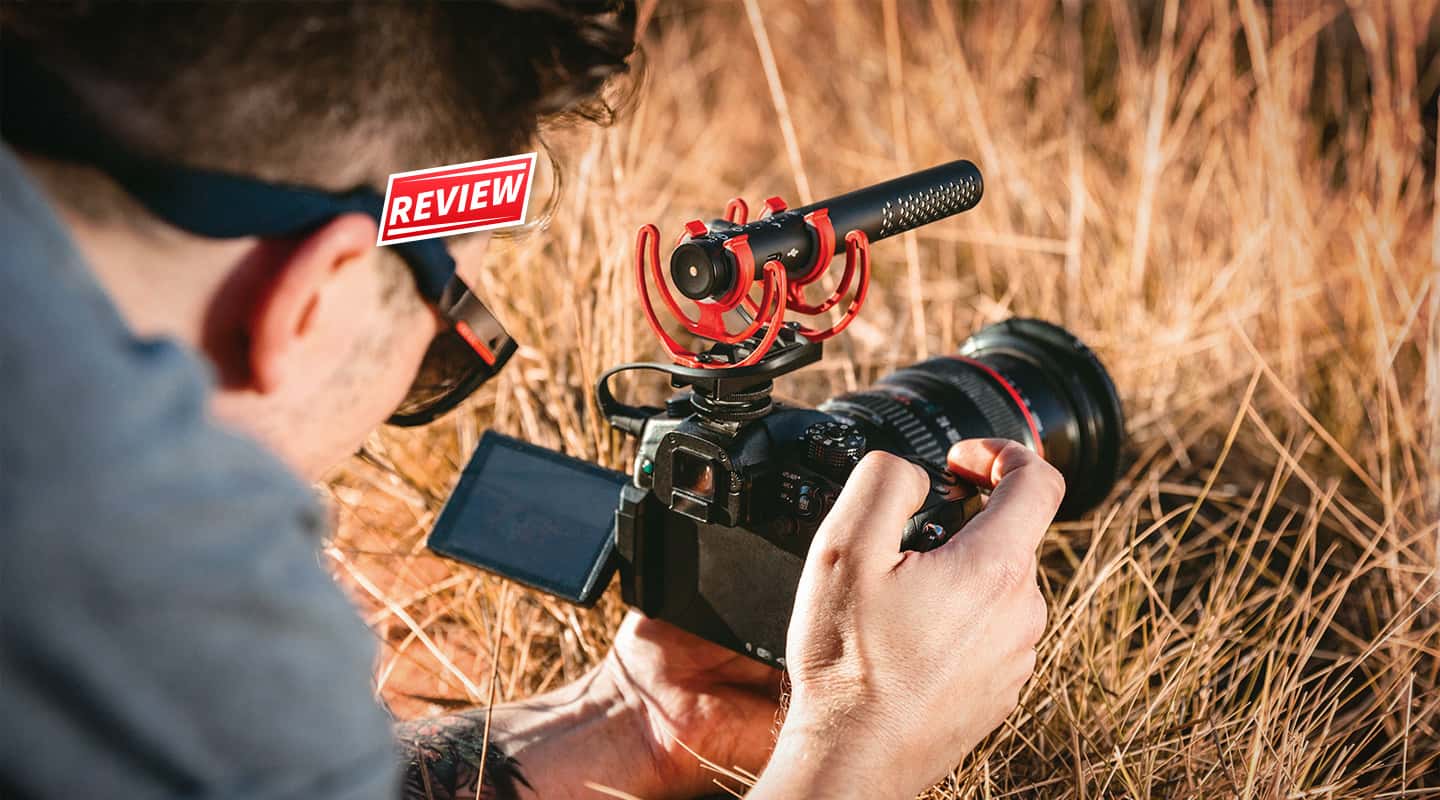
Rode’s focus on functionality shows itself in a number of nifty little hacks. A little cable guide on the Rycote mount lets you stow excess cable length and avoid a large dangly loop around the camera. The gain pot is an ergonomic ring at the base of the microphone with a clear numeric readout as you turn it. The USB-C connector not only functions as a charging port but also allows the mic to interface with a computer as an input device e.g. to a DAW; perfect for a quick podcast recording or putting down a GarageBand scratch track of a musical idea. No drivers were necessary with my Mac — I plugged it in and saw audio instantly thanks to the auto-sensing power toggle. As the icing on the cake, the VideoMic NTG’s TRRS port turns into a headphone output when used this way.
The first button atop the mic toggles between 75Hz/150Hz HPF rolloffs while a long press will engage the high shelf boost, indicated by LEDs. The second button turns on a -20dB pad and a second press initiates the safety channel — a built-in measure of clipping insurance which records a second channel of audio at -20dB down to catch unexpected spikes cleanly. The LED next to these is a dB peak warning light.
Rode states a 30+ hour lifespan from the rechargeable lithium-ion battery. Supplied with the mic is the Rycote shockmount, a foam windshield and all necessary cables. The mic itself is built well and firmly slots into the shockmount. Weighing in at 94g, you’ll hardly notice the difference using it with a handheld camera rig or camcorder.
ON THE PHONE
Phone usability is invaluable. Plugging it into my Android smartphone with a USB-C to USB-C cable yielded instant level in my recording app and much better sounding audio than the built-in mics. In our editorial line of work we rely heavily on our phones to hastily record interviews and conversations with people. Video is also a big part of what we do, for which we use ‘proper’ cameras. I love that I can plug the VideoMic NTG into my phone to capture an interview, then move it straight to a hot-shoe to record audio on a professional camera. Just as easily I can take it home and plug it into my iPad to put down a quick recording of that song I’ve been writing. In today’s multi-device world, versatility equals bang for buck — and the Rode VideoMic NTG covers all bases.
As for the mic’s sound itself, it probably won’t blow your socks off. Especially if you’re a location recordist relying on purity and pristine signal paths. The mic’s self-noise (15dBA) is comparable to other shotguns of similar breed and it responds well when paired with a quality, quiet preamp. Tonally the VideoMic NTG has a slight low-mid lump that I felt compelled to scoop out more often than not — but that’s me nitpicking. The tight supercardioid polar pattern does an excellent job rejecting sound to the rear and sides of the mic. Overall, for capturing clean audio off the top of a camera, you can’t go wrong.






RESPONSES