

PC Audio 104
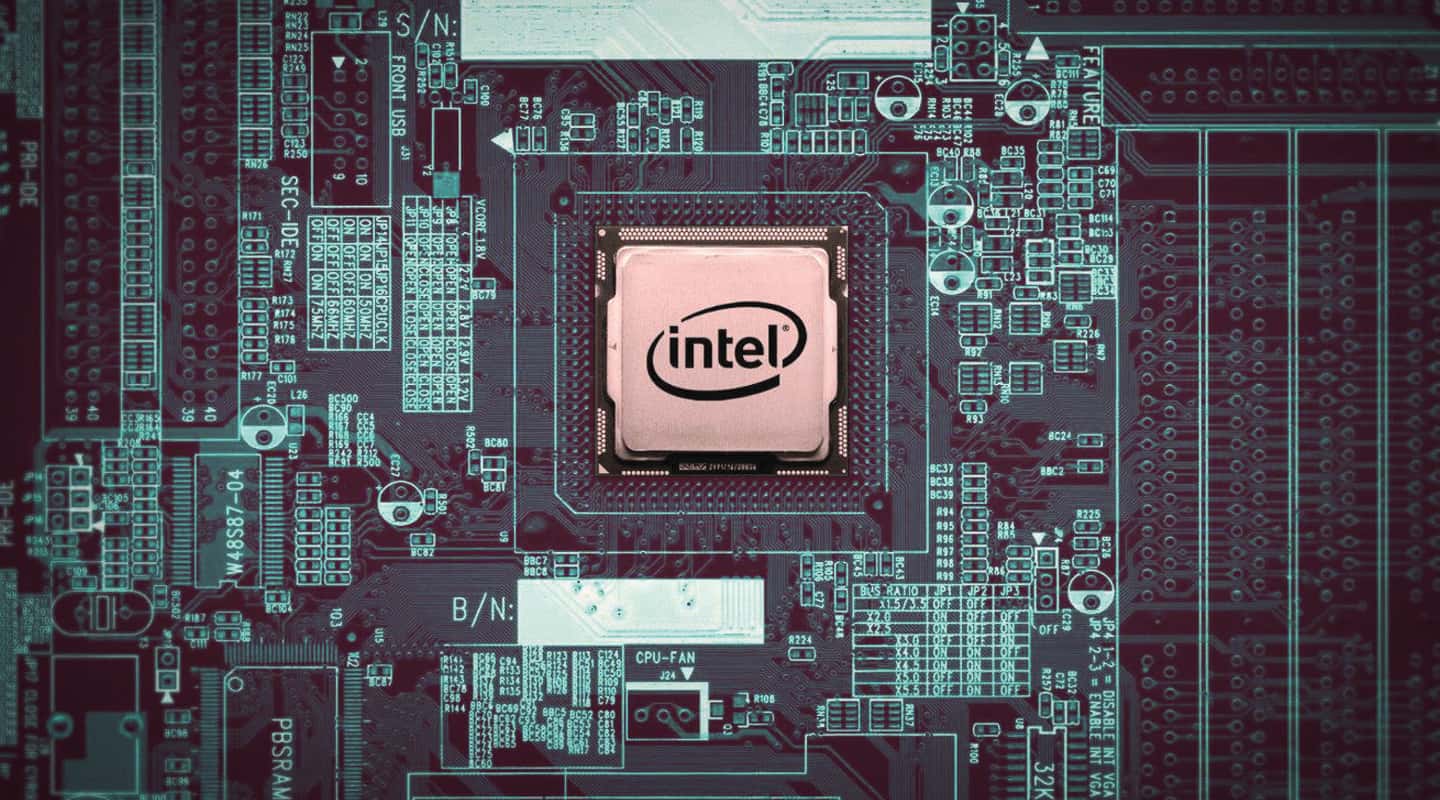
The latest buzz words in the PC world are Intel's Wellsberg and Haswell-E. Are you up to speed yet, or are they irrelevant to your musical world?

29 September 2014
Column: Martin Walker
Well, after last issue’s brief foray into nostalgic audio hardware, let’s fix our sights firmly on the future and take a look at what PC hardware is on the horizon, and how it may affect the musician. Intel continues to stay ahead of the processor game, and as we’ve come to expect from this manufacturer, its new generation of processors also means a new motherboard chipset and hence a new motherboard — in other words, to take advantage of all the new goodies I’m about to discuss will mean a replacement PC, rather than an upgraded component or two. However, with promises of performance hikes of ‘50% or more’, there is bound to be some cheering from multimedia types who still long for yet more processing power, and particularly from those who work with bandwidth-gobbling video as well as audio streams.
Right, down to business. Intel’s new X99 chipset, going by the family name ‘Wellsburg’, will be appearing shortly on motherboards from the likes of Intel themselves (and a handful of other manufacturers including Asus, EVGA, and Gigabyte), and will partner Intel’s new Haswell-E (for Enthusiast) processor family. Up until a few years ago, processor manufacturers managed to routinely achieve 50% improvements, or even double CPU clock speeds with each new processor family, but once we reached the dizzy heights of 4GHz it proved difficult to continue this trend due to increased system power consumption and cooling issues. So, for the last few years, computing power has been increased not by upward increases in clock speed, but sideways, by running multiple slower processors in parallel.
Haswell-E continues this trend, offering models with six or eight physical cores and clock speeds between 3 and 3.7GHz, each core having the usual Hyperthreading feature that gives it two logical cores. So, this time round your choice of processors will be offering either 12 or 16 logical cores, as well as up to 20MB of on-board cache RAM. Ironically, the musician/multimedia artist may benefit from such an architecture more than many mainstream users, as we tend to run lots of individual plug-ins/softsynths that developers have cleverly managed to share neatly among the cores. It did take some DAW developers considerable time to optimise their core-sharing algorithms as we moved from dual to quad-core (eight logical processor) CPUs, but having mastered eight it should hopefully be far easier to extend the existing code for 12 or 16 logical cores.
MAKING NEW MEMORIES
The new Haswell-E/Wellsburg family also includes quad-channel memory controllers supporting new DDR4 RAM, which itself offers a combination of faster clock speeds and larger module sizes — it will be initially available in 4GB and 8GB modules, with a promise of 16GB variants in the future, and with top-end motherboards having sufficient memory slots to support up to 128GB for those that need it. DDR4 RAM will be capable of running twice as fast as its DDR3 predecessor, but will operate at a significantly lower 1.2V compared with 1.5V or 1.65V, thus reducing power consumption. Meanwhile, the X99 motherboard chipset will support more USB3 ports, and a new SATA Express format that offers 67% faster throughput than SATA 3.0, to suit the new generation of Solid State Drives with transfer rates of up to 10Gbps.
Before your eyes glaze over with processor lust and numerical overload, let me bring you back down to earth by pointing out that as usual with the latest cutting-edge technological innovations, they will initially cost a lot, until economies of scale inevitably bring prices down. At launch, the new motherboards and processors may attract prices of perhaps US$1000 each, while the DDR4 RAM will be at least 50% more than its DDR3 predecessor.
WELLSBURG WORTH IT?
So what does all this mean for the musician? Well, your mileage may vary, but for many of us it will be business as usual. My PC built in October 2012 is based around a quad-core Ivy Bridge 3.5GHz processor over-clocked at 4.4GHz, and has yet to break into a sweat with any of my projects — like so many other musicians I already have more CPU grunt than I routinely use, and offhand I can’t think of any computing situation thus far that has required 100% of its processing power. Those who routinely run over 100 simultaneous audio tracks won’t need Haswell-E/Wellsburg either, as they can already do so quite easily with physical hard drives — really, it’s only the combined consumption of multiple plug-ins and softsynths that puts a strain on our CPUs.
So, I think the musicians who could benefit from the new Haswell-E/Wellsburg products will fall into three main categories. The first are those who run lots of high-end softsynths, some of which can still only use a single CPU core. Even with a quad-core processor, just one of those softsynths playing 16 or more notes at its ‘ultimate’ audio quality setting may consume the entire capability of that core. Now, if you like making synth-based music using half a dozen such softsynths in one track, one of the new Haswell-E processors with six or eight physical cores may be a tempting proposition.
The second category are those exploring the latest virtual console plug-ins that emulate the personality of specific analogue mixing desks, where each track ideally needs its own plug-in instance to achieve the accumulated effect. With complex mixes you may therefore need a hundred or more such plug-ins in place, even before you add a host of other incidental effects on specific channels, as well as several global reverbs. Once again, the parallel processing of the Haswell-E series, along with the faster throughput of DDR4 RAM, is likely to benefit such scenarios.
The third category of musician has always pushed the computing boundaries, and that’s the film/TV composer who mocks up entire orchestral scores using sample libraries, where the new DDR4 and SATA Express may together finally enable them to run the entire arrangement on one computer, whereas in the past they have had to split it across multiple machines.
One other aspect has yet to rear its head, and that’s the inevitability that software developers with 50% more computing power at their disposal will start creating yet more powerful, more realistic, and more expressive instruments and effects for us. Who knows — we may soon reach the fabled point where it becomes almost impossible to tell whether a composition is created with analogue or digital gear!






RESPONSES