
Producing Robyn’s Sexistential
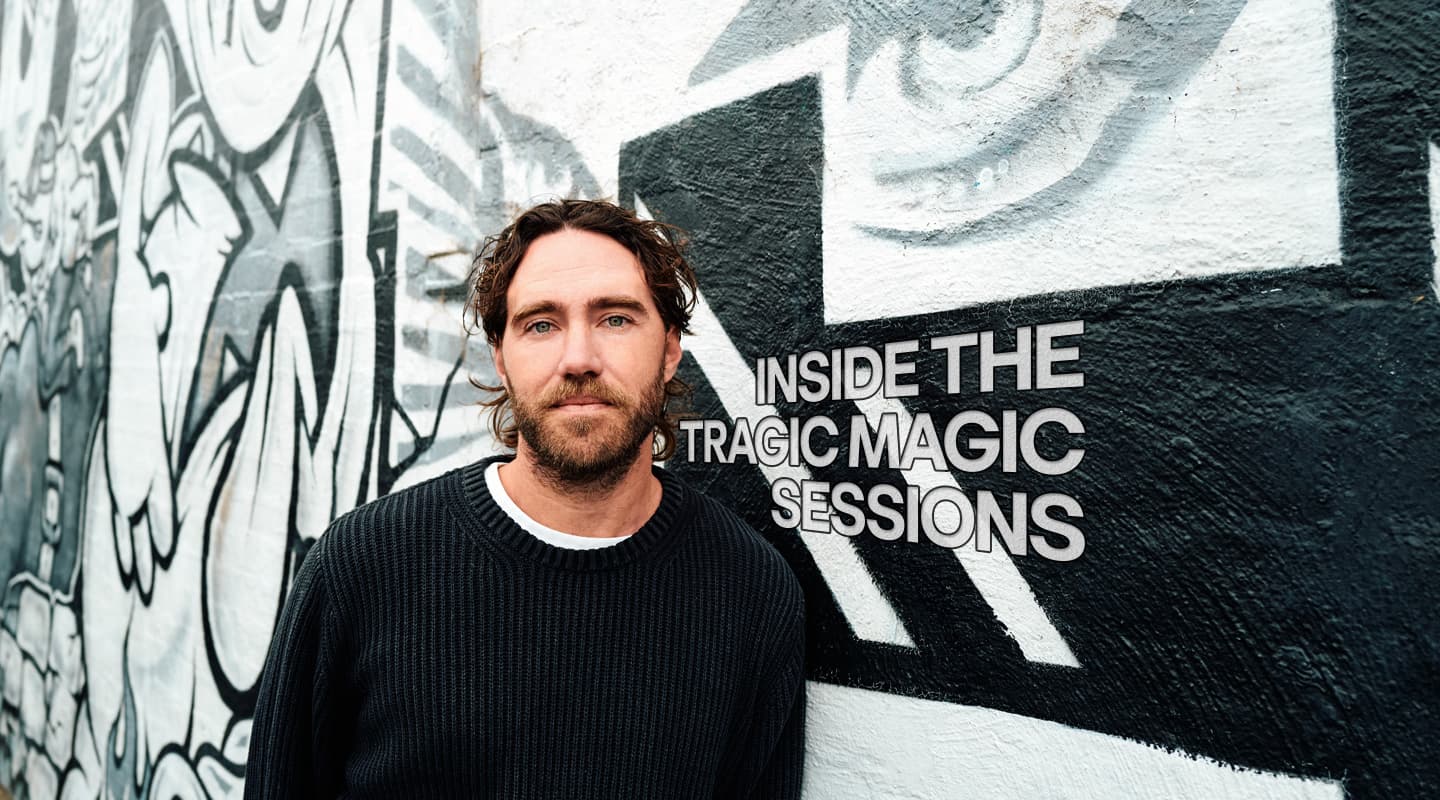
Klas Åhlund has a genuine instinct for pop, and for him it nearly always starts with a killer vocal. Here he walks us through his methods, using his recent work with long-time collaborator Robyn as the lens.

26 May 2026
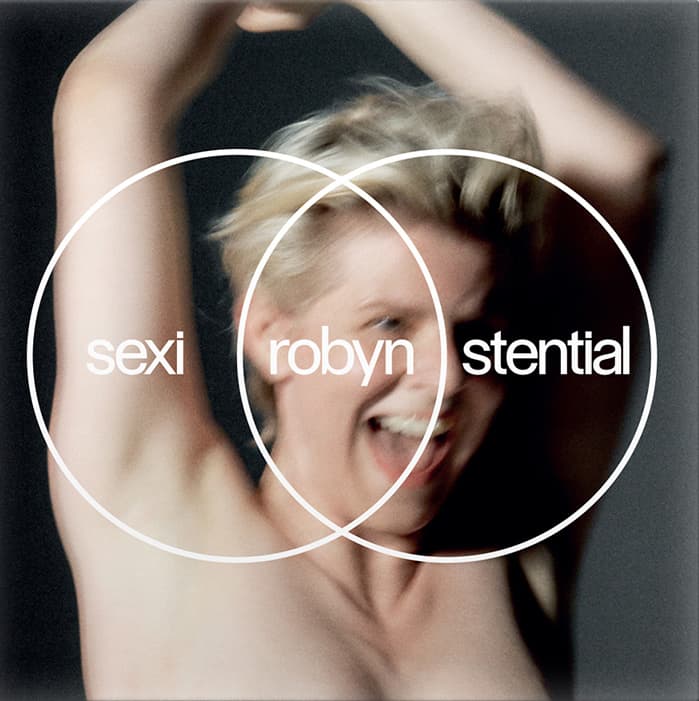
Artist: Robyn
Album: Sexistential
“Fun fact: no one in my family is particularly musical. We’re just very passionate. Compared to the people I meet and work with, there’s no musical gift involved. I’m not even in the ballpark. There’s no perfect pitch. There’s no Mozart. I’m more like a hardworking Salieri!”
Looking at his track record as a musician, songwriter and producer, it’s hard to imagine Klas Åhlund being bereft of talent. The artists he has worked with include The Weeknd, Katy Perry, Madonna, Charlie XCX, Britney Spears, Usher, and he’s a long-term collaborator of Swedish pop star Robyn, most recently playing a central role in the making of her hit album Sexistential. Åhlund, and his brother Joakim, are a also part of the hardcore electropunk band Teddybears.
The divergence between Åhlund’s assessment of his own talents and his achievements brings to mind tennis training ground observations that hold that the most talented youngsters often don’t make it, because during their formative years they can beat those less gifted on talent alone and so don’t work quite hard. Once adults, it’s the less talented but harder-working that overtake them and reach the top. When this is put to the Swedish top producer, he agrees…
“I think that’s super relevant to probably pretty much everything about development and growth. It’s not always about having God-given talent. It is about finding the passion to dig in and do the drudgery, and evolve. Not just ride your talents. If you want something that you don’t have and you work really hard to achieve it, you can get there. It’s this drive to get somewhere, and I’m more ‘drive and passion’ than talent!”
ALL KLAS
Åhlund grew up during the ’70s and ’80s in the Stockholm suburb of Bagarmossen, and recalls, “I had a lot of time on my hands as a kid, just hanging out and listening to my dad’s record collection. One of the first things that really blew me away was hearing the riff for the Rolling Stones’ ‘Satisfaction’. It was on a seven-inch single and that fuzz guitar thing, I was like, ‘whatever that is, I want to be doing that.’ We had an old beat-up guitar lying around with just two strings, and I could actually work out how to play ‘Satisfaction’ on that, and I was hooked.”
On his website, Åhlund describes himself as “grounded in punk and electronica, with a clear instinct for pop.” Guitar remains his principal instrument, which he studied at the Södra Latin high school in Stockholm, at one point being in the same class as master hit maker Max Martin. “Guitar remains my main instrument. It’s what I play in my band, and it’s what I refer to every time I want to work something out that I don’t understand. I’ve been in bands playing guitar since I was 12, and still play guitar in the Teddybears.”
According to Åhlund, his career as a songwriter and producer for others is “a parallel development to playing in bands. I always found myself writing stuff that wasn’t for the band I was in, and started doing side projects very early on. I was very much into my four-track cassette recorder, that I guess must have been off-brand, as it wasn’t a Fostex or Tascam. It was pretty much an electric toaster with two mic inputs! I was often doing recordings in my bedroom.”
“When you’re in a band and you have arrangements in your head, and you tell people what to do, it’s not always received in the most warm way. But if you have a multi-track, you can do everything yourself on separate tracks. I guess that’s how I started to produce. It allowed me to no longer be the annoying kid who was trying to boss his friends around! Also, a band is very much defined by what it doesn’t do, whereas my mind was always all over the place in terms of styles. I’ve always had a 12-year old in me who loves pop melodies, simple, accessible shortcuts to your emotional brain.”
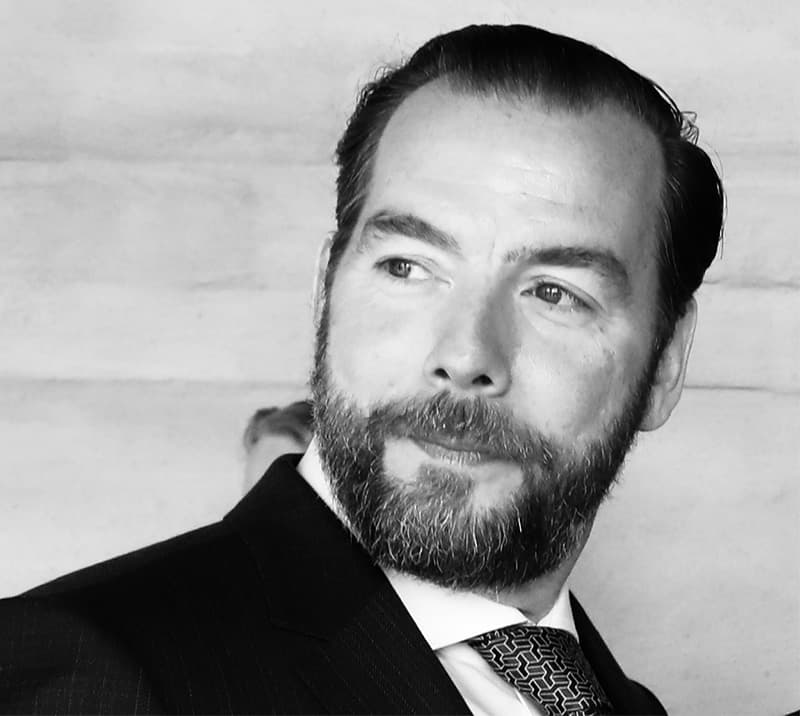
Klas Åhlund
EMOTIONAL BRAIN SURGERY
Clearly, over his career, Åhlund has been extremely successful in creating “accessible shortcuts to people’s emotional brains.” He’s part of the select group of Swedish songwriters and producers, including Max Martin, Shellback, Martin Terefe, Ilya Salmanzadeh, Oscar Holter, Oscar Görres, and others, that has a huge influence on the international pop world. This is all the more astounding given that Sweden is a small country in terms of a population, with just over 10 million inhabitants. Part of the explanation lies in the excellent Swedish education system that fosters artistic talent, like Södra Latin, but there’s more to it, asserts Åhlund.
“The Swedish success is a super-interesting enigma. There’s something to coming from somewhere small that opens your ears to the world outside of your culture. You hear a lot of languages spoken and music sung and movies acted that are not in your native tongue, which opens up your brain to things outside of your perception of the world. You see that there are alternate realities out there, alternate cultures and alternate ideas. I think that opens up your musicality, and also gives you a palette that’s outside of the given.”
The outsized international influence of Swedish songwriters and producers is mirrored by a similarly outsized amount of internationally successful Swedish artists, including ABBA, Roxette, Avicii, Swedish House Mafia, Zara Larsson, Tove Lo, and, of course, Robyn. Åhlund started working with Robyn in 2005, as the main producer and co-writer of her fourth solo album, Robyn. He’s since fulfilled the same roles, also often playing and programming many of the instruments, on her Body Talk album trilogy (2010) and on Honey (2018).
“My work with Robyn has gone through different phases, writing a lot of stuff together with her and sometimes with other collaborators. Quite early on with Teddybears we started having guest vocalists, and I found that pretty much 80% of my focus is on the vocal and how it moves and what words are being said and how it makes me feel. If you get that right, nobody cares about the kick drum. That’s something I really got to dig into when I started working with Robyn: focusing on vocal production and vocal composition and vocal arrangement. We really clicked on that. If you give us a laptop, two sets of headphones and a mic, we have fun for hours and come up with tons of new material!”
ROBYN IN THE HOOD
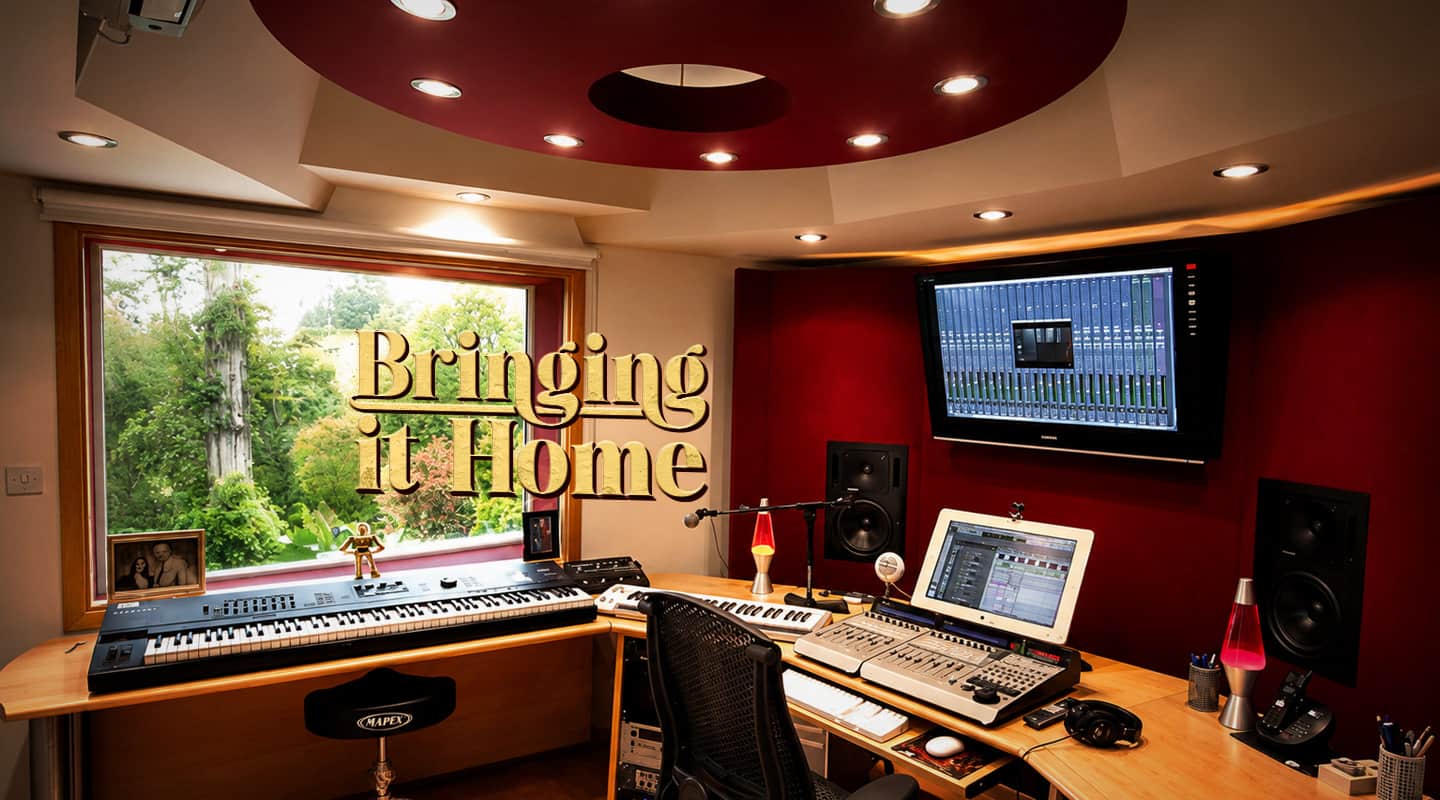
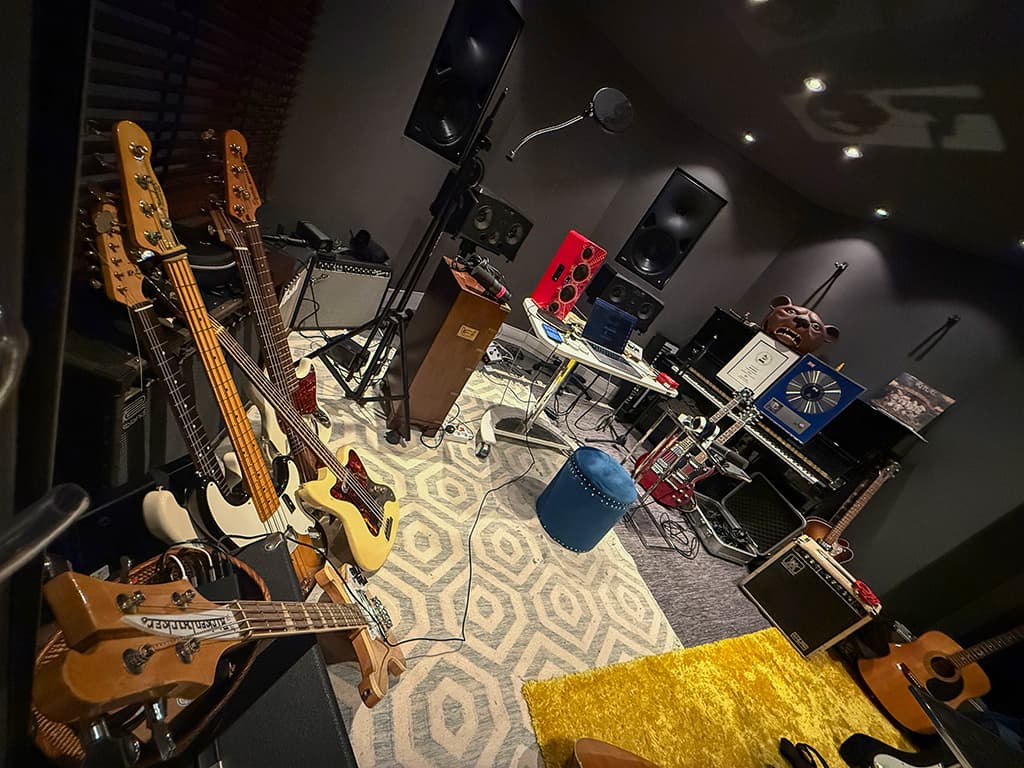
Åhlund does most of his writing and production work from his studio in Stockholm. Åhlund and Robyn wrote “90%” of Sexistentialism at the former’s Apmamman studio, which he ran with his brother Joakim, though Klas Åhlund has since relocated to a new facility.
“In my old studio my main monitors were Adam S3X-H, and I had and still have a very fancy mic, the Sony 800G. I plug that into a Urei 1176, and then my Universal Audio Apollo Twin, going into Logic. I got into Logic quite early, when everything was just grey and it looked like a Windows interface or something. When I make beats and when writing, I am always in Logic. It’s like an instrument for me. You need to make your DAW an extension of your nervous system, and for me that’s Logic. But when it’s just a workhorse, or I’m producing, I can work on any DAW.
“My old studio sounded really crap for making beats and mixing, but it was such a great room for vibe. Robyn and I were in there a long time. With both of us using Audio-Technica M50x headphones, we know we’re hearing the same thing. We’re in the same world. They’re great, because they are cheap enough that you can buy four pairs, and when they break, you just open another box. I just know how they behave, and can understand and react to whatever she says and does, and make adjustments. There’s something about going into a headphone space together that’s like deep sea diving or something.”
“When I’m making electronic music, like with Robyn, I’m pretty much 100% using soft synths. It’s fun to mess with hardware synths, but I can’t play them, and I don’t really know how to dial in sounds. When I start dialling in sounds, I spend too much time tweaking things. I lose that bird’s eye view and start getting too deeply into different grains of the tones. The joy of VSTs is that you can within a one minute timeframe hear 10 different tones. You can jump instantly between very different sounds. For me it’s about my visceral reaction to what I’m hearing, rather intellectually striving to reach some kind of perfection.”
VST PHILOSOPHY
For this reason, says Åhlund, it’s easier for him to be, “in the box, and also to use other people’s presets. You can always tweak them and make them your own. Digging through someone else’s presets is like inviting another musician into your process. I like using Xfer’s Serum, and found this community of people making Serum presets. Serum can sound like so many things. I’m also a huge fan of U-he’s Diva, and it’s the same thing: you can find many different presets for Diva. Pretty much any VST somebody has curated presets for is good, because every time you open any software synth, it’s very daunting. You find yourself spending infinite time twiddling knobs. But I just want to hear things. I’d rather flip through 20 presets over five minutes than spend five hours on one thing trying to learn how to master the programming.
“I also like to be quick when I find drum sounds with textures that I like. I’ll then pull them into the Logic sampler. It’s fun to browse the internet and find one-shot sample libraries. Samples From Mars did a great sample collection where they sample into a Technics SL1200, then print to tape and then on vinyl. Bass is the hardest of them all. I just browse through my software synths and presets until I find something that fits in the mix. We do a lot of that arpeggiated 16th-note bass with Robyn, and I have to construct it every time, shifting synths, keys, different chords.
“Of course, I also treat sounds with plugins. Sometimes you want to distort something. Sometimes you want to add harmonic overdrive. Something that’s super successful in one instance, sounds like crap the next one. So it’s good to have your little buffet of plugins that each do different things. If I throw something on and it doesn’t make me feel the way I want to feel, I’ll jump to another overdrive or distortion or fuzz thing, rather than sit and tweak. I’ll have a couple of choruses and a couple of delays and a couple of distortions, at least. Rather than spending a lot of time on each one, I just flip through and see which one feels right for any instance. I might only have one or two plugins on each sound. It’s about striking hard at the right spot, rather than having eight weak blows. The actual architecture of music production is finding a place for everything and making it fit together, like cogs in an emotional meat machine.”
TRACKS FIRST
When discussing the songwriting aspect of the “emotional meat machine”, Åhlund elaborates on a comment he made on his Instagram account, about how the lyrics of Sexistential have an existential angle. The end result was, he says, “electronic music meeting Ingmar Bergman. It’s a Scandinavian thing. We share a little bit of that with the Danes, the Finns and the Norwegians as well, where there’s this inherent heaviness to everything.”
However, the notion that the lyrics on the album informed the music, for example in the atonal, out-there title track, is quickly dispelled by Åhlund. “Can I just intervene there? That’s constructing an intention after the fact. The beat of ‘Sexistential’ was just me trying to muck around with a four to the floor kick, because there’s such a momentum and gravity in that, and to also stagger it and make it experimental. But it was nothing to do with Robyn’s emotions or lyrics. It was simply fun to add the layer of the lyrical content and her vocal performance on top of the track. The weirdness of the track provides a good backdrop to give the lyrical content some brevity and lightness.
“We almost always start with the backing track. Usually, the lyrics come way later. Sometimes we start with a piano and a vocal, or a guitar and a vocal. And then the track takes shape over time. But a lot of time it’s just a research and development phase, where it’s me finding sounds and rhythms that intrigue. And then we write the song on top of that. Robyn is a very good, intuitive writer. She can find amazing melodies and she has a really good sense of lyrics. Sometimes I have a melody and I sing it to her and it sounds like crap. But then when she sings it, it sounds awesome. Same notes and everything. I also have input into the lyrics. When Robyn and I are working, she’s allowed to have ideas about my hi-hat choices, and I’m allowed to write melodies and get involved in lyrics. She will also go to the computer and make changes when I can’t really manifest her ideas. It’s a no-holds barred collaboration. Everyone’s allowed to do whatever.”
GO WITH THE FLOE
Giving some specific examples of their songwriting process, Åhlund begins with the album opener, ‘Really Real’, which was cowritten and coproduced by Åhlund and Robyn with Jonathan Bates, of US rock band Mellowdrone, and Joseph Mount of UK electronic music band Metronomy. Unusually in electronic pop, the song also features a rather wild electric guitar solo.
“So John Bates had a fantastic riff, which is what opens the song. Robyn started writing over that riff, with Joseph, and then I came in and helped them elaborate and finish it. We wrote the chorus and added some chord structure, because it started out being very static with just the riff. Over time, we broke everything down as far as the production, and I built it up again. We kept that amazing riff and reconstructed it.
“Then Robyn was urging me: ‘you can play the guitar, do a guitar solo.’ I started out very Robert Fripp-inspired, and then I felt we needed to destroy it more, I wanted it to be a Robert Fripp/Aphex Twin mashup. I went through my little Marshall amp, which we recorded with a Shure SM57. I have a ton of pedals, but there’s a good amount of gain on the Marshall that gave me quite a bit of distortion. I distorted things after the fact as well. Actually, I think of distortion and degrading as separate things. Degrading is the digital version of distortion. So while amp distortion and console distortion, and the plugins that imitate them, are fun, sometimes plugins that emulate what a sampler sounds like when you distort it, or digital devices distortion in general, also is exciting. I also played a guitar solo on a The Weeknd song called ‘Shameless’. Guitar solos are cool and fun. The one on ‘Really Real’ just turned out to be very deconstructed and smashed.”\
SEXISTENTIAL. NO ANGST
Åhlund also comments on the making of Sexistential’s second track and lead single, ‘Dopamine’, which was co-written with Taoi Cruz. According to the producer’s Instagram account, Robyn’s vocals were recorded with her lying on his studio’s yellow rug. There also is a vocoder vocal part in the arrangement that has echoes of Daft Punk.
“The yellow rug came with me to my new studio and is right here! Taio is an old friend of mine, and he had this idea for the beginning of the chorus. We worked on it for a bit, but it didn’t go anywhere. But when Robyn heard it, she went, ‘this is awesome, I want to write to it’. So she and I wrote the verse and the post-chorus and completed the song. She recorded her vocal with a Shure SM7. The Sony C800 is amazing, but sometimes stepping up to it feels like you have to deliver. Whereas there’s something very informal and non-imposing about the humble SM7. It’s definitely the rug microphone.
“Daft Punk? For me, it goes back to Kraftwerk. I’ve always been fascinated with synthesized voices. It’s a combination of chopping her up. I chopped up Robyn’s vocal and used a VST made by a Swedish guy for the vocal effect. I can’t recall the name. Logic’s Vocal Transformer also is great for robotizing a vocal and freezing notes. Then you can pitch and automate them and create melodies. And Sonic Charge has made an amazing VST called Bitspeek, which is amazing at degrading things. I might have five or six bit crushers, 10 or 15 distortions, the same amount of outboard emulations that distort things, and the same for vocoders. Sometimes you automate the hell out of something monophonic, and use it to build chords.”
While Ahlund likes to work fast and intuitively during the creative process, he says he definitely spends a lot of time tweaking in post-production. “I’ll work on a beat for months if I have to. I work on it until it feels good. Often, rather than tweaking something forever, I tear it down, build it up again, tear it up, build it up again. I did that for ‘Existential’ at my previous studio, mostly with Robyn present, and then we collaborated on the mix, with Nicholas Flyckt, who mixed the entire album. Robyn and I went out to his studio and moved things around until it sounded right.”
Like Åhlund said, “hardworking.” Whether his work has more echoes of Salieri than of Mozart is for others to decide.








RESPONSES