





Review: Kali Audio SM-5 Studio Monitors
Pristine accuracy is only the beginning with Kali’s flagship monitors.

14 October 2025
Review: Preshan John
Kali Audio is known for making outstanding studio monitors at accessible price points. AudioTechnology has reviewed a number of the brand’s studio monitors over the years and none have failed to impress, particularly in the areas of accuracy, imaging and translation.
While affordability is a hallmark of Kali’s Lone Pine and Independence product families, the Santa Monica range is birthed from a different design philosophy: a little less ‘bang for buck’ and a little more ‘no corners cut.’ Kali has set out to create its best studio monitor yet. Of course, this is reflected in the price tag. It’s also reflected in the materials used, the performance of the amplifier, the attention to detail in transducer design, and the extra DSP functionality built in such as room calibration and networkability.
The Santa Monica line comprises the SM-5 (which I am reviewing), and the larger SM-8. Uniquely, both models are available in active and passive versions.
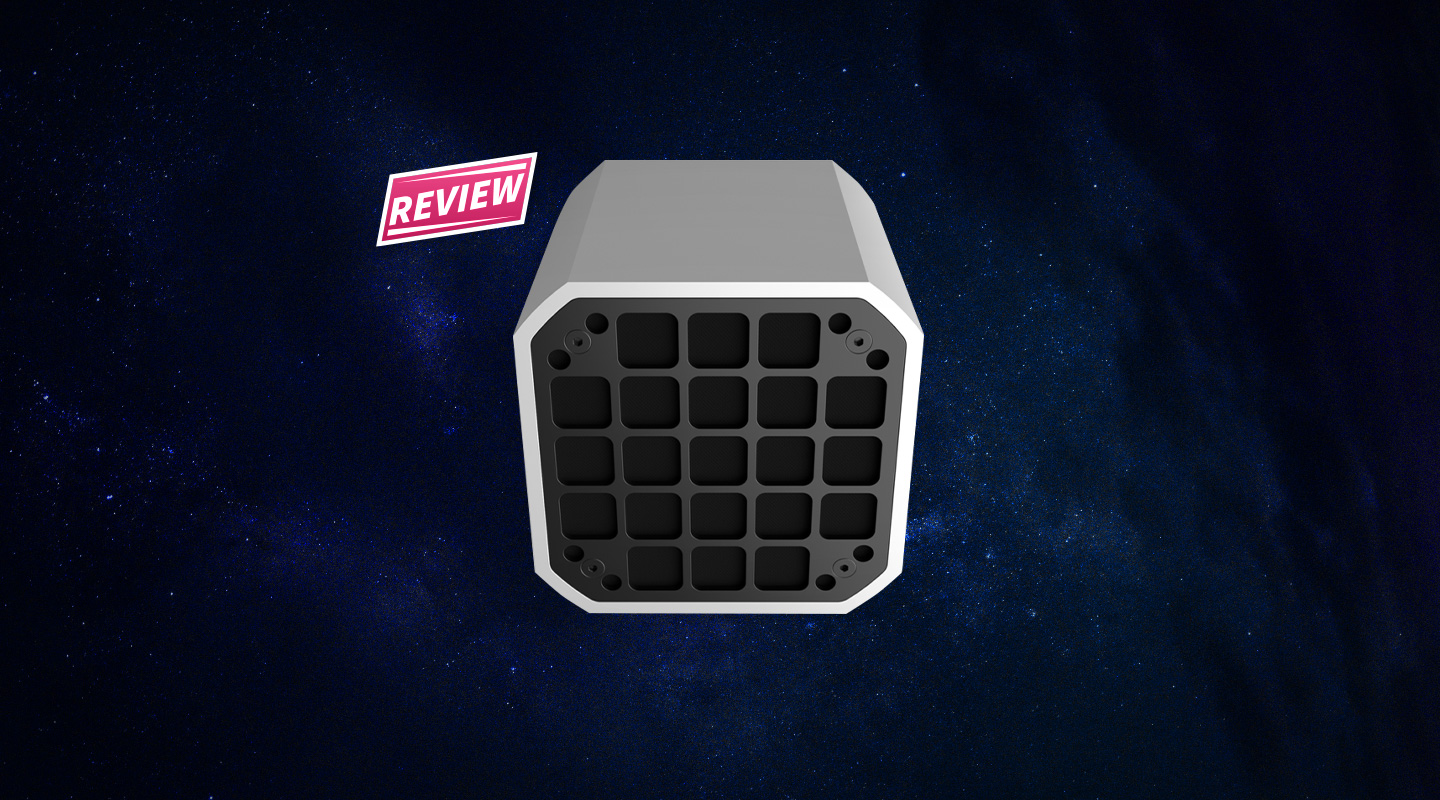
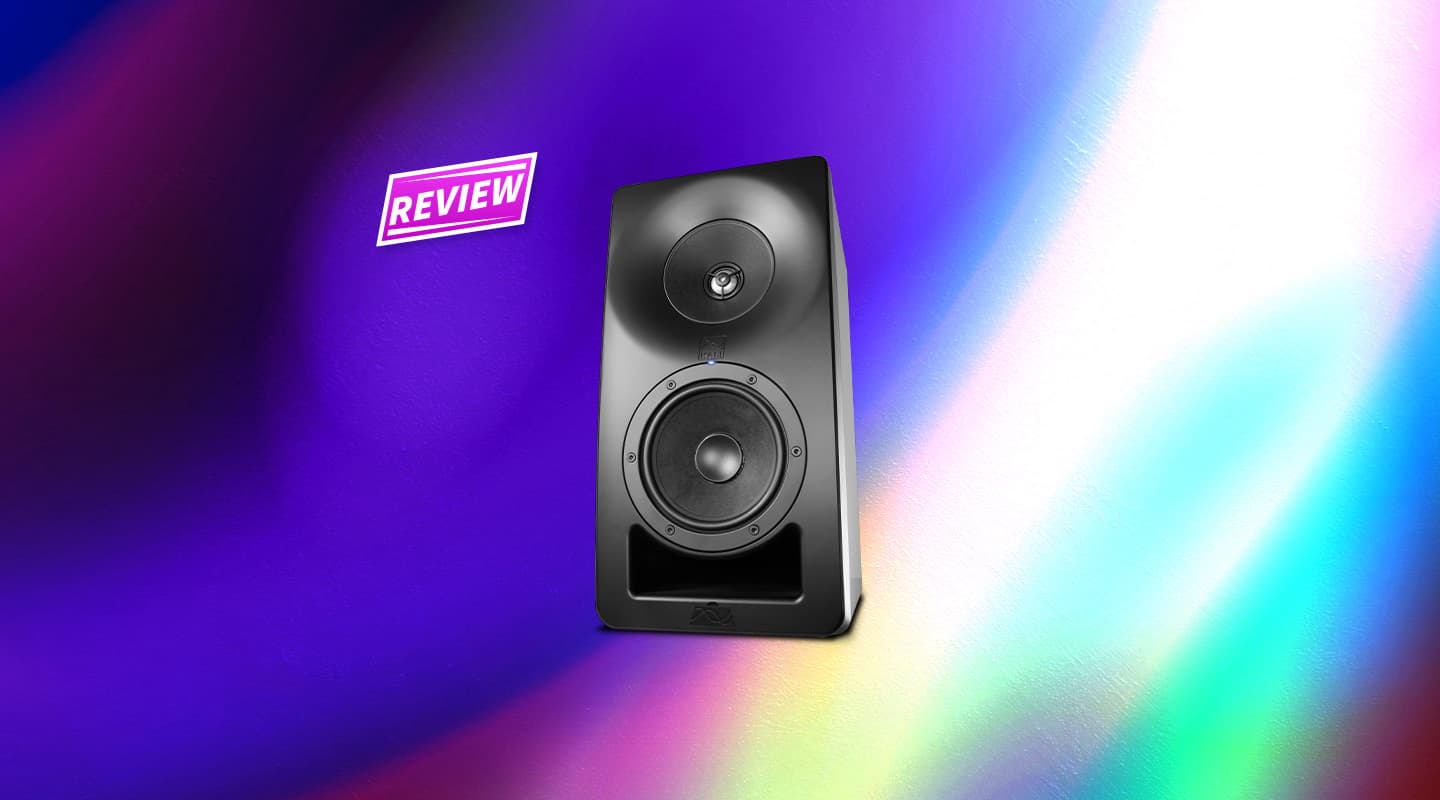
The SM-5 is a three-way speaker. A one-inch metal dome tweeter sits concentrically inside the four-inch midrange driver and the cone is shaped to double as the tweeter’s waveguide. The five-inch paper cone woofer sits above a bass port at the bottom of the speaker. Driving the active version of the SM-5 is a 225W Class-D amplifier with three channels, one for each driver. Crossover points are at 280Hz and 2.8kHz. Frequency response is stated to be 39Hz–35kHz (±10dB). More usefully, they spec out at 47Hz–21kHz at ±3dB but the ±10dB figures hint at the high-end extension.
Each SM-5 weighs 9.5kg and is 20cm wide, 25cm deep, and 40cm tall. Physically, the cabinets feel solid and inert. The design language is understated, with the slick black finish interrupted only by the silver tweeter and blue/yellow LED above the woofer.
SOUND ADVICE
Every Kali Audio speaker I have listened to has been honest and accurate. The SM-5, being the flagship, is certainly no exception. Usually when listening to a speaker for the first time, a particular sonic characteristic reveals itself that helps you somewhat describe how it sounds. What stood out to me about the SM-5 is that nothing stood out to me. It’s so neutral that it was difficult to discern a particular attribute about how it presents audio that was distinct enough to help describe its sound. The upgrades to the amplifier have no doubt assisted here to minimise distortion down to the stated <0.75% from 100-450Hz and <0.5% above 450Hz. The three drivers work together beautifully with smooth crossover points. Stereo imaging is exceptional thanks to the coaxial mid driver and tweeter.
AT Editor Chris Holder took the SM-5s home for a weekend to run them alongside his Kali IN-8s. The IN-8 is a fantastic studio monitor but the difference in detail in the SM-5s was hard to ignore. Nuances in reverb tails, a reed vibrating in a saxophone mouthpiece, the wires of a snare brush gliding along the drum skin, all are presented in a striking amount of clarity. Low end presence was predictably the only area where the IN-8s outperformed the SM-5, but more in energy than detail.
IN PRODUCTION
I adapted to mixing on the SM-5 very quickly and found it to be confidence-inspiring. The lack of colouration combined with the pinpoint imaging gives the true sense of working through the speakers directly on the sources themselves. Small 1dB adjustments with an EQ plug-in are easy to identify and assess. Panning feels incredibly precise thanks to the pinpoint imaging.
Low-end extension is smooth and clear. One may expect a slightly restrained bass response with a five-inch woofer, but the SM-5 reaches confidently down to the claimed 39Hz (-10dB) with definition and authority. There’s no sense of hype or woolliness — bass frequencies are clean and articulate, making it easy to discern subtle differences in kick drum tuning or bass guitar articulation.
The amplifier feels like it has power in reserve. Even when driven hard, the SM-5 remains composed, without a hint of the congestion or fatigue that can creep in when a smaller monitor is pushed to its limits. Dynamic transients such as snare drums or the punch of an 808 land with immediacy and control but never feel ‘poke-y.’
NEED TO KNOW
NETWORKABILITY
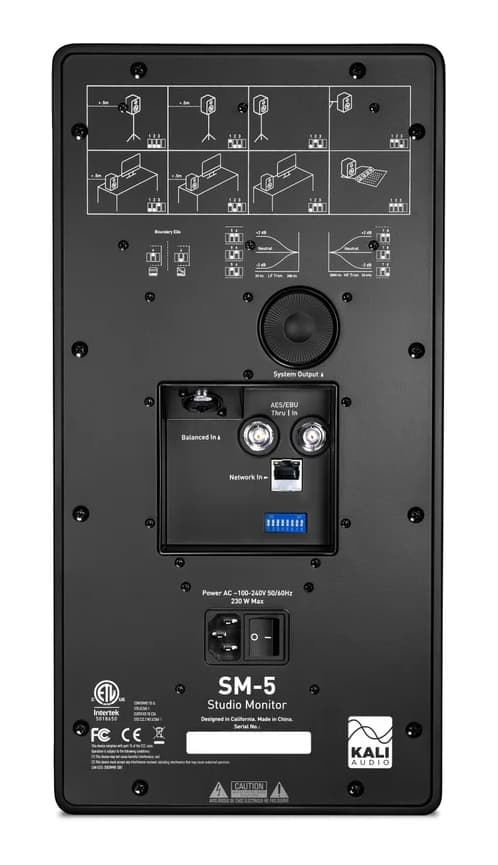
Increasingly, studio monitors in the more premium category are coming equipped with the ability to sit on a network and be controlled via Ethernet. This addition to the Kali Audio SM-5 allows each speaker to be plugged into a network switch via the RJ45 connector for simplified control of the DSP using the Kali Control Panel application. Note: networkability is only for control purposes – not for audio transport.
As mentioned, the DSP onboard the SM-5 runs a parametric EQ, delay and trim, and is primarily for corrective purposes. Preset boundary compensation EQ curves for how the speaker is positioned in the room can be activated using the series of dip switches on the rear of monitor, as well as 2dB boosts and cuts to the low and high end, and toggling between Kali or user-defined EQ presets. Kali Control Panel offers more granular control and is useful for things like surgically notching out a problem frequency in your mix room, or tweaking the SM-5’s response to suit your tastes.
For commercial studios running more complex monitoring systems such as Dolby Atmos, being able to identify and control speakers over the network is invaluable for both calibration and control purposes.
FINE TUNED
Room calibration is a gamechanger for any studio space, and the SM-5 comes fully equipped in the box. But while you may not need an external processor, you will need a reference microphone (Kali recommends the Earthworks M23R) and at least 90 minutes of your time.
The calibration process revolves around Room EQ Wizard, a free software download. Kali provides detailed instructions online to help you perform a DIY calibration. Once the calibration is complete, the room readings can be sent to Kali Audio who will, for a US$50 fee, send you back a custom-tuned profile to load onto your SM-5s from Kali Control Panel. These files can be loaded as a user preset via USB stick or in Online mode over a network.
THE PROPOSITION
At A$3500 (US$1700) per speaker, the Kali Audio SM-5 sits at the more serious end of the studio monitor market where things like a flat response, low distortion good translation, and premium componentry are a given. For mix engineers who sit in a studio every day producing all manner of material and need honest monitoring tools to perform their job consistently, the Kali Audio SM-5 positions itself as a worth contender without breaking the bank. But beyond pure sonic accuracy, the SM-5 endeavours to compete in the price range with its commercial studio-friendly features like networkability, onboard DSP, and considerations for Atmos and other complex mixing applications.
Ultimately, the Santa Monica series represents Kali’s most ambitious effort yet: studio monitors that balance sonic precision with the workflow features demanded in high-end studios. It’s a serious option for engineers who need absolute confidence in their monitoring chain and the flexibility to integrate with modern production environments.






RESPONSES