


Recording Matt Corby
With a spring reverb thrumming, a tube mic glowing and a studio built entirely around creative flow, Matt Corby and producer Chris Collins crafted Tragic Magic by chasing feel first and fidelity second.

3 July 2026
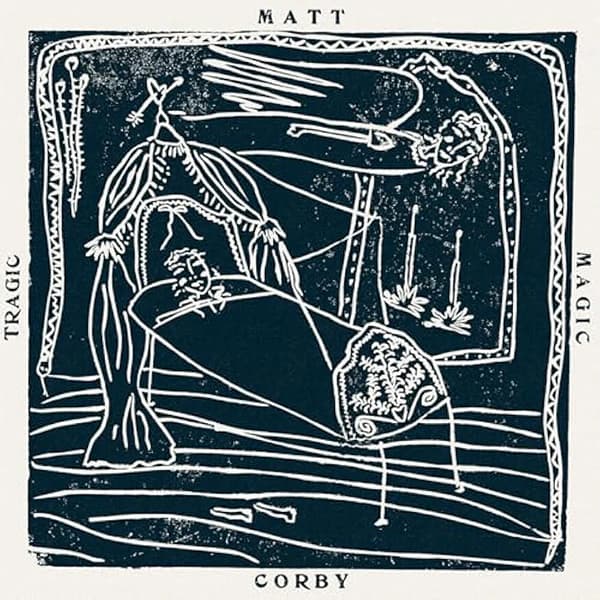
Artist: Matt Corby
Album: Tragic Magic
Australians hate a smart arse. But they’ve made a special exception for Matt Corby. Not only does he have a spectacular, once-in-a-generation voice but he plays everything on the album…
And what do you get an artist of such rare and varied talents? His own studio, of course. And before you continue to maintain that Matt’s a great bloke, I’ve gotta tell you – he’s now also a producer of some renown. Artists such as Gretta Ray and Genesis Owusu have recorded sessions at Matt’s Byron Bay studio with Matt at the helm.
But the latest album, Tragic Magic, is all about Matt Corby. Recorded largely in his purpose-built studio and shaped alongside producer, co-writer and mix engineer Chris Collins, the album leans into vintage textures without disappearing into nostalgia. Vintage gear alongside modern classics help to support the retro DNA, while contemporary production and mixing techniques ensure everything still lands with impact on modern systems. AudioTechnology sat down with both Corby and Collins to dissect the recording chain, studio philosophy and sonic decisions behind one of the year’s most distinctive Australian releases.
BUILT FOR FLOW
When Matt Corby designed his studio, the brief wasn’t commercial flexibility, it was creative momentum: “When we built this place, it was mainly for my workflow,” says Corby. “I pretty much play everything on the records. There’s never a lot of live simultaneous recording, so we didn’t need huge amounts of isolation.”
The project became a crash course in acoustic design. Working alongside a builder friend with experience constructing mixing rooms and mastering suites, Corby immersed himself in everything from non-parallel wall geometry to subfloor construction and specialised adhesives.
“I kind of half knew all that stuff, but I never really understood the detail required to create a space. Even down to the glue we used and the type of gyprock.”
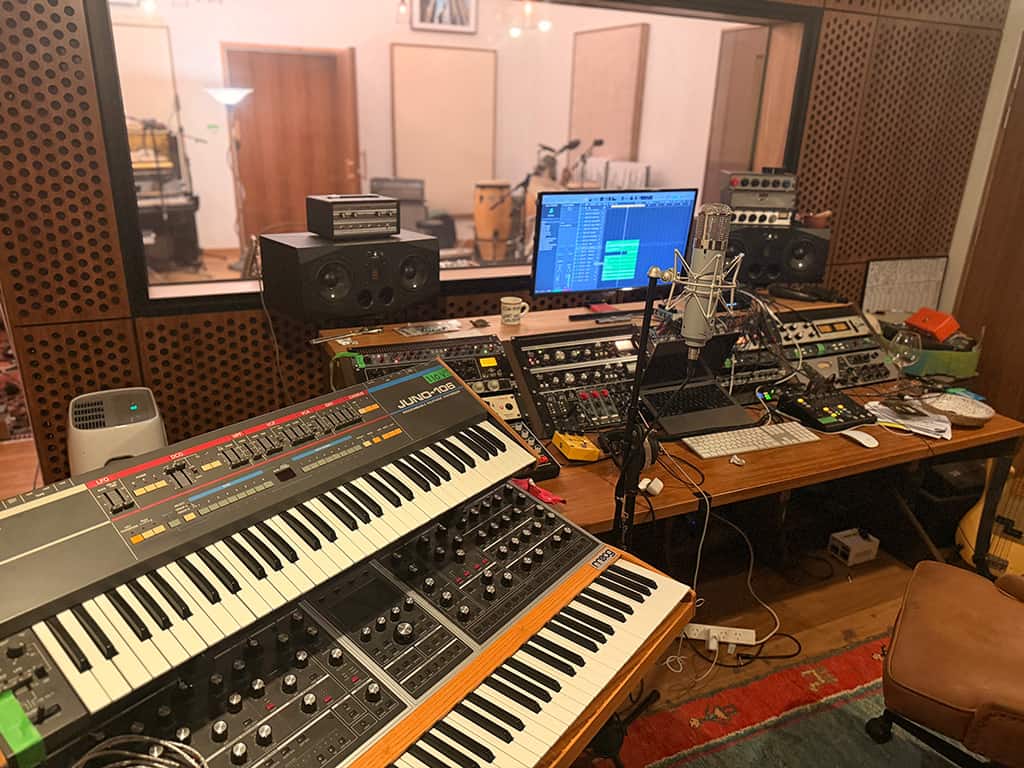
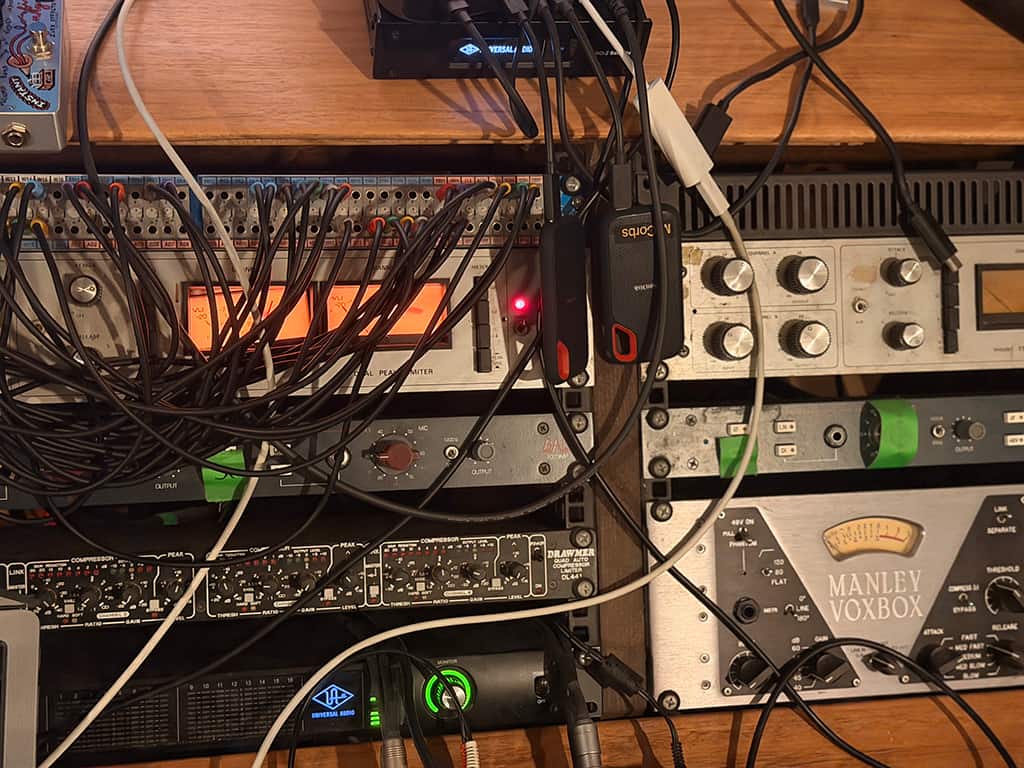
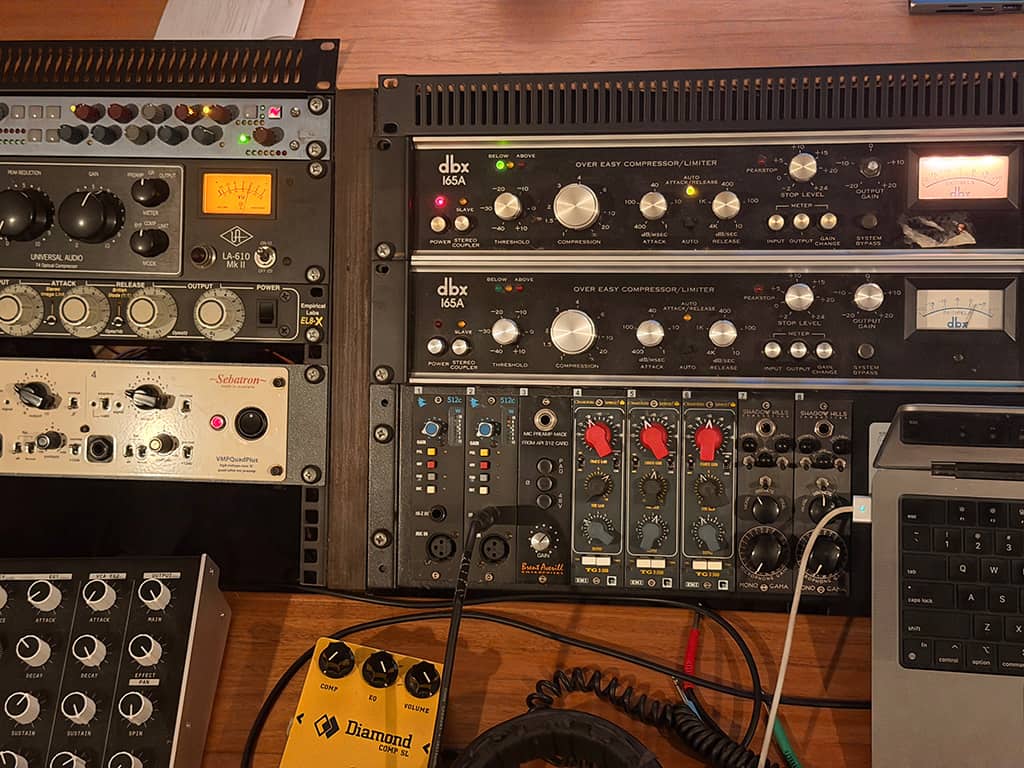
A 30-channel wallplate links the live room and control room, while the studio centres around a Universal Audio Apollo-based workflow supplemented by an expanding collection of carefully chosen outboard.
Corby laughs that he’d love a console-centric setup.
”I’d love an API 1608, but I don’t have that sort of money sitting around for a console like that.”
Instead, the studio reflects a modern reality: largely in-the-box production, supported by select analogue front-end pieces accumulated over a decade.
“The first thing I bought was a dual-channel BAE 1073 mic pre and a Urei 1178 limiter. That was it for a long time.”
THE MIDDLE GROUND
Like many self-taught producers, Corby’s recording philosophy has swung between extremes.
“When I first started recording, I was making these huge broad-brush decisions. Then I went through a phase where I wanted everything as clean as possible.”
Today he occupies what he describes as the middle ground: “Now I know how to get everything coming through the desk nicely, coming into the computer and speakers feeling great. Once the engineering fundamentals are there, I can make creative decisions intentionally for the sound I’m after.”
That philosophy extends to microphone selection: “The better sounding the instrument is, the shittier the mic I use.
“I don’t come from a technical background. Everything’s an emotional decision. Once your gear reaches a certain quality level, it really doesn’t matter that much anymore.”
The challenge isn’t fidelity. It’s finding the combination of player, instrument, microphone and room that creates a reaction.
“As long as the relationship between the instrument, the player and the microphone feels right, anything’s possible after that.”
DRUMS IN MOTION
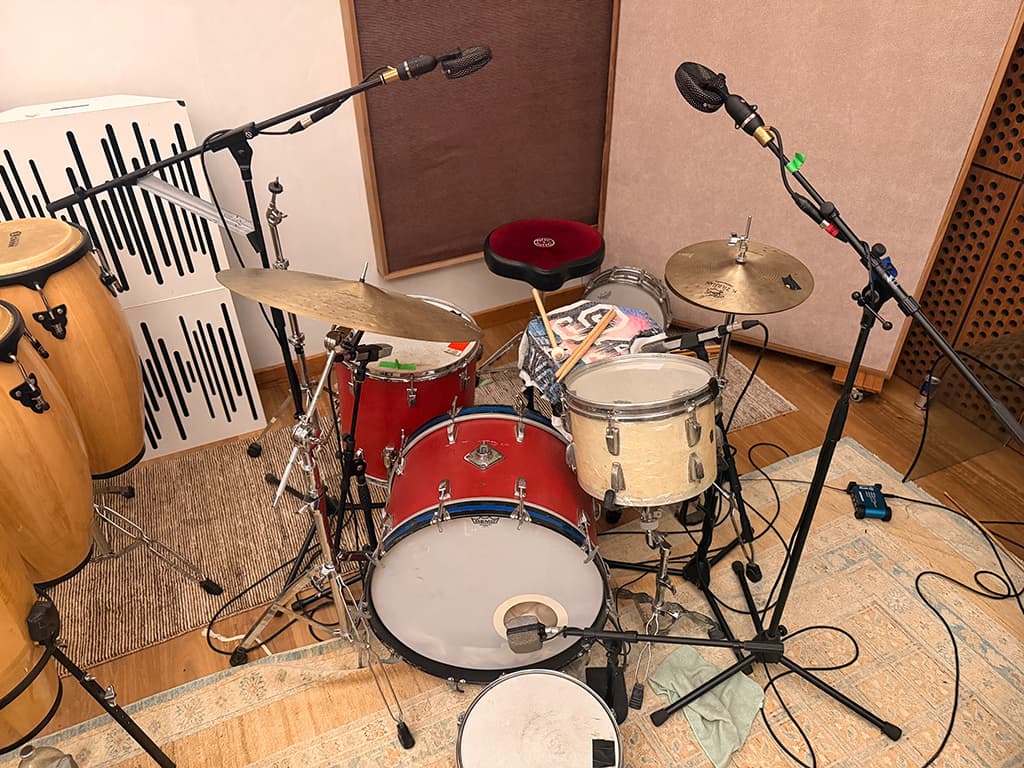
Corby’s drum recording approach has evolved: “The drum sound has gone from three mics to eight mics and now it’s back to five.”
The current setup often centres around a vintage AKG D12 mic. Around it sit a pair of Sennheiser MD441s and Coles 4038 ribbons as overheads, feeding compressors including dbx 165As and the 1178.
A recent acquisition, a Black Lion Audio Level-Loc, has Corby excited about exploring dirtier territory. “I want to put a SM58 somewhere in the room and absolutely crank the Level-Loc. You can sort of do it with plug-ins, but it’s not quite the same.”
Yet despite the gear talk, Corby repeatedly returns to performance.
“There are plenty of times I’ve recorded drums with exactly the same chain and it just doesn’t work because of how the drummer is playing. Then everything has to change.”
BETTER REDD
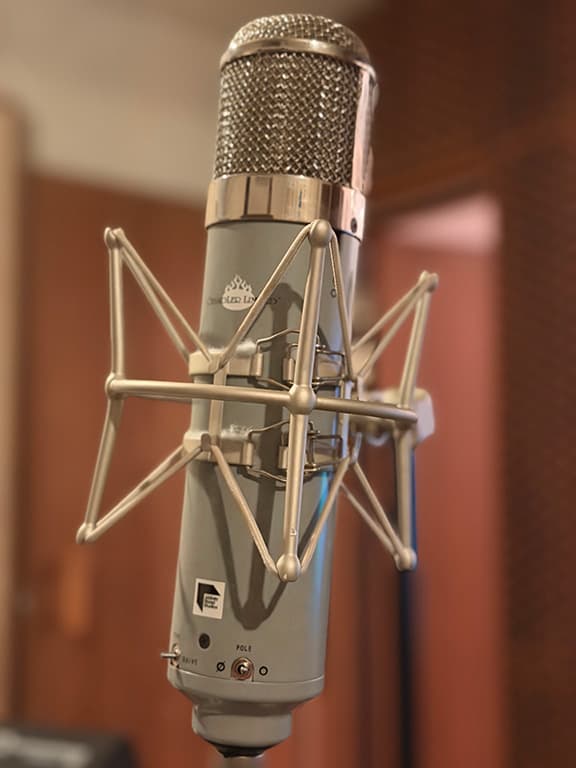
One microphone appears throughout discussions of Tragic Magic: the Chandler REDD Microphone. Famously, the REDD mic packs a classic vintage valve preamp onboard. For Corby, it’s become the nexus of the studio: “I use that Chandler REDD mic all the time for vocals. The preamp in that microphone is ridiculously good.”
The microphone regularly wins shootouts against more conventional choices including a Myburgh M1, Coles 4038 ribbons and Sennheiser dynamics. Most singers who pass through the studio end up on the Chandler – “it wins almost every time.”
Collins noticed the same thing during the album sessions: “It’s pretty much the heart of how his studio sounds,” he says. “The Chandler REDD is always on. It’s the room mic. It’s the vocal mic. Even when we’re recording piano with close mics, that microphone is still sitting in the middle of the room.”
The exception came during sessions with Greta Ray, where a Coles 4038 unexpectedly proved the perfect emotional fit: “The way it reacted to her voice just did something emotionally,” says Corby. “It just felt right.”
We found a vocal sound halfway through mixing that made Matt want to re-sing half the album
RETRO WITHOUT RULES
Unlike previous Corby projects, Tragic Magic wasn’t built around a tightly defined sonic brief.
According to Collins, the album emerged almost accidentally: “We were just hanging out and Matt said, ‘I’ve got two weeks. Do you reckon we should just make heaps of songs?’”
Songs arrived from multiple locations, collaborators and sessions. Some were co-written between Corby and Collins. Others began with songwriter Nat Dunn. Dann Hume co-produced three songs on the record with Matt (‘War To Love’, ‘Big Ideas’, ‘Locked In’), which was written in Australia and then worked on remotely between Matt’s studio and Dann’s in Wales. All up: different studios, different workflows and different origins eventually produced enough material for a record.
It was then Collins recognised a new responsibility: “I realised my role had become helping make this sound like a cohesive album.”
Certain songs pointed towards a common aesthetic. “‘King of Denial’ and ‘Is It Healthy’ were telling us how the record should sound. Retro became a big word.”
Not simply retro-inspired.
“Maybe sonically we could be a little more obvious with it than previous records.”
The shorthand became ‘soul records’ and ‘surf films’. Those references guided decisions from instrumentation through to mix treatment.
SPRING THEORY
If one effect defines Tragic Magic, it’s spring reverb. Collins reached for his old Sound Workshop spring reverb almost immediately: “As soon as I threw the drums through that, we were like, ‘There it is. That’s the sixties drum sound.’”
The same happened with vocals: “You can spend ages trying to make things tapey and vintage, but then you put them through a spring reverb and suddenly you’re back in that world.”
The spring wasn’t simply an effect. It became a lens through which the entire production was viewed. From tracking onwards, sounds were evaluated according to how they interacted with those vintage reflections. “It helped set the tone from the very start.”
THE PARTS MATTER
While many productions chase vintage aesthetics through processing, Collins deliberately avoided relying on sonic degradation. His challenge was making the album feel old while still sounding exceptional: “My daily battle is making something feel warm and fuzzy but actually sound super-clear.”
The solution wasn’t found in filtering highs or crushing everything through tape emulations. Instead, it came from arrangements and instrument choices: “The things that make it feel retro are the parts themselves.”
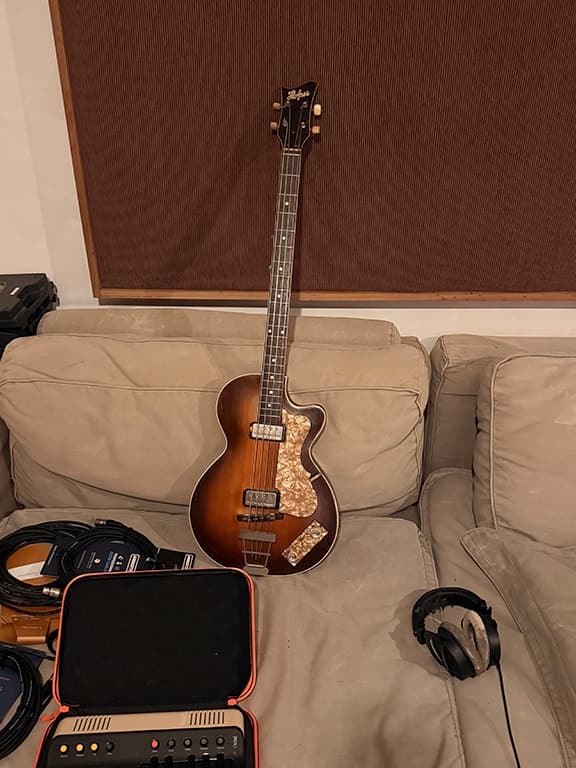
A Hofner violin bass became a recurring weapon. (“That’s never going to sound modern!”) Drums were tuned higher than contemporary norms. Hardware synths replaced virtual instruments. Old pianos remained central.
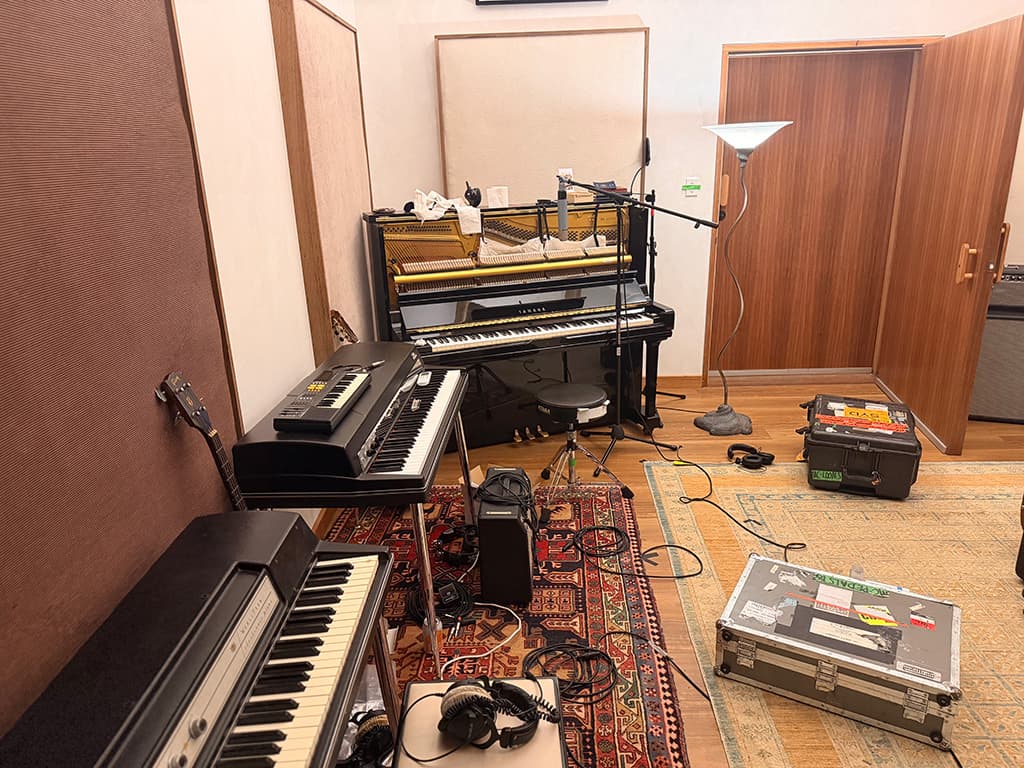
At Corby’s studio, a Yamaha upright contributes heavily to the sonic fingerprint. Collins’ own studio features a characterful mini grand. (“Piano is really the heart of Matt’s sound.”)
Vintage-flavoured synthesisers including a Prophet-5, Roland Juno and a Moog One rounded out the palette: “Once Matt starts playing everything, that’s where the cohesion comes from,” says Collins. “You instantly hear it’s him.”
FINDING THE VOICE
Perhaps the most revealing moment occurred during mixing. Collins had taken several weeks away from the project following the birth of his child. When mixing resumed, he approached the material with fresh ears: “We found a vocal sound that gave Matt confidence.”
Historically, Collins had treated Corby’s voice conservatively. “My thinking was always that Matt’s voice is so special that the best thing you can do is get out of the way.”
This album changed that. Heavy saturation, spring reverb and carefully layered tape-style processing created something new. “The more saturated it got, the better it sounded.”
Halfway through mixing, Corby made a surprising decision: “He wanted to re-sing a lot of the album.” The vocal sound itself inspired the performances.
“When he heard how saturated and reverby everything was, he realised he could sing as loud as he wanted and it would still sound cool.” The result was what Collins affectionately describes as Corby “giving it the berries”.
Powerful lead vocal performances replaced more restrained originals across chunks of the record.
ANALOGUE INSTINCTS
Neither Corby nor Collins romanticise vintage equipment for its own sake. Both remain deeply practical.
Corby’s guitar recordings are remarkably straightforward. A Fender Princeton Reverb or vintage Vibro Champ. A Sennheiser MD441 close. A Myburgh M1 positioned somewhere in the room. The magic lies in the interaction.
”The relationship between the volume of the amp, the room and that room mic creates something really special.”
Similarly, Collins mixed largely in-the-box while chasing analogue character through saturation, compression and performance-driven decisions.
Several tape emulation plug-ins played key roles, though neither producer points to a single magic bullet. Instead, the effect came from cumulative layers: “A lot of different tape plug-ins doing little things.”
The biggest contributor may have been less glamorous. Collins’ spring reverb unit features an overload circuit: “If you drive the input hard enough, the spring itself distorts.”
That distortion became part of the album’s identity: “The spring reverb crunch ended up being a huge part of the thickness.”
PRESERVE THE FEELING
Throughout conversations with both Corby and Collins, one theme repeatedly emerges: speed. Everything in their studios is permanently wired and ready. Microphones remain set up. Instruments stay within reach. Recording requires little more than pressing Record.
For artists who rely heavily on instinct, the approach is essential: “What gets Matt excited is chords,” says Collins. ”Once he’s excited, you’ve got to capture it.”
The studio exists to remove friction between inspiration and documentation: “Matt relies on a feeling,” Collins continues. ”If the studio isn’t ready, the feeling might disappear.”
Listening to Tragic Magic, it’s hard not to conclude that’s exactly what makes the record work.
For all the discussion of spring reverbs, tube microphones, tape saturation and vintage instruments, the production never feels like an exercise in nostalgia. The technology serves a simpler goal: preserving the emotional spark that happened in the room.
As Corby puts it, once the fundamentals are handled, everything else becomes a question of intent.
“It’s always just about finding the right combination of things that makes stuff jump out of the speakers.”












RESPONSES