


Recording A Live Session with The Grogans
A walkthrough with Melbourne engineer/mixer/producer Callum Edwards.

20 November 2025
Story: Callum Edwards
Capturing a band live in the studio is always a balancing act: energy versus control, vibe versus precision. When The Grogans approached me about recording their entire upcoming album live – with extra members and cameras rolling – I knew it would be one of those sessions where the atmosphere mattered just as much as the gear, and probably more so.
MAINTAINING AUTHENTICITY
I’ve been a fan of The Grogans for a while now, and I was lucky enough to get a sneak peek of the upcoming album before the session to see what we’d be working on. Over video calls we discussed the sound that we thought would work best for the project; make it sound like you’re seeing them live. While we had access to some pretty crazy gear at the studio, the idea was to keep it simple, be authentic to the sound of the album, as well as authentic to what the band sounds like live.
The Grogans record and mix everything themselves, and the album mixes sounded great – raw, roomy, lots of effects, yet clear and accessible. So it was definitely a priority to try and achieve a similar sound with mic choice and mix decisions.
Whenever I do a live session where video is being captured at the same time, I find it extremely important to consult with the production team (in this case, Creepy Baby Productions) and see how we can best achieve a product that both looks and sounds amazing. Discussions around mic placement, baffles and clearways were all important conversations to have before getting stuck into the fun stuff.
NEW SING SING
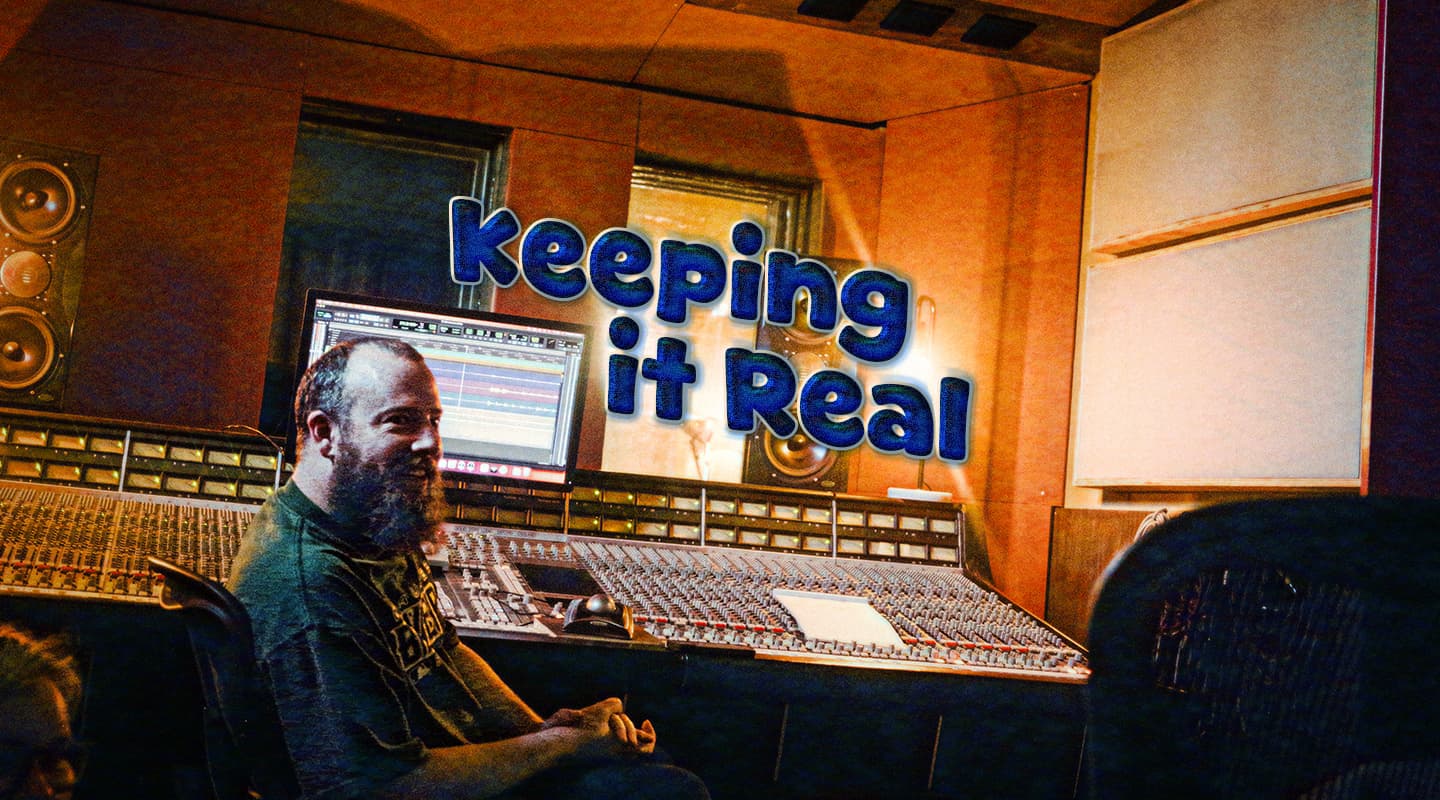
I’ve been working primarily out of Sing Sing Recording Studios for years now, through all three iterations of the business. The newest incarnation, set up in Northcote by Aaron Dobos and Thomas Keating, was the perfect place to capture this session, as both the gear and the live room are incredible.
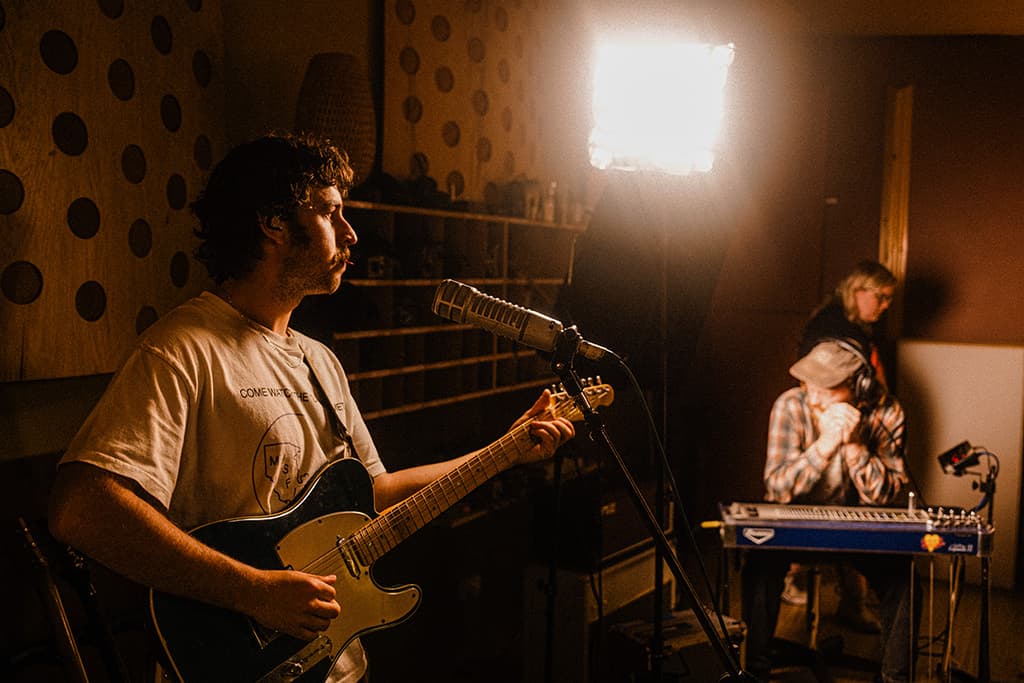
The live room has a very comfortable, retro feel to it – slightly reminiscent of a 1970s LA studio with its wood panelling and lighting. It’s a perfect fit for the style of music the Grogans play. The fact that the studio also has a separate amp room, which meant we could capture the amps turned up loud without creating too much spill, was a big bonus.
THE GEAR
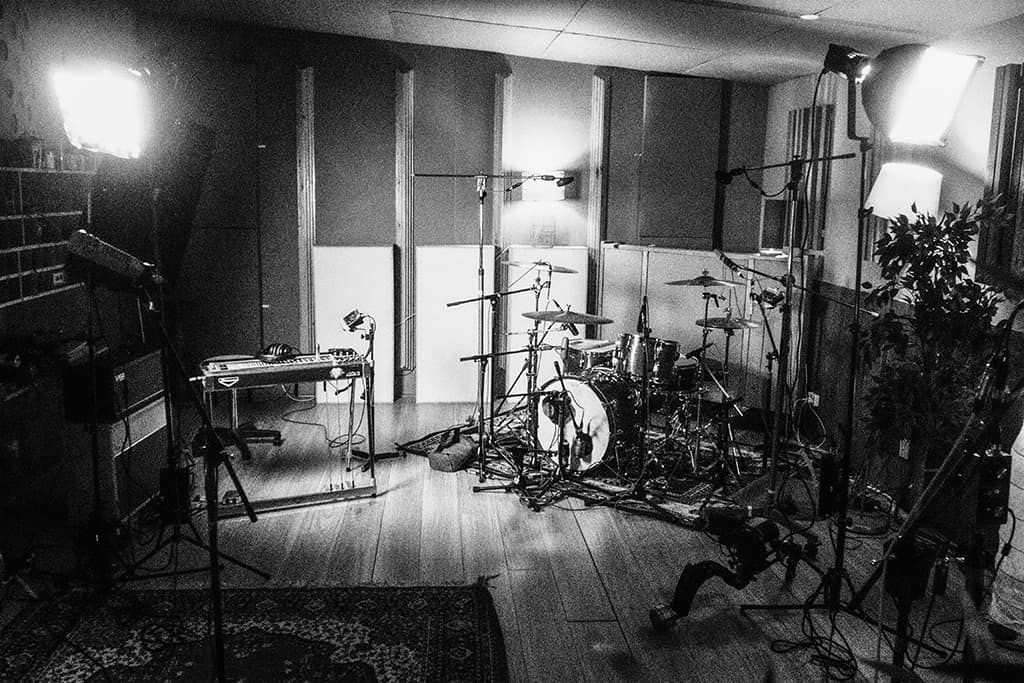
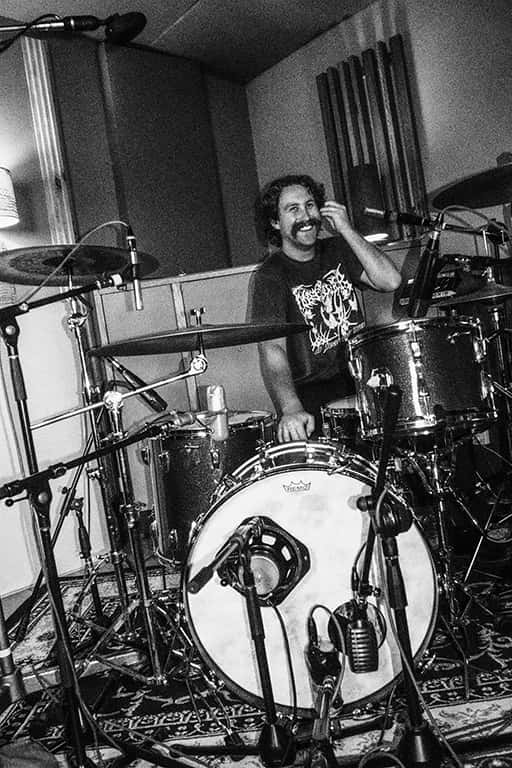
Drums: Starting with the drums (the Sing Sing house kit – a 1960s Ludwig ‘Super Classic’), I kept the mic setup fairly basic:
- Neumann FET 47 and Beyerdynamic M380 on the kick
- SM57s on snare top and bottom
- Sennheiser MD421s on the toms
- AKG 451s on hats/ride
- Sony C-37B for a knee mic (this mic super compressed was a big part of the final drum sound)
- Coles 4038s for overheads (to achieve that more lo-fi garage rock sound The Grogans play, I didn’t want anything too bright). I found I was getting enough spill through other mics that it made the Room mics I set up a bit unnecessary, so I scrapped them.
I ran these mics through a mix of Neve, SSL and JLM preamps, adding minor touches of dynamic control with Distressors, SPL Transient Designers, Al Smart C1’s, UREI 1176s among others.
Guitars: The guitars were fairly simple as well. I like to generally blend a couple of different mics on amps, allowing me to achieve warmer sections or more in-your-face sections with a simple fader slide. For both Quin and Angus’ amps I put a SM57 and Royer 121. To get some low end without a bass player, Quin’s signal was split into some pedals and sent to an Ampeg fridge, which was mic’d up with a Fet 47. I ran all of these mics through GML and API pre’s with no outboard gear.
Vocals: To get vocal sounds similar to the album, we went for a mix of Sennheiser MD421s, Electro-Voice RE-20s and AKG 441s. This meant we could achieve good clarity and rejection, while also having some more ‘vintage’-looking mics for the filming. On all of these we used Neve 33115 preamps, and Quin and Angus’ vocals went through an Unfairchild.
THE TRACKING
As we wanted to be as authentic to the live show as possible, the aim was to get everything in a single take and not splice between takes. Because of this, we didn’t use a click and relied on the tightness of the band. Impressively, we got all songs within two or three takes.
When we first started tracking there were a few brief mic changes. I initially had Neumann M49s up to capture the room sound, but quickly realised they were unnecessary and in the way of the cameras. I also started with an Electro-Voice RE20 for the kick-in mic, though that wasn’t quite hitting the spot.
Generally, I use quite a few baffles when recording a band at Sing Sing, especially with vocals being tracked at the same time as the drums, but after some discussions with the film crew, we thought the baffles would get in the way too much. Therefore, there was a bit of time managing the spill from the drums. There was some light gating on vocals, as well as some subtractive EQ to make sure cymbals weren’t too present in the vocal mics.
THE MIXING
Like the rest of the session, I wanted to keep the mix straightforward. I mixed all tracks in the API Room at Sing Sing, using Focal Twin 6 monitors and the API The Box 2 console. The room also runs a Trinnov Dmon6 system.
I like busses, maybe a little too much – but it keeps my workflow tactile and flexible. My main mix template is set up to smoothly work with the API console. I send out of Pro Tools into the console through busses, which is then treated with some light compression from the Unfairchild. I like to have the hardware compression on the mix at this stage just to very subtly glue it all together.
After the Unfairchild I return to Pro Tools through a Burl B2. This is fed into my mix bus where I treat the sound some more, before bussing out to one more channel – a limiter which I put in and out during my mix to give me an idea of a mastered level. This setup keeps the workflow tactile and gives me the colour of the API console and Unfairchild, while retaining the flexibility of digital recall.
This was definitely a mix where it was all faders up from the start rather than treating an element at a time. All elements were reacting to each other so much that it was better to treat it as a whole.
FUN SESSION
This was a really fun session to be a part of. The band was happy to be guided but also knew exactly what they wanted out of the session. It was fun to capture the classic Grogans sound whilst creating some unique tracks with the addition of extra members.
Sessions like this show that it’s not all about fancy gear and perfect, no spill environments. Capturing the energy in the room will always be the most important thing in a recording session for me.




RESPONSES