



• Latest Issues
  • Reviews
  • Tutorials
    • Microphones
    • On The Bench
    • Thinking Outside the Box
    • View From The Bench
  • Features
    • Acoustics
    • Broadcast
    • DIY
    • Field Recording
    • Game Sound
    • Interview
    • Live Sound
    • Mastering
    • Mix Masters
    • Music Business
    • Name Behind the Name
    • Post Production
    • Recording
    • Studio Focus
    • Technical
  • Regulars
    • Fresh Produce
    • Top 5
    • Top 5 Live
    • Top 5 Template Tools
  • Videos
  • Free Stuff
  • By Gear
    • Audio Accesories
    • Audio Mixers
    • Headphones + IEM
    • Interfaces
    • Location Sound
    • Microphones
    • MIDI Controllers
    • Mobile/iOS
    • PA Systems
    • Software + Plug-ins
    • Studio Monitoring
    • Studio Outboard
    • Synthesizers + Keyboards
  • By Interest
    • Acoustics
    • Broadcast
    • DIY
    • Field Recording
    • Game Sound
    • Live Sound
    • Mastering
    • Music Business
    • Name Behind the Name
    • Post Production
    • Recording
    • Technical
    • Thinking Outside the Box
  • By Brand
  • Subscribe
  • Contact Us
  • Advertise
Previous
Issues 98
0 SHARE
Read Next: Three Calrec Launches to Celebrate 60 Years
  • Home
  • /
  • Reviews
  • /
  • Review: Eris Pro 4

Review: Eris Pro 4

Presonus’ baby 4.5-inch coax monitors are tailor-made for Atmos home studios.

By Christopher Holder

17 September 2024

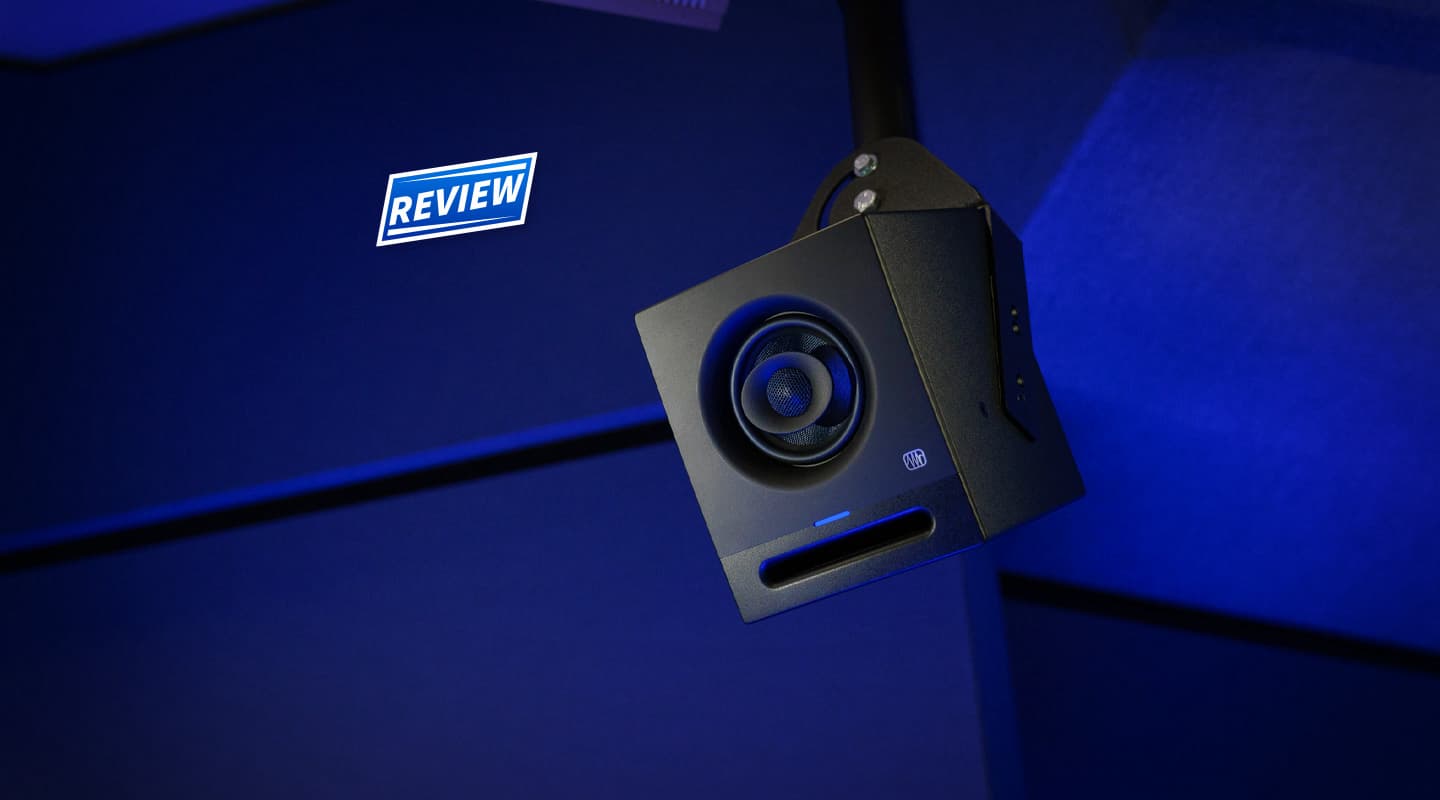
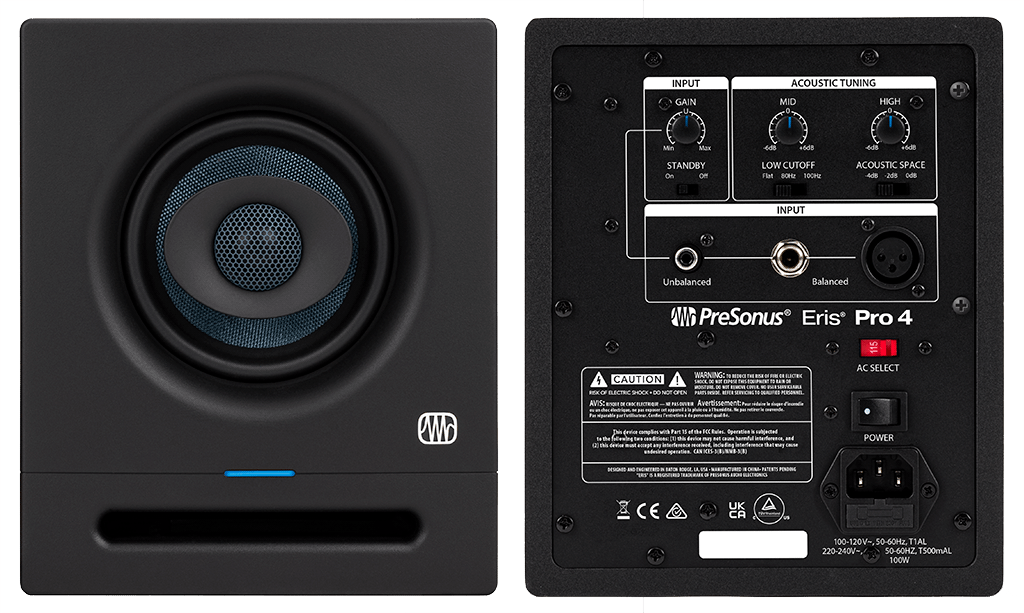
The new Eris Pro range of coax studio monitors continue the Presonus active coax tradition, initiated by the Sceptre 6 and Sceptre 8. The difference with Eris Pro series is the 6 and 8 models are joined by the Eris Pro 4. The 4 is the baby of the range, and that’s the point. It’s small enough and cost effective enough that it’s a great candidate for a spatial audio studio setup – especially in rooms that don’t have oodles of space. In fact, Presonus makes it clear that the Eris Pro 4 is its anointed model for spatial by giving the enclosure wall and ceiling mounting points. From a physical point of view, Eris Pro 4 is an awesome candidate for smaller studios trying to do Atmos.

From an acoustic design perspective, a coax driver arrangement makes a lot of sense for multi-channel systems. The promise of coax is a two-way design emanating from the same point source, providing phase accurate performance. When you’ve got 9, 11, 13 or even 15 of these guys in a space, all within two metres or so of your ears, phase accuracy is a big deal.

So there’s plenty going for the Eris Pro 4s if you’re seriously considering an Atmos room on a budget. But you still want them to sound good, right?

SPECIAL (POINT) SOURCE

The Eris Pro 4s sound good. They’re super-snappy but not bitey, thanks to the silk-dome one-inch tweeter, 4.5-inch driver and the coax arrangement. They’ve got a surprising degree of bass extension for such a compact unit and can more than ably reproduce the punch and snap of a kick drum, even if they’re not in the business reproducing the thump and rumble.

If you’re thinking about buying the Eris Pro 4s as a stereo pair for a small desktop monitoring setup, then you won’t regret it – even if that’s a hotly contested end of the market. But let’s return to the central theme of immersive monitoring:

If you’re planning to buy nine Eris Pro 4s for a 7.1.2 spatial system then you’re up for around A$4500. You can buy a very nice pair of studio monitors for that sort of outlay. It does make you think about how committed you are to the multichannel dream. After all, great stereo does sound incredible.

I think what I’m saying is: if you’ve worked with good six- or eight-inch studio monitors then you’re unlikely to be blown away by the comparatively diminutive Eris Pro 4s, especially as a stereo pair.

But (and this is a huge ‘but’), when you line up nine Eris Pro 4s in a properly tuned and configured Atmos space and listen to well-crafted spatial mixes, then you won’t be thinking about whether you’re a Genelec guy or a PMC person… you’ll just be slack-jawed with amazement. Atmos music has the capacity to sound absolutely phenomenal and the Eris Pro 4s provide a cost-effective means to getting there. They have what it takes to give you the immersive imaging (both in the horizontal and vertical domains) that makes Atmos so bloody good.

This might sound like I’m damning the Eris Pros with faint praise, I’m not. They’re not as involving to listen to as my stereo pair of eight-inch, three-way coax monitors and neither did I expect them to be. But neither did I expect to have a 7.1.2 Atmos monitoring setup in my home studio, and I do, in no small thanks to the Eris Pro 4s. Without the Eris Pro 4s, the exercise would otherwise be unaffordable and unpractical (bigger monitors wouldn’t fit).

Well done Presonus.

NEED TO KNOW

Eris Pro 4
Studio Monitors
  • PRICE

    A$499 each

  • CONTACT

    Link Audio: linkaudio.com.au

  • PROS

    • Small format
    • Great imaging
    • Mounting points

  • CONS

    • Commensurately small sound

  • SUMMARY

    Thanks to the Eris Pro 4’s compact size, point source imaging, ease of mounting and price, they’re the heroes of my ‘Atmos studio on a budget’. They shine in this application but are just as happy in a more conventional stereo or 2.1 arrangement with the Eris Pro 10 Sub.

POINT 1: SUB

You can’t have a proper spatial monitoring setup without a sub and Presonus has you covered. The Eris Pro Sub 10 is a 10-inch, front-firing sub using a glass composite cone and a ported bass reflex design. It packs a 170W (RMS) Class AB amp and extends down to a quoted 20Hz. It’s a good combo for the Eris Pro 4 in a 2.1 arrangement or a larger multi-channel setup.

But neither did I expect to have a 7.1.2 Atmos monitoring setup in my home studio, and I do, in no small thanks to the Eris Pro 4s
FEATURES

  • Single point-source coaxial design for wider sweet spot and better phase alignment
  • 4.5-inch woven composite low-frequency driver
  • 1-inch, ultra-low mass, silk-dome, high frequency driver
  • Crossover Frequency, 3.4kHz
  • 80W, Class AB amplification
  • 50Hz to 20kHz frequency response
  • 99dB Peak SPL (@ 1 meter)
  • Acoustic Tuning Controls:
  • Acoustic Space (flat, -2, -4dB)
  • High Frequency (±6dB, centre 10kHz, continuously variable)
  • Mid Frequency (±6dB, centre 1kHz, continuously variable)
  • Low Cut (Flat, 80Hz, 100Hz @ -12dB/octave)
  • XLR and 1/4-inch TRS balanced rear inputs
  • RCA unbalanced rear-panel input
  • Provisions for wall and ceiling mounting (mounts sold separately)
  • Protection:
    • RF interference
    • Output-current limiting
    • Over-temperature
    • Turn-on/off transient
    • Subsonic filter
    • Power Saver mode (engages after 40 minutes)

BIG DOG? BIG BACKYARD

As AT’s founding editor, Greg Simmons, said to me years ago: “a big dog needs a big backyard”. In other words, small-format studio monitors will be easier to accommodate in a small home studio, and will give you less trouble with certain frequencies getting out of hand. Large monitors need more real estate to stretch their legs.

Dolby stipulates a minimum of 1.5 metres distance from loudspeaker to monitor position in an Atmos setup. So, in reality, you’re looking at a minimum of 4m x 4m room. Still, that’s quite a small space/volume to accommodate nine or more loudspeakers, which is why something compact, such as the Eris Pro 4s, are way more appropriate than a bunch of six- or eight-inch monitors. A single sub (such as the Eris Pro Sub 10) will round out the frequency spectrum.

A calibration tool is all but mandatory for a multi-channel setup. As Dolby puts it: “Volume, phase, frequency, and time alignment of audio is always important in a control room whenever you have more than one speaker, and to an even greater degree in a Dolby Atmos environment.”

In my case, I used the Sonarworks SoundID system which shipped with the Audient Oria interface.

RESPONSES

Leave a Reply Cancel reply

Your email address will not be published. Required fields are marked *

More for you

Filter by
Post Page
Reviews Hotone Issue 110 Headphones Sennheiser Audio interface Antelope Audio Sonarworks Issue 109 Issue 108 Waldorf Solid State Logic (SSL) Audio-Technica Issue 107 Studio Monitors KRK Kali Audio Issue 106
Sort by

Review: Sonar X3 (Producers Edition)

25

Review: Hotone Freqlux

19

Review: Sennheiser HD480 Pro

19

Review: Antelope Audio Discrete 8 Oryx & Zen Quadro Synergy Core

19

Review: Sonarworks SoundID Reference Virtual Monitoring Pro

19

Review: Universal Audio Volt 876

19

Review: Waldorf Protein Wavetable Synth

19

Review: SSL Super 9000 Channel Strip

19

Review: Audio-Technica ADX7000

19

Review: KRK Kreate 5

19

Review: SSL Revival 4000

19

Review: Kali Audio SM-5 Studio Monitors

19

preview
preview

Free! Get AudioTechnology magazine sent straight to your inbox every month

This field is for validation purposes and should be left unchanged.

preview
  • Latest Issues
  • Reviews
  • Tutorials
  • Features
  • Regulars
  • Videos
  • Free Stuff
  • By Gear
  • By Interest
  • By Brand
© 2026 AudioTechnology magazine.