

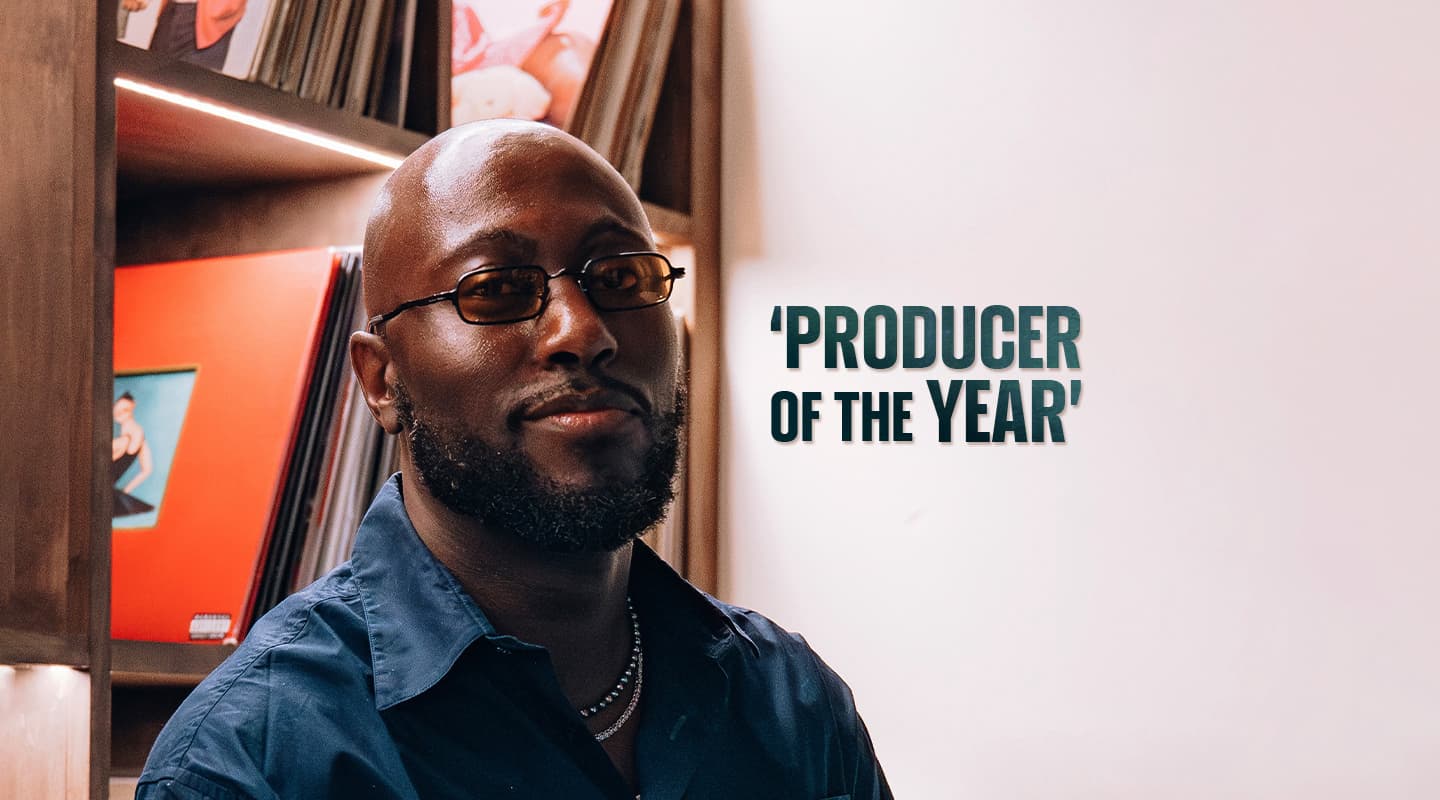
Nineteen85 Interview
Paul Jefferies, aka Nineteen85, came to fame thanks to 2013 Drake production credits, and has followed a very distinctive career path ever since.

By Paul Tingen
23 July 2026
“I’ve been teaching myself the art of minimalism in my production approach, to some degree by necessity because of the gear I’m using, particularly when travelling, but also because if you go back to these classic songs and albums from previous generations, most of them were pretty simple. There would be a guitar, a synth, bass, drums, perhaps a string section; the average song would not have more than five things happening at once. But today, with the freedom of having as many tracks and effects as you want, you can get lost in layering and sonic details. So I’ve gone back to using fewer tracks and fewer plugins.”
Speaking is Paul Jefferies, better known as Nineteen85, and famous for his writing and production work for Drake, Travis Scott, Mariah Carey, Ed Sheeran, 21 Savage and Mariah the Scientist. Ever since his breakthrough in 2013 with his involvement in Drake’s major hits ‘Hold On, We’re Going Home’ and ‘Too Much’, Jefferies has been working on the cutting edge of modern R&B, rap and pop. However, his more recent productions have strong influences of the 1980s, particularly in his synth sounds, giving the impression that Nineteen85 likes to party like it’s, well, 1985 – while also incorporating the punch and directness of the music of today.

Artist: Drake
Album: Views

Artist: Drake
Album: Nothing Was the Same
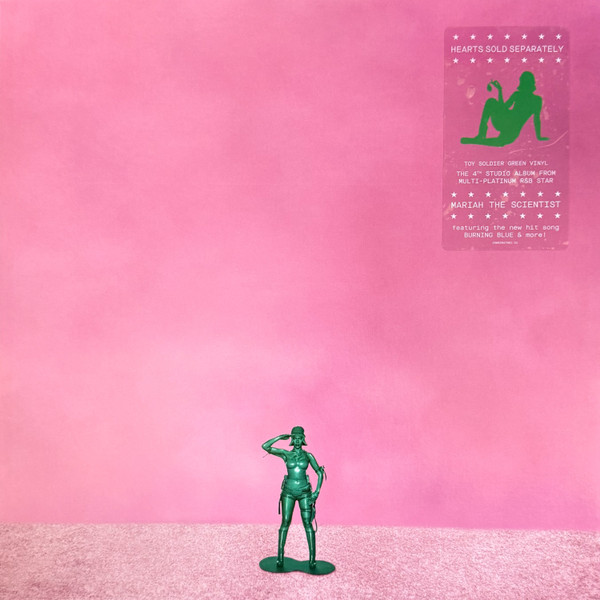
Artist: Mariah the Scientist
Album: Hearts Sold Separately
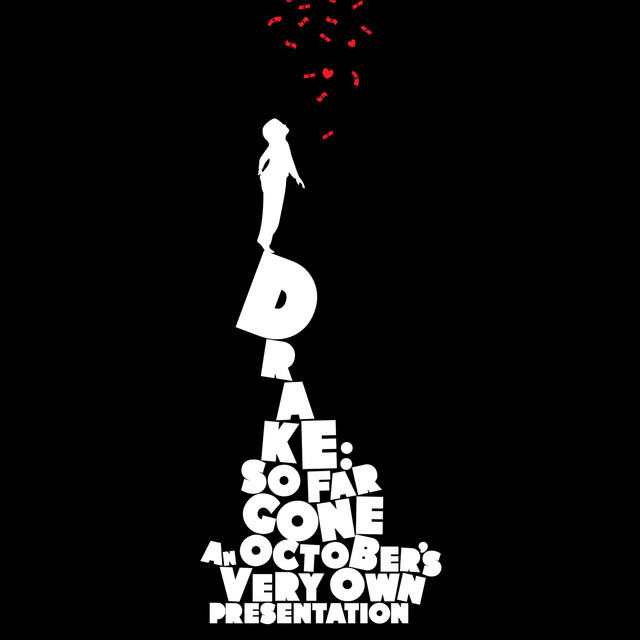
Artist: Drake
Album: So Far Gone
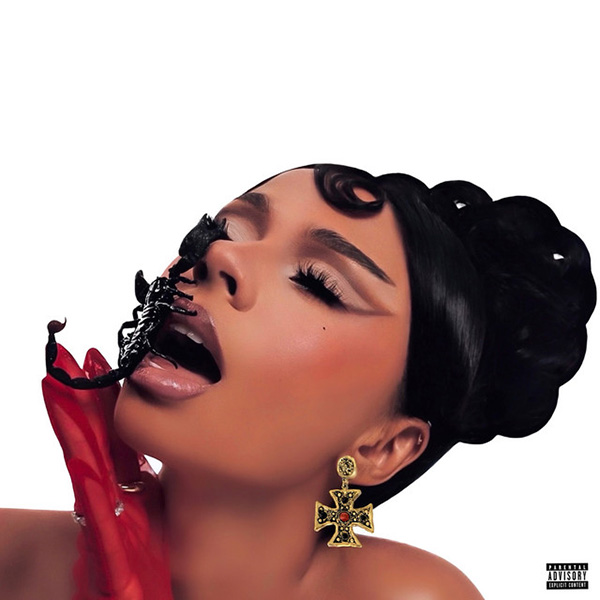
Artist: Mariah the Scientist
Album: To Be Eaten Alive
“By default, I gravitate to the synths sounds that were prominent in the ’80s and ’90s. They were so clean and rich. So much R&B and pop that I grew up is based on that. I used to use the original keyboards, like the Yamaha DX7, and lots of Roland stuff. But because I’m travelling so much, I’m now using plugins 98% of the time. If I’m in a studio, I might pull up whatever keyboards and analogue gear they have, but it’s hard, because the original keyboards never sound exactly the same. A particular keyboard may be slightly detuned, or the chorus is a little more prominent in one keyboard than the other. Everything is on a laptop these days, and I use things like the Roland Cloud package, with many vintage sounds. There’s a great DX7 replica in the Roland Cloud, as well as in the Arturia package.”
BIRTHDAY BOY
Jefferies took on the producer name Nineteen85 because it’s his birth year. It’s said that it’s all in the name, and intentional or not, the fact is that Jefferies’ entire career is based on old-meets-new aesthetics, and on combining very divergent influences. This included starting out on guitar and playing punk-rock when growing up in a suburb of Toronto, Canada.
“When I was 11-12 years old I was in a band with some friends, and learning how to write songs. We were influenced by the Seattle grunge movement, and bands like Nirvana and Soundgarden, and also the more pop alternative rock of Nickelback. I also wanted to become a DJ. My high school girlfriend’s older brother was a DJ, and one day I knocked on his studio door, wanting to ask him to teach me to DJ. Before I could say anything he asked, ‘I hear you play instruments, you mind putting some guitar on this song?’ I did, and then he asked me to put bass on, and then a drum beat using the pads on a drum machine. He then said, ‘OK, you just produced a track’ and I was like, ‘what???’
“This was maybe 2001/2. I was blown away, also because I wasn’t planning to get into production. I wanted to be a DJ, but instead got hooked on production. I didn’t have the money to buy a drum machine, so got a cracked version of Steinberg’s Cubase, and started making beats. A few years into teaching myself how to produce using Cubase, I started working with local artists. I had some songs on the radio with some local artists and got my name around, but this still didn’t translate in a big break. I would make a couple of hundred bucks here and there, barely enough to buy equipment.
“I was still working a day job to make ends meet. It took eight to nine years before I had any real commercial success. My parents were not too happy with me trying to make it in music, because I come from a generation when the word ‘artist’ was usually preceded by the word ‘starving’. Everybody knew somebody who had been an artist or part of a band trying to make it big, and things never panned out. Fortunately, I was moving into a generation that could use the Internet and MP3 to take your music from your house to the rest of the world.”
DRAKE: BIG BREAK
Big success still needed a stroke of luck for Jefferies. It occurred when he hooked up with Drake in 2012. “Our connection came through us both being from Toronto. One of my friends at high school was best friends with a girl who was an actress on the Degrassi: The Next Generation, the TV series in which Drake also acted. This was before he became a rapper and artist. We were in the same room together at various points, but were not aware the other was into music. In 2008, I connected with 40 (Noah Shebib, Drake’s long-standing producer, mixer and general collaborator), at a time when they were working on their first project together, So Far Gone (2009).”
Three year later, Jefferies was in the room where it was happening, with Drake and 40, at the heart of the making of two tracks on Drake’s third album Nothing Was the Same (2013). One, ‘Hold On, We’re Going Home’ became a monster hit, and the other, ‘Too Much’ went platinum in the US. Two years later Jefferies co-wrote and co-produced three of Drake’s biggest hits, ‘Hotline Bling’, ‘One Dance’, and ‘Too Good’, all part of Views (2016), arguably Drake’s most commercially successful album. ‘Hotline Bling’ won Jefferies a Grammy Award, and Views two Grammy nominations – including one for Producer of the Year for his huge impact on the sound 2016.
“When working with Drake, sometimes I had things prepared, sometimes I wrote things in the room. The biggest thing in working with him was always being around. At one point, I was living at his place in LA. We also were often on the road together. Drake is always thinking about and listening to music. He could be at a club, or out at dinner, and literally always listening to something. When I realised that, I started to have conversations about what he was listening to and I’d ask him what things he was inspired by, and what kind of things he wanted to work on. Drake is one of the best producers in the industry. He just doesn’t wear the producer hat in public. But his music, knowledge, and taste is so different than any other artist I’ve worked with.
“From being around him so much, I was able to soak up a lot of that and use it to my advantage. For instance, at one point in his house in LA I’d been working on a beat for a few hours, thinking, ‘he’s going to love this.’ When I played it to him, he said, ‘You’re on the right track. It’s just that the drums are wrong.’ I knew that when you have his attention, you have a 30-minute window to come back to that same conversation, or you’re going to have to wait weeks, because he’s moved on to something else. So I stripped all the drums and put on new drums, and called him back in 15 minutes later. He said, ‘perfect. This is exactly what’s needed. Send it to me right now. I know exactly what to do.’ That became the song ‘One Dance’.”
ABLETON SWITCH
During his early days with Drake, Jefferies was still working on Cubase, but this quickly changed. “I was working on ‘Hold On, We’re Going Home’ with Jordan Ullman of the duo Majid Jordan, and he was on Ableton. I did my contribution on that song and on ‘Too Much’ on Cubase, but because I had watched Jordan do things in 10 seconds that took me 30 minutes in Cubase, I switched to Ableton soon afterwards. Ableton is really confusing to look at, but there’s stuff you could do with it at the time that was way simpler and quicker. You could manipulate samples, automation and pitch in ways that other DAWs couldn’t.
“DAWs also sounded different at the time. I had a friend who used Acid Pro, and he ran everything coming out of that through his tube gear to make it sound fuller and bigger. One day I’d sent him some files and when he played them on Acid Pro, I said, ‘hey, that sounds much smaller.’ I then played it back off Cubase, and he was like, ‘wait, that’s how the original sounds?’ He’d wasted five years trying to make things sound big, and really he was just using the wrong program. Since then many DAWs have caught up with each other, and today they all are more similar and streamlined.”
A difference in sonics also extended to Jefferies’ hardware. “In those days I had a Korg Triton and a Roland Phantom, a rack-mounted Roland extension pack, and an Akai MPC4000. I could trigger them through MIDI. I would sample things in hardware, because it sounded different than what you got from laptop or computer. Back then, every piece of gear had such a specific sound that it really did make a difference what you sequenced on or what you sampled on. Now you can manipulate whatever you want to sound like almost any piece of gear. But at the time, it was really specific. In my studio I also had a Fender Stratocaster, a Fender Precision bass, a Taylor acoustic-electric, and KRK VXT4 monitors, which I all still have to this day.”
I try to use as few plugins as possible. It’s another reason why I love Ableton
BACK TO THE ’80S?
During his time with Drake, Jefferies was branching out into other projects, for example DVSN (Division), his collaboration with singer Daniel Daley. Founded in 2015, the duo have released four albums to date. With Jefferies the sole producer on many of the tracks, it allowed him the space to further develop his own sound, leading to the ’80s vibe in his synth sounds. This ’80s aesthetic is also very much in evidence in his work with Mariah the Scientist. Jefferies was involved in the making of three songs on the singer’s third album, To Be Eaten Alive (2023), and he was at the heart of the making of all 10 tracks on her next album, Hearts Sold Separately (2025), being sole music writer and producer on three songs.
“It’s funny, because a lot of the ’80s influences on Mariah’s most recent album came from her tastes. I’d send her a bunch of ideas and the ones that she picked all had a very similar feel to it. I asked her whether she had always been into this ’80s influence, and she was looking at me saying, ‘what do you mean? This is just what I like’. Our process is unorthodox in comparison to the other artists I’ve worked with, because she’s used to being independent. For her first album, she’d search YouTube for beats and wrote to them, and that became the songs we know and love.
“She hadn’t really worked with producers in the traditional sense, where there’s a back and forth in making the songs, like ‘maybe the verse should be a bit shorter, or ‘how about we take this from the intro and make it the verse’. So when I started touching up a few songs after she recorded some vocals, it was a little uncomfortable to her at first. It was like someone reading her diary and then changing something. After a while, she realised it wasn’t so much that I was trying to shape her thoughts, instead I was shaping how the audience is able to receive them.
“There were many different ways in which the songs came together. Sometimes she wrote to one a beat I’d sent her. That’s how ‘All I Want’ happened. ‘Sacrifice’ was a combination of two songs she had done before. I had the a cappella and tried something for the music, and she loved it, and decided to scrap the chorus and the second verse, and it became something completely different. In another case, she was working on a song with her engineer. We were in a studio, and I was in a corner working on my laptop on a completely different beat. At the end of the session, with maybe 10 minutes left, she asked her engineer to open up a record track, so she could lay down an a cappella demo idea she had written on her phone. I’m listening to it, and guessed that it’d line up perfectly with the beat I’d just been making. So I sent it to her engineer, she put the two together, and when Mariah came out of the booth, and heard it, she loved it. That became ‘Eternal Flame.’”
if they happen to hear it on a great system, you want it to sound phenomenal. And if they hear it on a not-so-great system, you want it to still sound pretty good
VIRTUALLY AMAZING
Today, Jefferies continues to make his beats and produce in Ableton, which he says, “has a good sequencer. There’s one called Simpler and one called Sampler. I use those a lot for the drums. The Roland 808 and 909 sounds I’ve been using in them are in the Roland Cloud pack. I love the Roland stuff. It sounds really accurate. Software has really come such a long way. In the past I could understand why diehard people would say, ‘oh, it has to be the outboard gear. It has to be analogue. It just doesn’t sound the same.’ But we’ve come so far now that many things sound better in the box.
“For some of the drums on Drake’s ‘Too Much’ and Nothing Was The Same I used the Spectrasonics Stylus RMX instrument plugin. I don’t use it much anymore. Instead I use a lot of Splice samples these days. I love using samples, but when using loops you always have the potential to run into trouble, because you never know if you can get it cleared. On Splice I can treat those loops like a sample, but when people send me loops there’s been times when a song with that loop gets placed, and suddenly clearance is a problem.
“Technology has made making music easier and harder at the same time. It’s easier to get the end result. You need less technical skill and you need to know less about music theory and song structure and arrangement, because there’s so many ways in which you can get there, whether it’s through loops or AI or some of these plugins that spit out loops for you. You can just click ‘rap drum beat’ and a plugin will give you that, similar to AI.
“On the other hand, I’ve had nightmare mixes where certain plugins don’t work, and this completely changes the sound. I’ve spent weeks putting tracks back together because one engineer did it one way, and then when they sent the mix over, the plugins didn’t all work, and the artist goes, ‘what happened to my song?’ Because of these failures, I try to use as few plugins as possible. It’s another reason why I love Ableton. Its stock effects are really good, and I can pretty much use only Ableton plugins for most things. For instance, a song like ‘Twist & Turn by PopCaan (2020, featuring Drake and PartyNextDoor), is made only with Ableton stock sounds. If you buy Ableton, you can remake that song.
“The other issue is that most people don’t listen back on great stereo equipment anymore. They listen on their laptop, or on a little Bluetooth speaker, and probably more people than not are listening to music off their phone. If you go back just 10 years, 15 years, most people had some sort of stereo in their house, with physical speakers. The average person doesn’t have that now. So this may sound crazy, but when I’m on the road I travel only with my Apple headphones. I’m a die-hard believer in these wired ones, that used to come with the iPhone 14. Just the standard ones. These are not the most recent ones, but I find them to be the most durable. And they give me a good perspective of how people listen to music today.
“I’m pretty hands-on with mixes, I’ve learned the hard way that the wrong mix will kill whatever great energy you had in the song. I’ve had a couple of moments where I wasn’t happy with how the final mix turned out, so I try to be very hands-on and very specific about who’s mixing, and how the overall mix turns out. It’s the last moment when we still have control over the sonic quality of the song. We can’t control how people are going to listen to it, but if they happen to hear it on a great system, you want it to sound phenomenal. And if they hear it on a not-so-great system, you want it to still sound pretty good. To be a great mix engineer now, you have to mix so that it’s going to sound great anything from two and a half inch laptop speakers to hi-fi stereo set-ups.”
And, Jefferies could add, make sure that it makes people party like it’s, well, 2026.



RESPONSES