


Column: Anthony Garvin
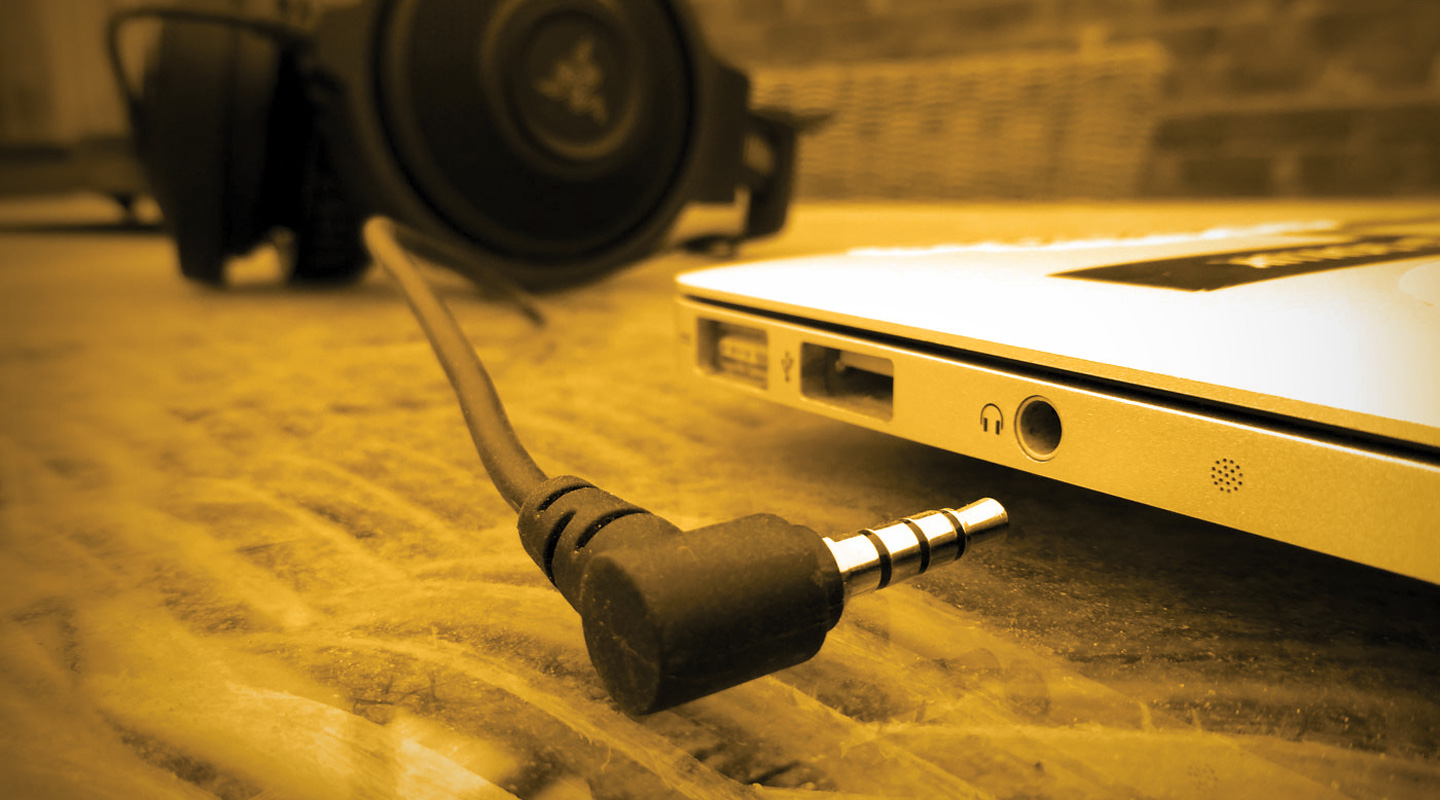
I’ve used Macs for many years, initially with PCI audio interfaces, then Firewire, then PCIe, then USB, but more recently I’ve found I’m often deferring to the built-in audio output on my Macbook Pro. Which is probably entirely lazy, but for trying to compose and mix quickly, the built-in output has got me by. But is getting by good enough? After all, my choice hasn’t been based on anything more scientific than a gut-feeling. So I decided to put in some more rigorous testing and find out the answer to: Is the built-in output good enough as a monitor DAC?
FUZZY SETUP
I used FuzzMeasure Pro 3 as my virtual test bench setup. It’s an audio and acoustical measurement application for Mac, handy for doing room plots and testing the frequency response of equipment. As an input device, I used a PrismSound Lyra 2 audio interface, which is arguably one of the best converters available at the moment.
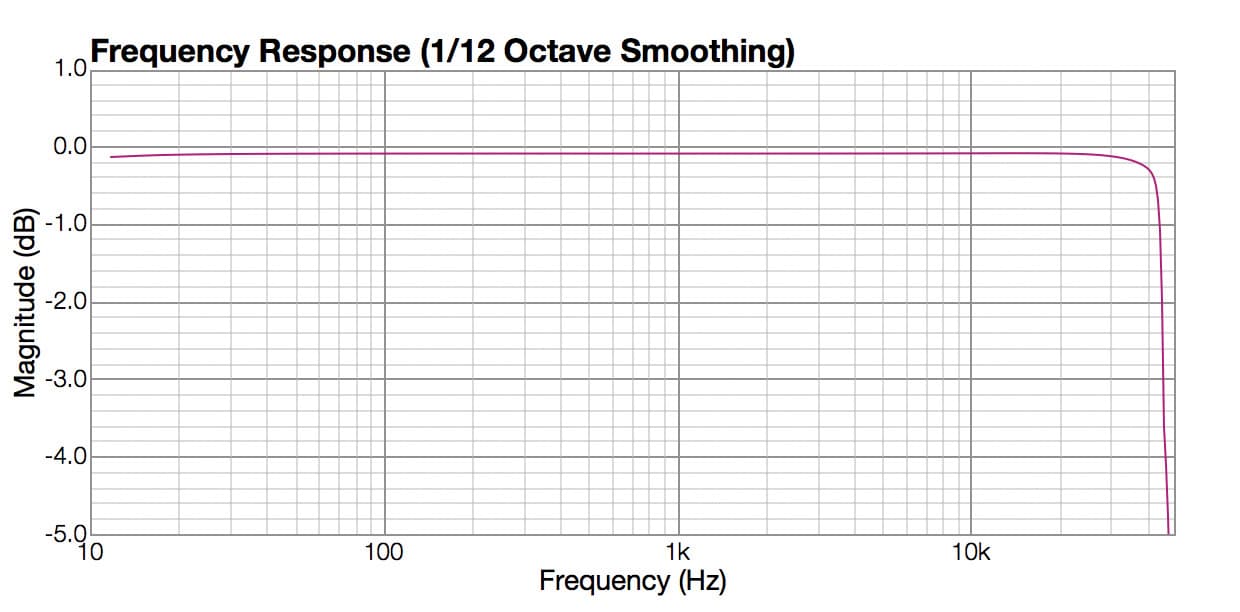
To create a benchmark for my ‘built-in’ candidates, I did a 24-bit/96k frequency response sweep of the Lyra 2’s line input and outputs. It performed impeccably — less than 0.2dB variation from well below 20Hz all the way up to 35kHz, with only a 1dB dip at 45kHz! I was starting to sweat a bit on those Mac tests.
As far as noise floor goes, TT Dynamic Range put the Lyra 2 down at -94dB, with output connected straight to input. While it may not be the published spec, power supplies and other ‘real life’ issues will affect the noise floor — all in all, -94dB ain’t bad at all.
FIRST STOP, LAPTOP
By connecting the built-in output of my 2013 13-inch Retina Macbook Pro (running on battery power because I was too lazy to get the PSU… detecting a theme here) into the Lyra 2, I was able to measure the frequency response, and noise floor of the device in the same way.
I nearly fell of my chair when I saw the results.
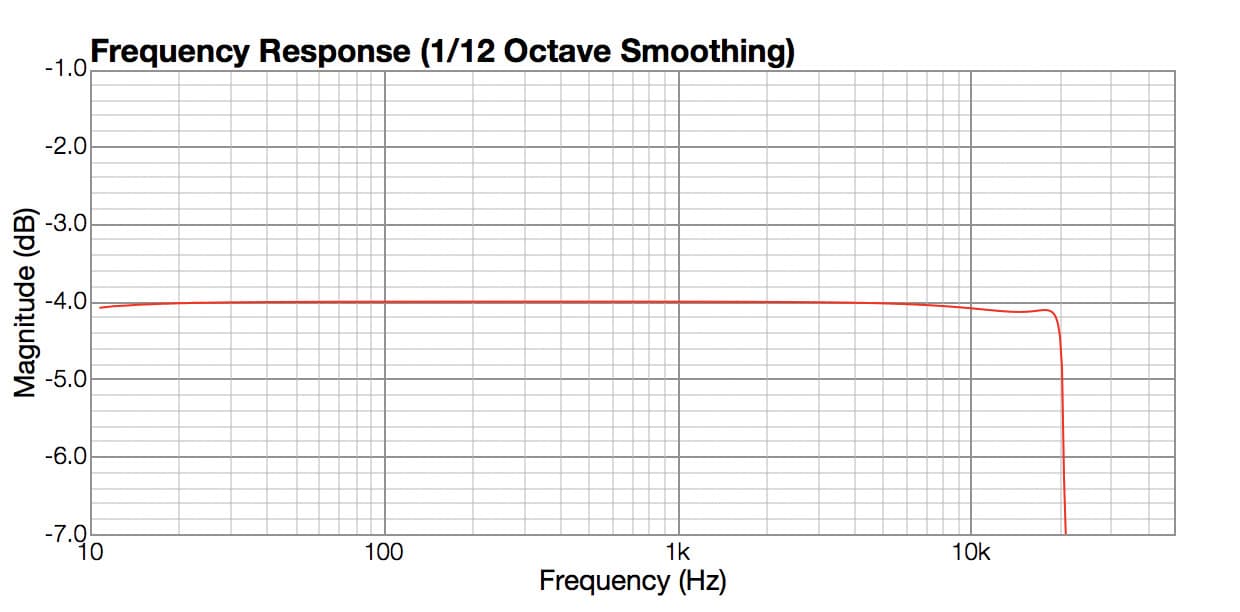
There is less than 0.4dB of variation between 20Hz and 30kHz! It wasn’t exactly ruler flat like the Lyra’s response plot, but hey, the sweat was starting to dry off a bit after seeing that. Beyond 30kHz the frequency response drops off quite sharply, which I’d expect anyway. Measuring the noise floor, the same output is at -82.5dB — which is lower compared to the Lyra, but still, not too bad.
APPLES WITH APPLES
So then it got me thinking. What about my iPhone? And my iPad? If using my built-in output on my Mac seems to be fine for reference purposes, what about these devices?
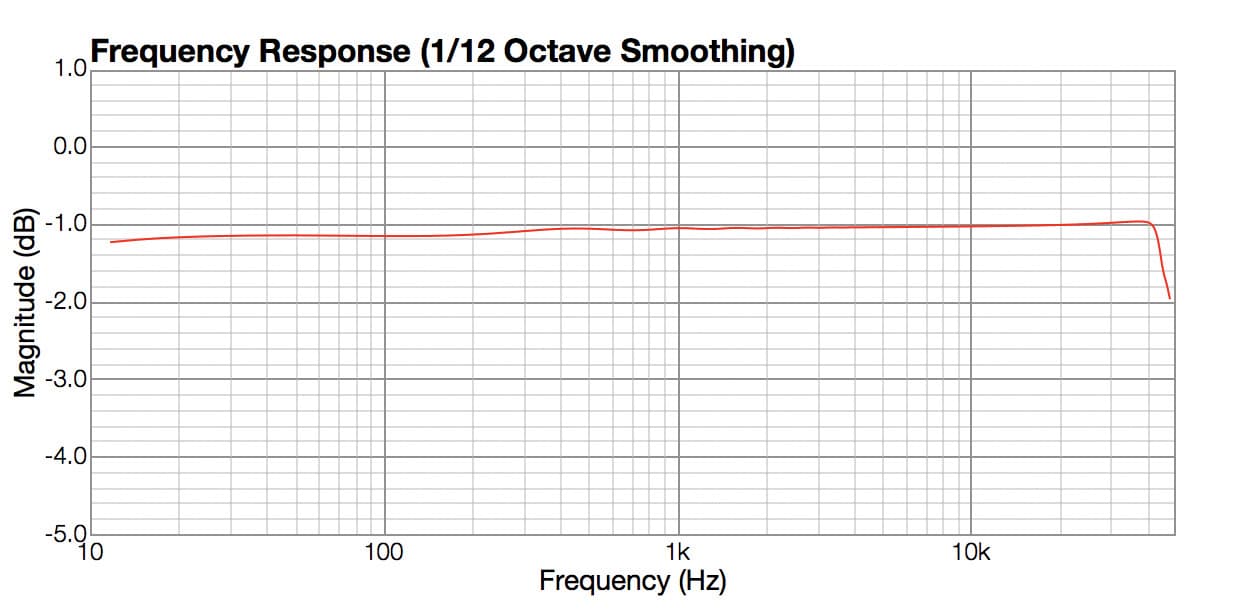
After doing some research, it appears the iPhone and iPad don’t support audio playback higher than 16-bit/44.1k, which is a bit of a disappointment in itself and a whole other conversation. So to compare Apples with Apples, I did a quick test of my Macbook Pro at 16-bit/44.1k. It returned slightly different frequency response results compared to 24-bit/96k, but less than 0.2dB difference across the 20Hz–20kHz range, so rather negligible. And the noise floor remained the same.
Using FuzzMeasure’s ‘Export Stimulus’ and ‘Import Field Recording’ features, I was able to export a 16-bit/44.1k sweep and play that through the Music app on my iPhone 5S. Again, another ‘falling-off-chair’ moment — the frequency response of my iPhone is actually better than that of my Macbook Pro! It was within 0.2dB from 20Hz–20kHz. Albeit, there’s only 1dB difference in tolerance between the Macbook Pro and the iPhone, so the real-world difference is not much. A measurement of the noise floor came in at about -87dB.
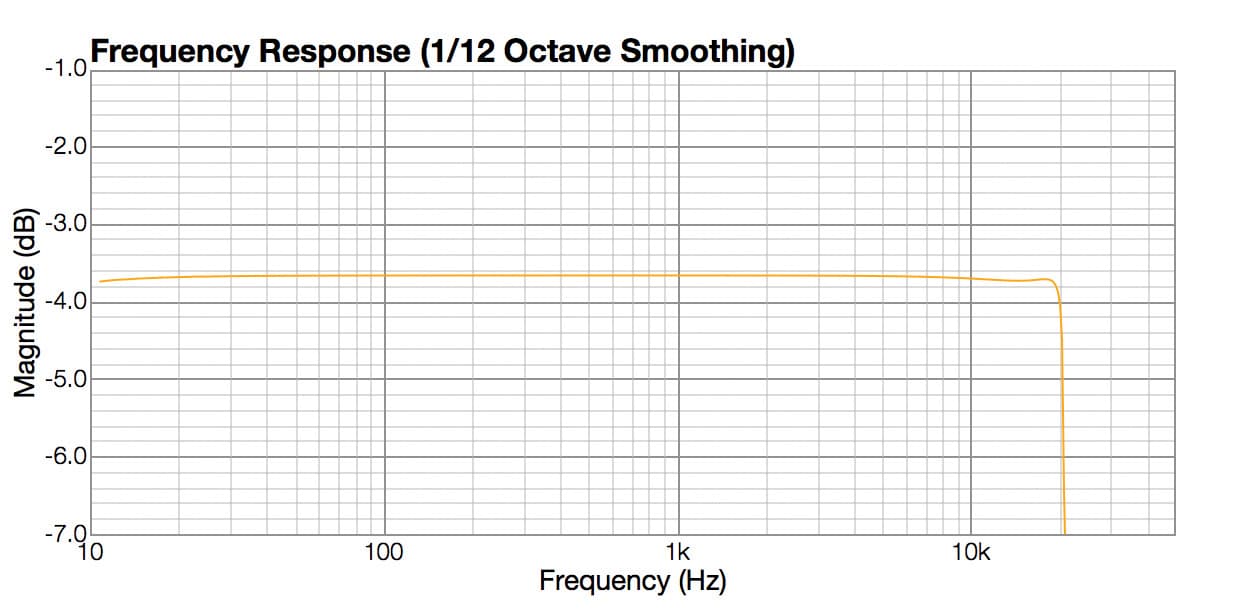
Interestingly, running the same tests on my iPad 2, it was more or less flat from 20Hz–17kHz, with only a -0.2dB drop down at 20kHz. Again, these numbers are tiny, with no real-world adverse implications in my opinion. The noise floor, again, was about -87dB.
It should be noted that the level coming out of the iPad and iPhone were both about 3dB quieter, but that won’t have a significant effect on ‘quality’, just reducing the noise floor a slight amount.
HOLE IN THE STORY
Of course, despite these relatively impressive specs, all these Apple devices have one major caveat — the ⅛-inch stereo output jack. Whilst the DAC in all these devices may be quite impressive, the simple fact that they all connect to this dinky connection is inevitably going to be a problem in real-world, pro environments. These tests obviously aren’t exhaustive, but I’ll rest a little easier knowing that referencing through the built-in DAC isn’t really all that bad.









RESPONSES