

Genelec Monitoring in SynthTemple
An epic Genelec monitoring solution was needed to get the best from this extraordinary vintage synth collection.

7 March 2025
A man needs a hobby. Tony Osmond collects synths. But this is no ordinary collection, it’s one of the best in the world. So you might imagine SynthTemple to be a place where Tony can show off his synth collection. Well, you’d be only partly correct. SynthTemple is much more than a synth shrine, effectively it’s a synth studio. Every synth is not only operational, it’s ready to be recorded and fully sync’ed. In fact, all 120 synths could, notionally, be played and recorded simultaneously.
“We didn’t want another synth museum,” confirms SynthTemple founder Tony Osmond. “Simply displaying synths serves no real purpose. We wanted to make these instruments accessible to musicians and producers in a modern, practical context. SynthTemple is a synth studio.”
MONITORING NERVE CENTRE
Underpinning SynthTemple’s flexibility is an elaborate monitoring platform, based on Genelec loudspeakers, GLM5 software and control hardware. The monitoring system allows multiple performers to play the synths independently or collaboratively.
There are nine distinct synth stations or ‘Pods’, as they’re called, each with their own monitoring. For example, there’s a Roland vintage synth Pod, a Moog Modular Pod, an Oberheim Pod etc. Each Pod has a pair of Genelec small-footprint 8330A active monitors for local monitoring. A local analogue mixer provides an easy-to-reach way to balance the synths within the pod. A headphone output provides another monitoring option. Each of the nine pods behave in this way.
The monitoring system becomes even more sophisticated when musicians collaborate across pods.
POD CONNECTIONS
The output from the synths in a pod are fed into Metric Halo LIO-8 and ULN-8 MkIV interfaces. Metric Halo is a boutique US-based manufacturer, very well regarded for great-sounding converters and preamps. When Tony and his studio manager co-conspirator, Stephen Jones, were designing the monitoring, they weren’t responding to the Metric Halo sound, so much, as they were to the flexibility provided by the Metric Halo’s network audio output option, MH Link. According to the Metric Halo website, MH Link “provides an ultra-low-latency, ultra-high-bandwidth self-configuring audio and data backplane between multiple MH units as well as a native Gigabit Ethernet interface to the computer.” For Tony and Stephen, they decided MH Link was a superior choice to Dante for this particular application. “Metric Halo allows any LIO-8 on the network to function as the controller,” explains Tony. “As long as only one is in charge at any given time. This means you can connect a laptop to any of these interfaces and instantly control the entire studio’s audio, offering greater flexibility.
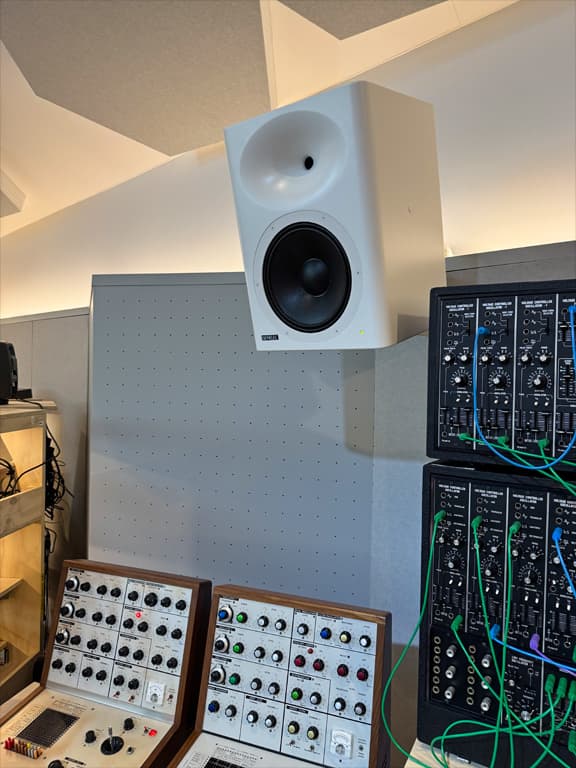
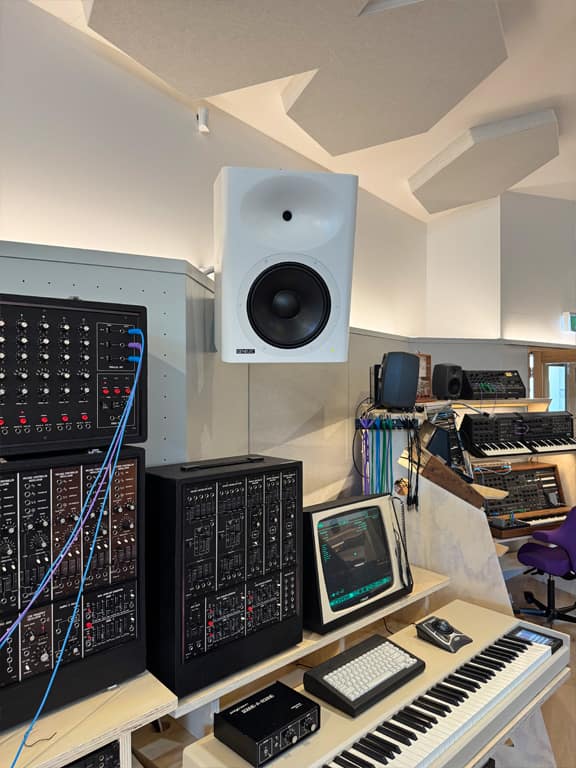
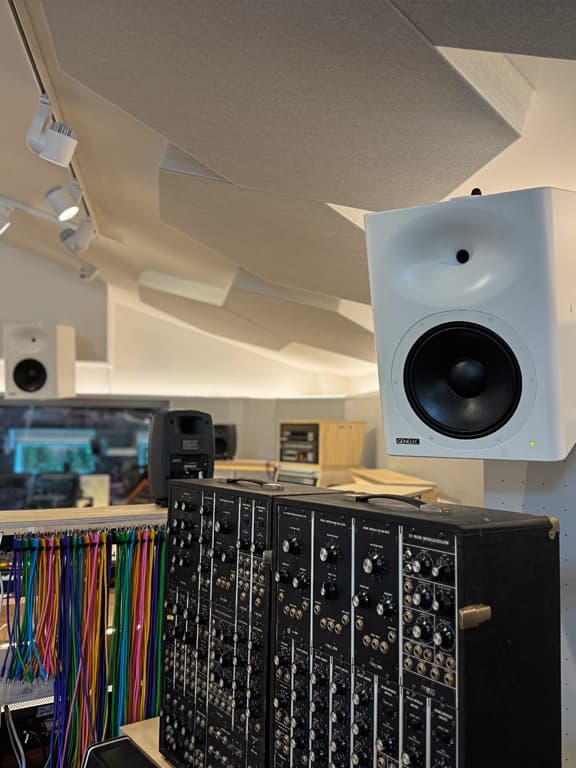
Genelec S360A monitors for the 9.1.6 Atmos rig double as hefty local monitors for synth pods when switched to their analogue input.

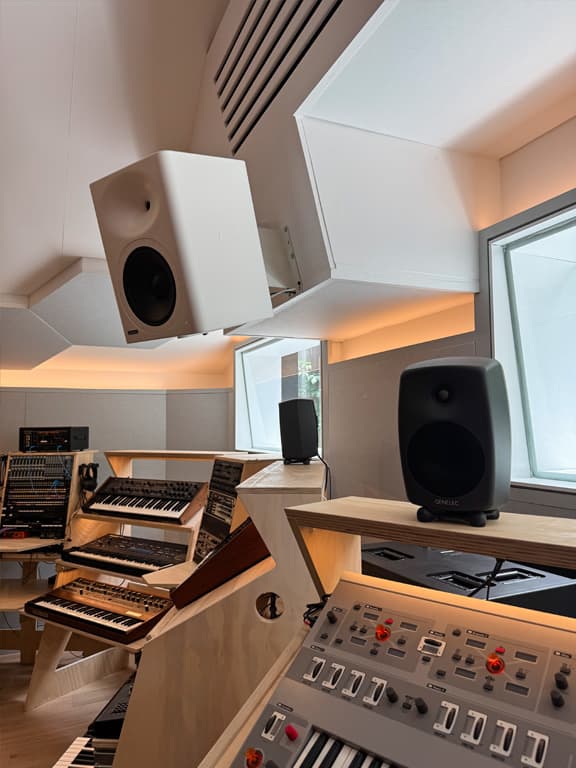
One of the nine synth ‘pods’ in SynthTemple. This one’s home to some choice Oberheim instruments.
“One of the most impressive aspects is the Metric Halo software,” continues Tony. “If you have one LIO-8 box, a mixer appears on your screen. If you connect another box with a network cable, the mixer automatically doubles in size. The computer sees everything as a single device, and each unit has onboard DSP, reducing the load on the computer. Each box can mix 128 channels, so, in theory, with 19 boxes, we could have 128 x 19 channels – although I’m not sure if there’s enough network bandwidth for that!”
The 19 Metric Halo LIO-8 and ULN-8 MkIV interfaces in the main room all feed audio via the network to the main computer at the control desk, where everything is mixed in Logic, Ableton or Pro Tools.
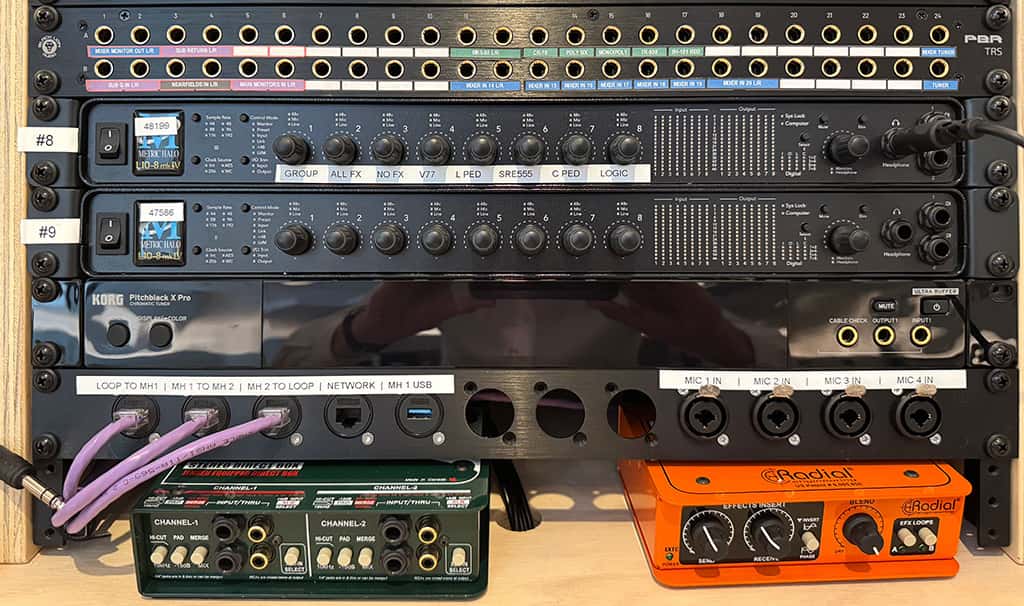
Metric Halo’s MH Link serves as the monitoring nervous system, offering the connections and flexibility.
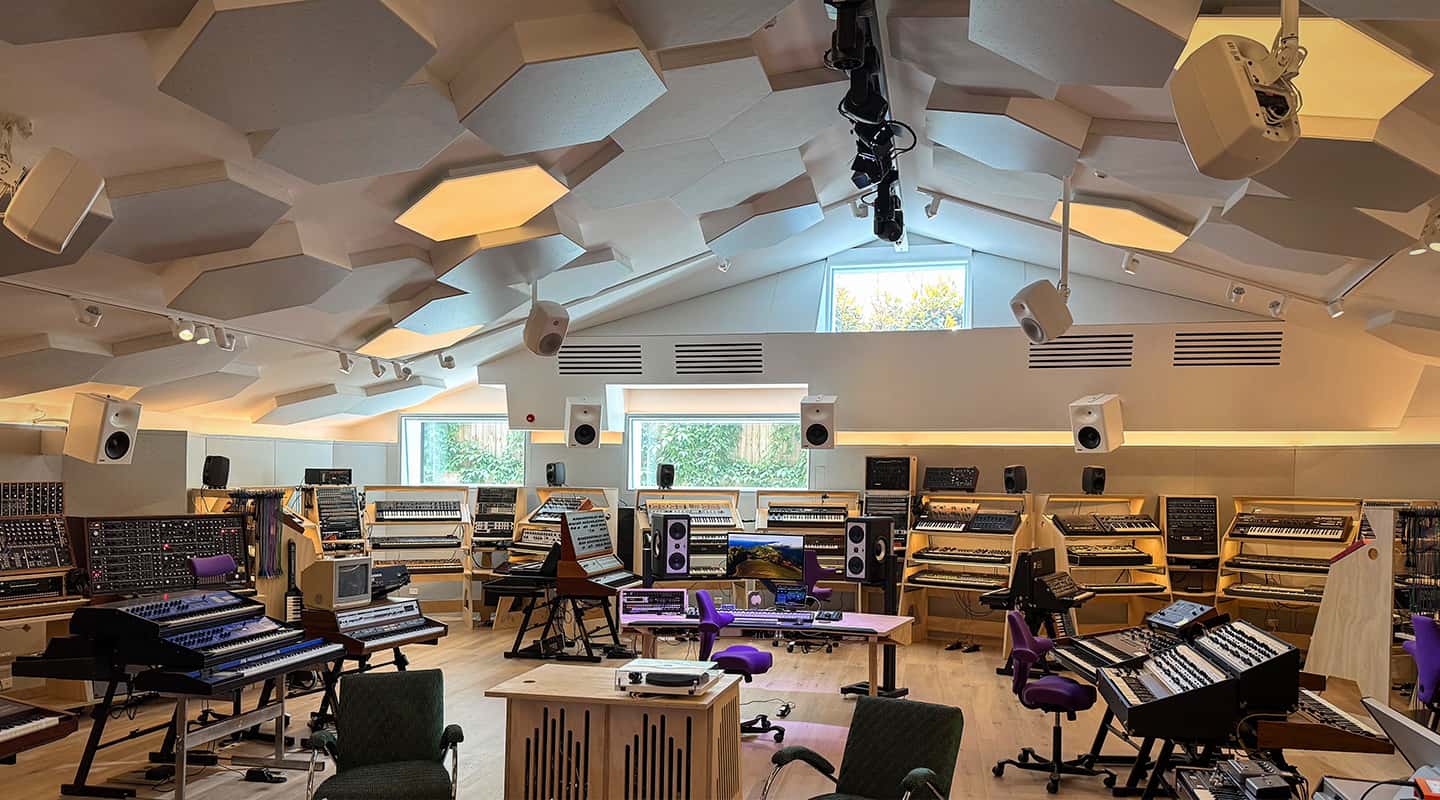
SynthTemple’s main space is not only a synth toyshop with infinite collaboration and experimentation frontiers, it’s a fully-fledged 9.1.6 Atmos mix room
FULLY FLEX
Thanks to MH Link, it’s straightforward for pods to collaborate. Genelec S360A monitors mounted at head height around the perimeter of the room provide a balance (created in the Metric Halo MIO Console 3D software) of the various synths being played in the space. The local Genelec 8330A in each pod provide additional ‘more me’ control of the mix.
As a sidebar, as a player in one of the Pods you can plumb into the S360A monitors local to you. The analogue output of the local LIO-8 feeds directly to the analogue input of the local S360As. Otherwise, the S360A monitors and subs all receive AES digital audio. The reason for this makes more sense when you understand that the S360A monitors are part of a 9.1.6 Atmos monitoring setup that employs the whole of the 195sqm space. More on that in a moment.
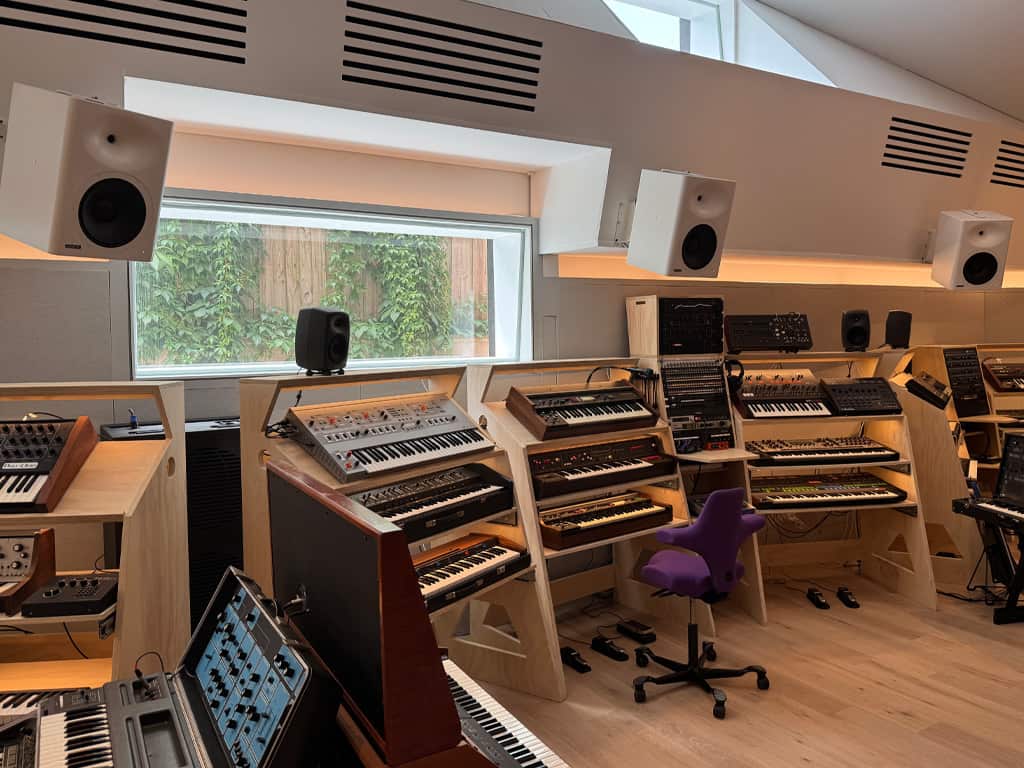
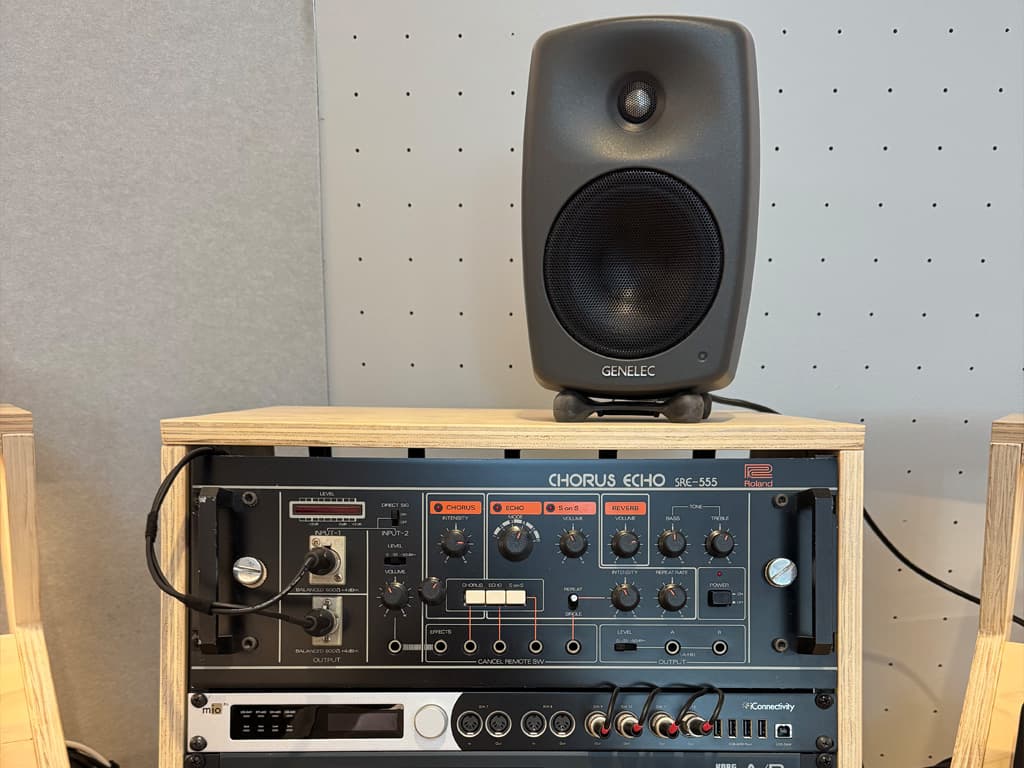

Genelec’s small-footprint 8330A active monitors provide local pod monitoring.
AS EASY AS A PLUG-IN
The primary purpose of the SynthTemple main room is to allow musicians and producers to experiment and collaborate without any technical friction. The synths themselves are in pristine, mint condition – spotless and fully serviced, thanks to Stephen Jones’ technical ministrations. Stephen has also spent the time to ensure the synths (where possible) are all receiving MIDI timecode out of Logic – yes, they’re all sync’ed. “Hit Play on the TR-808, and the SH-101 locks to it. The arpeggiator on the Jupiter-8 locks to it too,” enthuses Stephen Jones.
With this extreme level of accessibility, SynthTemple founder, Tony Osmond, foresees a steady stream of producers booking the space to bring in their productions and sub in real vintage and analogue synths for their virtual counterparts in the box.
The studio’s Mac runs Logic, Pro Tools and Ableton for visiting producers who work in Live. Once configured, it’s really as easy as sending Midi performance data to the hardware synths in the space. In fact, it’s just as easy to access outboard effects in the space.
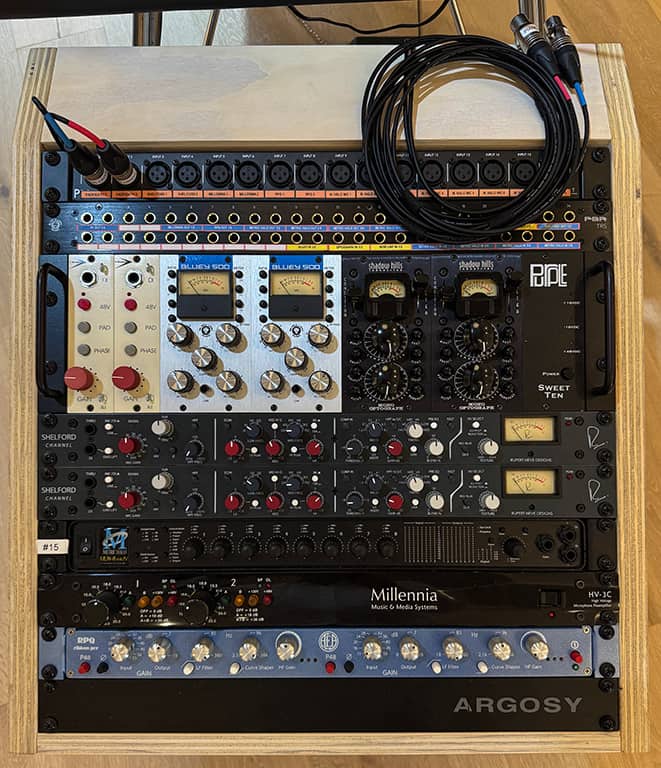
“The hardware AMS, and Lexicons and Bricasti can all be addressed as inserts via the Metric Halo interfaces,” explains Stephen Jones. “Just call them up as ‘plug-ins’ in Logic, because they’re all normalled through the patchbays into the Metric Halo system.”
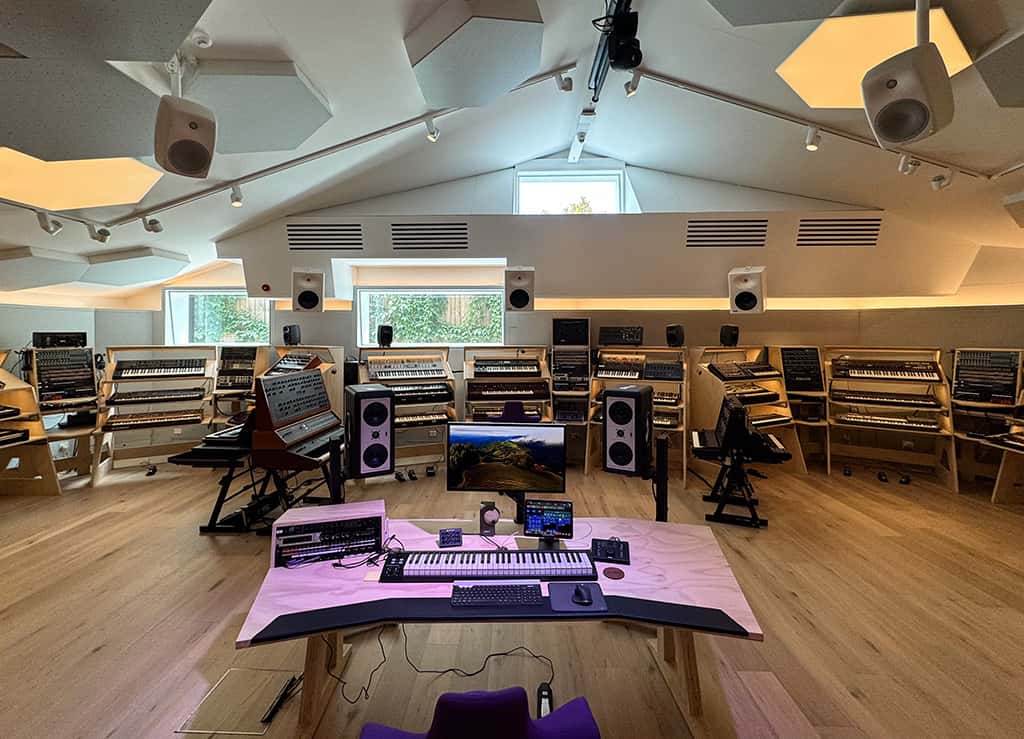
The mix position. The entire 195sqm space can act as one giant 9.1.6 mix theatre. Or you can simply use the main Mac to record a performance.
ATMOS SPHERICS
As alluded to, SynthTemple’s main space is not only a synth toyshop with infinite collaboration and experimentation frontiers, it’s a fully-fledged 9.1.6 Atmos mix room. Tony Osmond explains: “When we planned the space, we considered how people use vintage synths today. Immersive audio is still in its early stages, but electronic music is incredibly well-suited to it. So, we felt it was essential to install an immersive system. We use Logic as our primary DAW, which has a built-in 7.1.4 Dolby Atmos Renderer.”
The fact the SynthTemple Atmos rig is 9.1.6 (rather than Logic’s current default 7.1.4) simply means the studio would need a bridge to an external Dolby Atmos Renderer when needed. But the two additional Genelec 8350A top speakers aren’t lying idle. The room has been calibrated to provide two optimised listening positions – one at the desk and another at the couch for visiting guests. In the case of the couch’s listening position, it employs the two most distant top speakers at the rear.
SynthTemple is an absolute unicorn – a drop-dead gorgeous space with a full array of history’s most desirable synthesisers, in shop-new condition all ready for prime time
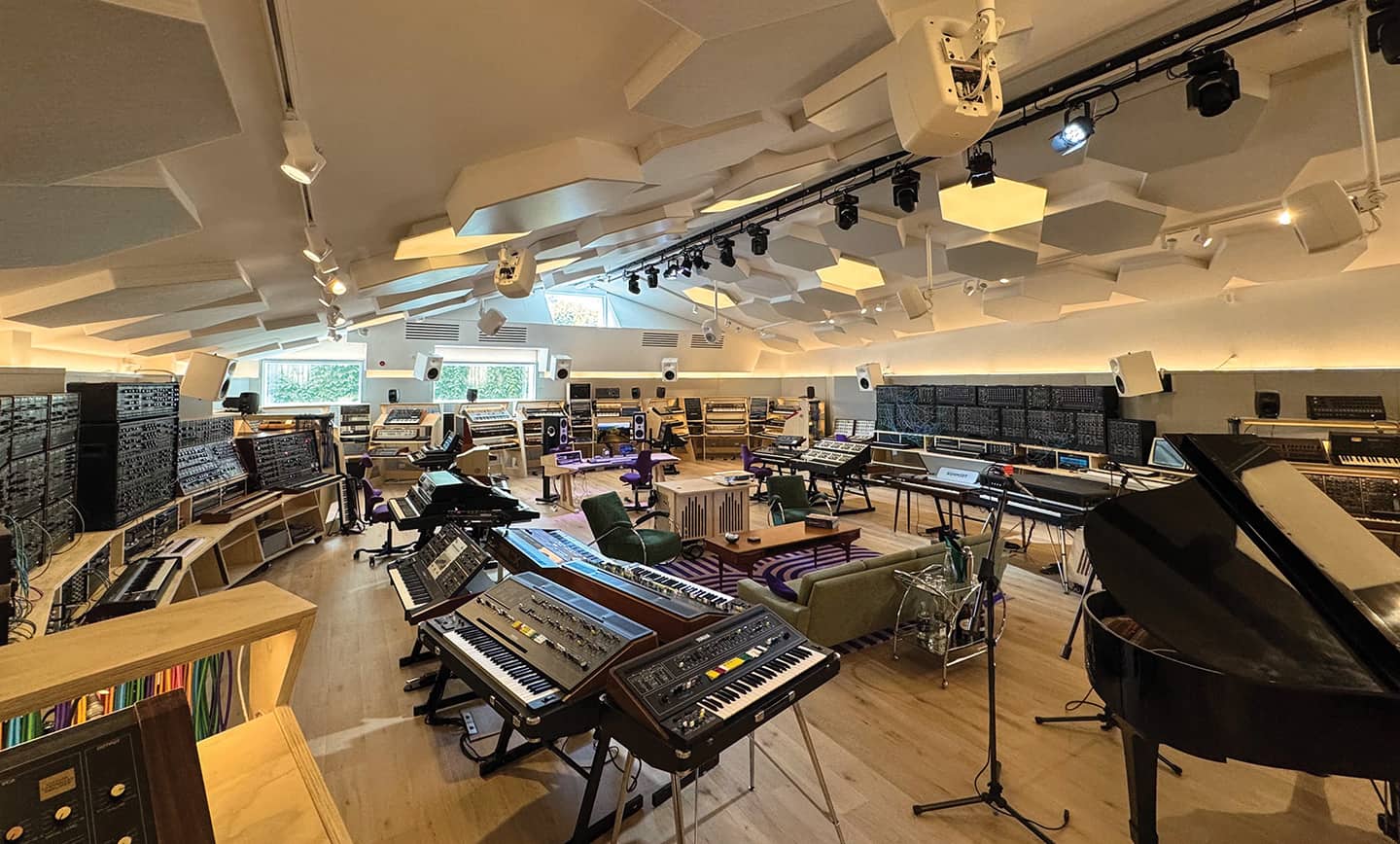
EPIC RIG
The 9.1.6 Atmos monitoring setup is impressive. It’s a Genelec showcase of the latest and smartest studio monitoring – S360A for the nine main speakers, 8 Series (8350A) for tops and three subs (two s7380As and an S7382A).
All of the Genelec Atmos speakers are fed AES digital audio. Three Genelec 9301B devices take care of bass management to the Genelec subs. One 9301B, with its 16 inputs would normally do it, but, given the size of the space, duties were split to save on the length of the cable runs. Two Genelec 7380A SAM Studio Subwoofers placed either side of the space are supplemented by a single 7382A monster subwoofer at the front of the room, providing a usable frequency range down to 15Hz.
The subs are an interesting story in and of themselves. Tony and Stephen sought an acoustician’s advice regarding optimal sub placement but they also wanted the subs to double as low frequency support for Pod monitoring. So when the S360As are switched to ‘analogue’ for pod monitoring (via the desktop Genelec 9320 monitor controller), the nearest sub is also deployed to reinforce the lows. Nice.
GENELEC HEROICS
Clearly the 120 highly desirable vintage and collectable synths are the heroes of SynthTemple but without the Genelec monitoring, those synths would be just a pretty face. And as impressive as the monitoring sounds, its Genelec’s GLM5 software that brings it all together and makes the space so flexible. Tony Osmond picks up the story:
“We came from the starting point that Genelec monitors sound amazing but it was other factors that made them such a compelling choice for SynthTemple. Their network control capabilities were a major factor. The ability to calibrate and save different presets for different listening positions was crucial, given the unique nature of this space.
“We knew we’d be using the speakers in different configurations, and Genelec’s GLM5 software allowed us to create multiple calibration profiles.
“Genelec has a vast range of speaker sizes. As an example, we have S360As here in the main space, but in the control room, we’ve opted for The One Series monitors for their point-source accuracy [see box item for more].
“Genelec’s mounting options were important. Plus, we were able to create an all-white setup in the main room, while Studio Two is fully black.
“Genelec’s DSP and calibration capabilities are extensive. The difference in sound before and after calibration has been night and day.
“Finally, the support has been first class. The Studio Connections team in Australia has been a huge support from the early design stages, while Genelec itself has always made itself available.”
NO VANITY
SynthTemple has attracted attention from around the world. Synth enthusiasts, producers, musicians, events organisers, music video producers… SynthTemple is an absolute unicorn – a drop-dead gorgeous space with a full array of history’s most desirable synthesisers, in shop-new condition all ready for prime time.
Clearly, it’s a passion project for Tony Osmond and his wife, Fiona Griffiths, who is General Manager and Finance Manager of the facility. But it’s not a vanity project. Tony genuinely wants to connect his amazing synth collection to Australian musicians and producers. To book a session doesn’t cost the earth and he and Stephen will go out of their way to make it a great experience.
You get the feeling Tony would love to see the SynthTemple baptised by something truly ambitious: “I’d love to see groups come in, get everything synced, record live, and livestream the performance. That would be really exciting.”

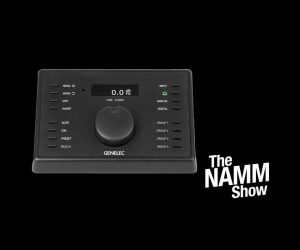
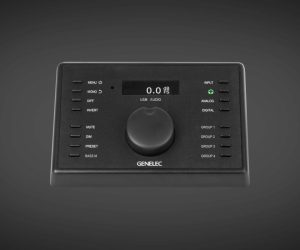
A Genelec 9320A SAM Reference Controller at the mix position.

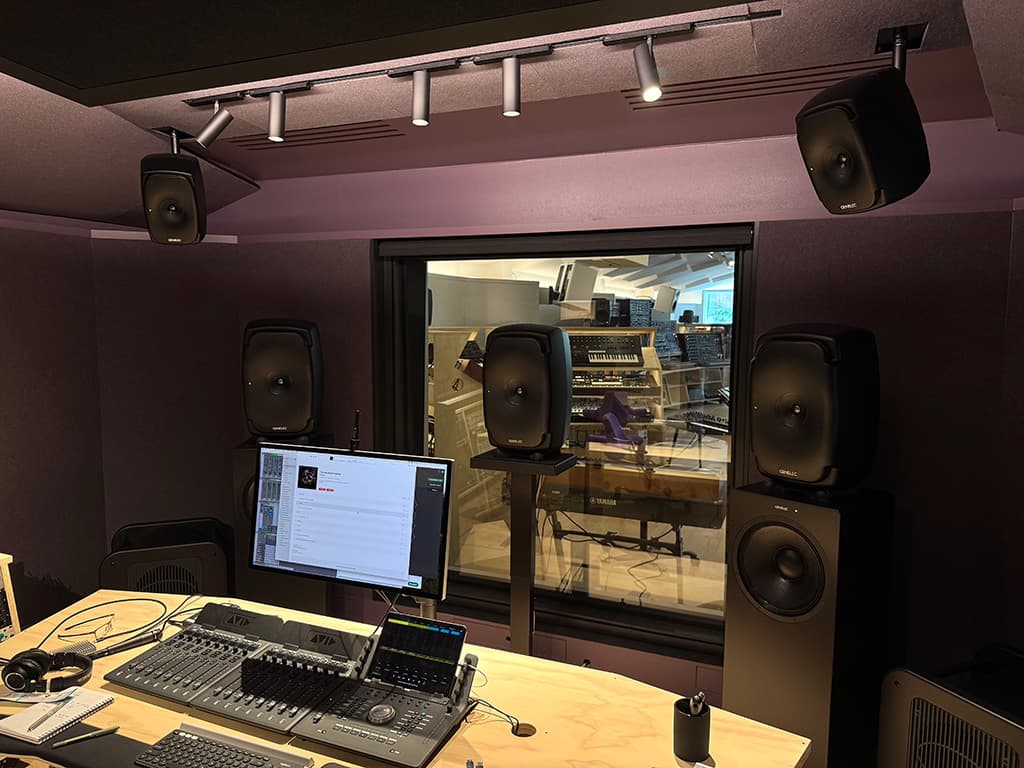
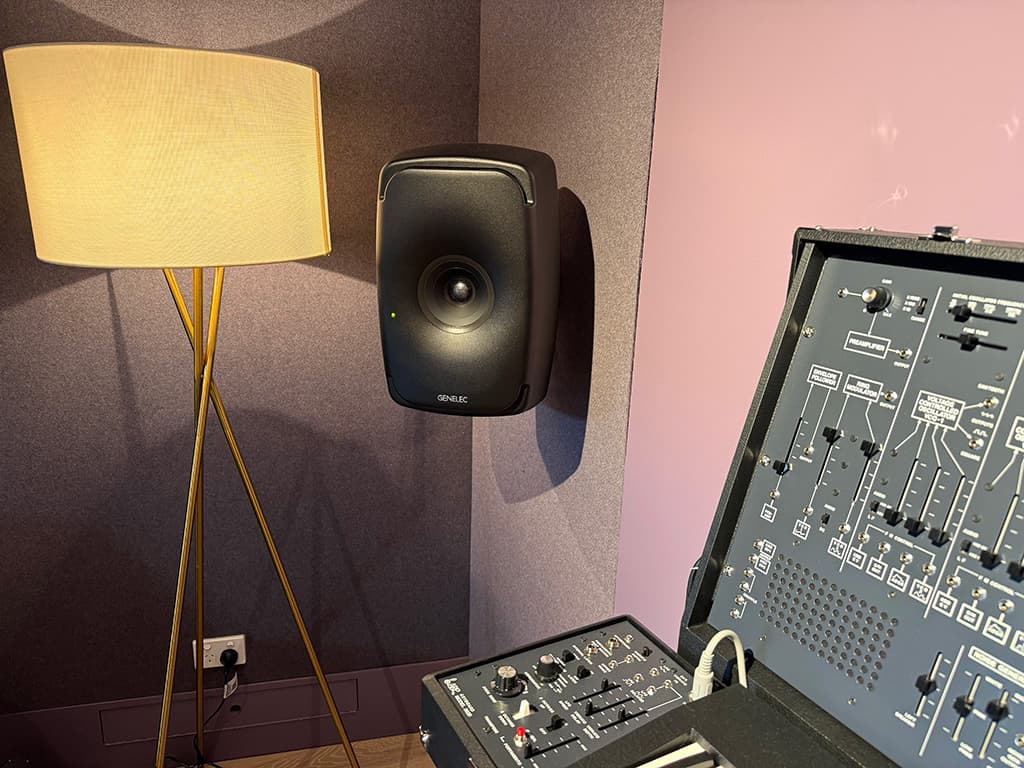
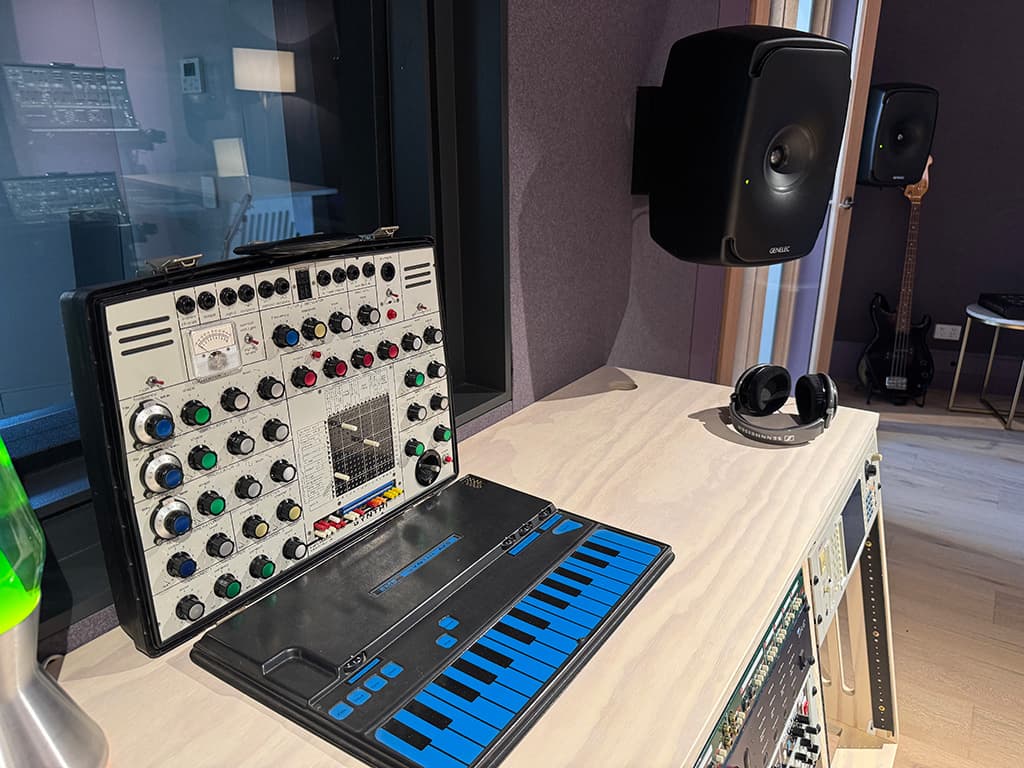
More The One series three-way 8351B monitors comprise the surrounds and 4 x 8341A comprise the tops, while a 9301B takes care of bass management in the space.
Tony Osmond: “One of the biggest advantages of our routing setup is its seamless integration of Studio 2 and the Solo Room into the larger ecosystem. The Metric Halo ULN-8 units have eight preamps each, and thanks to MH Link allow us to route audio anywhere. For example, if someone is recording vocals or piano in the Solo Room, we can send that audio directly into Studio 2 or into the main space. Similarly, all the synths and the grand piano can be routed into Studio 2, which is connected via MADI to an Avid Matrix feeding into a Pro Tools rig.” The Metric Halo units also double as a headphone distribution system, allowing individual cue mixes to be sent to any of the 22 ULN-8 and LIO-8 headphone outputs from the Studio 2 Pro Tools system.





RESPONSES