
Tim Palmer: Prism Horse Studio
Tim Palmer and Travis Kennedy join forces and start horsing around. Tim talks about what makes a mix room in 2026.

By Joe Matera
16 July 2026
Englishman Tim Palmer needs no introduction to the readers of AudioTechnology [but we’ll introduce him anyway – Ed.]. The producer and engineer’s credits run the gamut from Pearl Jam, U2, David Bowie, and Robert Plant, to Tears for Fears, Ozzy Osbourne, and The Psychedelic Furs, among many others.
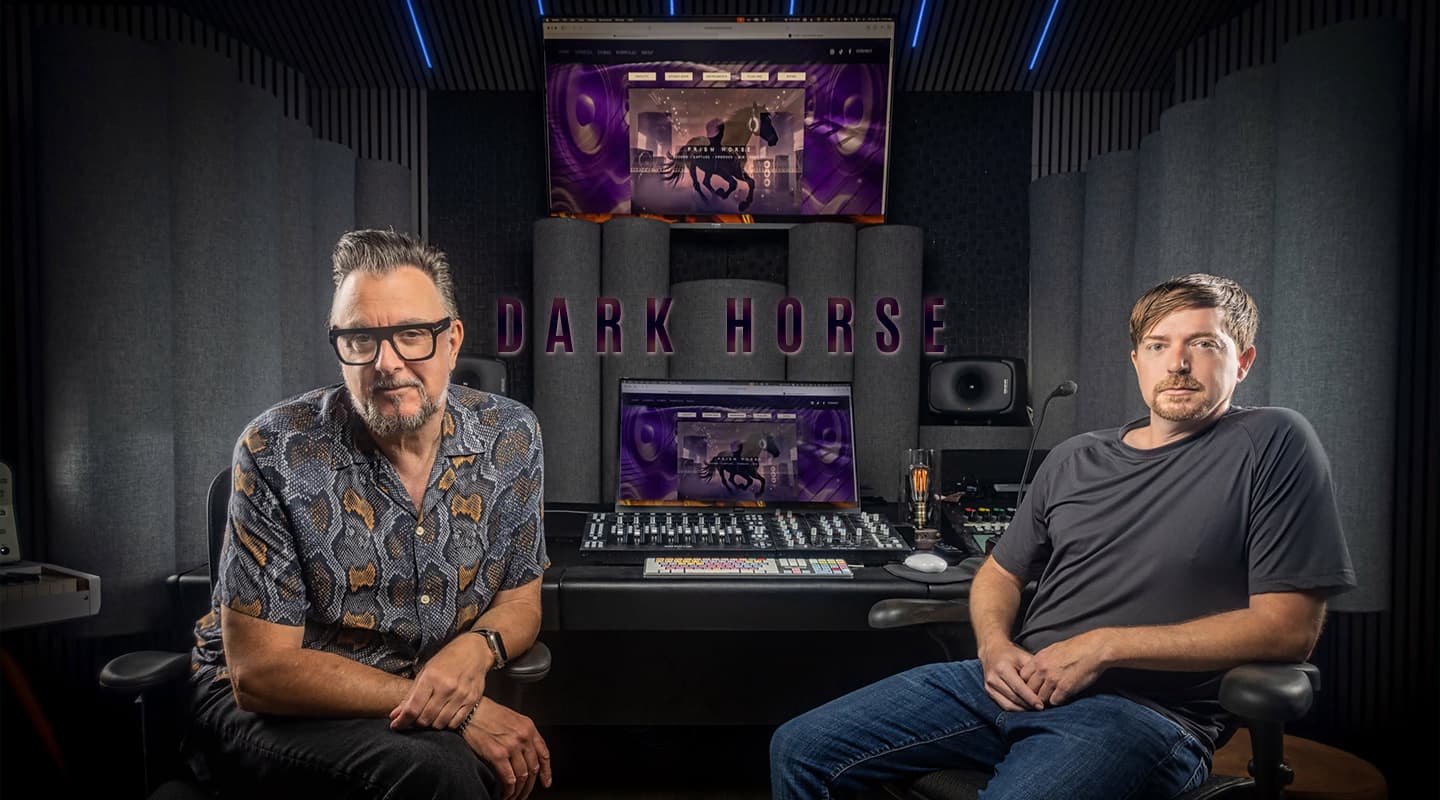
Palmer recently launched his newly-built Prism Horse Studio with Travis Kennedy, who himself began his career at the legendary Electric Lady Studios in New York City before spending more than a decade under Palmer’s mentorship. The premier hybrid mixing and overdub facility in South Austin, is built around a meticulously tuned listening environment.
Centred on a Tonelux summing mixer, outboard gear, and Pro Tools HD hybrid setup, the studio combines the depth, character, and workflow of analogue processing with the precision and flexibility of modern digital production.
“I’m super excited that the new studio is officially up and running,” Palmer explains to Audio Technology. “Now that we have ironed out the initial kinks, everything seems to be working beautifully. There’s something wonderful about walking into a space that inspires you!”
At Prism Horse Studio, both Palmer and Kennedy will continue to mix independent projects, while also collaborating on select productions, which will offer artists the rare benefit of two highly experienced mixers working together.
Palmer recently sat down with Audio Technology to discuss his new studio.
AT: What was the impetus that led you to build this new studio?
Tim Palmer: I’ve been very fortunate to work in some incredible studios and with incredible artists over the last 40 years, and one thing I have learned is that the room itself is one of the most important pieces of the puzzle. Travis and I wanted to create a place designed from the ground up to make confident decisions.
We also wanted a studio that reflects how records are actually made today. Artists and producers don’t necessarily need a huge commercial facility anymore, but they still need a room that sounds great, inspires their creativity, and combines the best of analogue and digital technology. Prism Horse was built to be exactly that.
AT: What sets Prism Horse apart from other studios?
TP: I think what makes Prism Horse unique isn’t just the equipment, although we’re very proud of that; it’s the combination of two engineers with very different but complementary backgrounds.
Travis comes from a younger generation that’s completely fluent in modern production, while I bring years of experience working on records across rock, pop, and alternative music. Together, we can approach projects from different perspectives while sharing the same goal and always serving the song!
The studio itself was designed to maximise the listening environment. Everything else, the outboard gear, converters, and workflow all support that. If you can’t hear accurately, you can’t make great decisions.
AT: Was the purpose of building a hybrid studio to serve clients who may be wanting the best of both worlds when it came mixing their projects?
TP: I think people sometimes oversimplify the analogue-versus-digital debate. Modern digital recording is astonishingly good. It offers incredible fidelity, flexibility and recall. Analogue isn’t valuable because it’s nostalgic; it’s valuable because certain pieces of equipment still sound great and do things that software doesn’t quite replicate in the same way.
For me, hybrid is about choices. Most sound processing happens in the computer because it’s incredibly efficient, but certain audio paths benefit from going through real transformers, compressors, or equalizers that add depth and character. The goal isn’t to make something sound ‘analogue.’ The goal is always to make it sound emotional and make the song successful.
AT: How will a mix project involving both you and Travis collaborating, work?
TP: It really depends on the project. Sometimes one of us is the primary mixer while the other contributes ideas, offers another set of ears, or helps solve creative or technical problems. Other times we’re both much more involved throughout the process.
The advantage is that you’re never working in isolation. Mixing can become very subjective after you’ve listened to a song hundreds of times. Having another experienced engineer who understands your philosophy but hears things differently is incredibly valuable. Walking away for a while has always been valuable, and now that’s easier to achieve. Ultimately, there’s always one person steering the ship, but having collaborative input often leads to better mixes.
Prism Horse Studio: www.traviskennedysound.com/prismhorse




RESPONSES