








Mix Masters: Charli XCX, Von Dutch
Tom Norris mixed six of the songs from the brat album, including the standout track ‘Von Dutch’. Tom takes us through his process.

25 June 2025

Artist: Charli XCX
Album: brat
Story: Paul Tingen
“I started out as a producer and wanting to do my own DJ projects. But when the mix opportunities came, I didn’t reject them. I thought, ‘cool, I get to work in music full time, and it’s fun.’ Being open to opportunities that arise and being curious about where they go is super important. Especially with an independent career that’s contingent on people asking you to work on their art, you have to go with the flow. I’m not a smooth talking guy who goes out to network all the time and gets big projects because of that. I’m just open to all the possibilities.
“The other thing about maintaining a career is momentum. When one thing happens that is really visible, you need to follow it up. A lot of that is serendipitous, where things just materialise. But it’s also about keeping your toes in the water, and being alert to what’s happening. When I was approached to mix for the Charli XCX album, which was initially presented to me as more of a personal project, I didn’t say, ‘oh, I only want to work on Charli’s pop albums.’ I went for it, even as it was hard work with perhaps less sleep than I would have liked!”
Tom Norris’ career choices clearly paid off. Charli XCX’s sixth album, ‘brat’, became one of the biggest albums of 2024, had a huge cultural impact, and was nominated for nine Grammy Awards at the 2025 Grammy Awards, including Album of the Year, and won three. Two of those Awards also went to Norris, for Best Dance/Electronic Album and Best Dance Pop Recording, the latter for his mix of the album’s lead single ‘Von Dutch’. These awards followed Norris’ Grammy nominations for his work with Rüfüs Du Sol, Marshmello, Illenium, Lady Gaga, Skrillex, and Zedd, and a Grammy Award as the mixer of Lady Gaga and Ariane Grande’s “Rain On Me” (2021).
ONE TO MANNY
Clearly, Norris has entered the elite, top echelon of the world’s top mixers, a little less than a decade after his first major success, mixing and mastering the song ‘Starving’ (2016) by Hailee Steinfield, Grey and Zedd, using FL Studio. “I started out playing guitar and piano,” Norris recalls, “and was in a high school band that became quite successful. It made me realise that it’s way more fun for me to be sitting at home, working on music, than to go out and perform. I started on a Windows computer with FL Studio and learned about mixing through meeting Manny Marroquin.”
The band that Norris was a part of was called Allstar Weekend. He left in 2009, just before they signed with Hollywood Records, and has co-writing credits on four tracks on the band’s debut album ‘Suddenly Yours’ (2010). Continuing his career in music a few years later, Norris worked extensively with EDM/pop luminaries like Skrillex, Grey, and Zedd, and also got a reputation as a finisher, earning him additional production credits. Even as he also works in rap (Lil Tecca), electronic music and pop remain at the core of Norris’ work, and found a perfect expression in Charli XCX’s ‘brat’. Given the album’s huge impact, it’s odd to think that its ambitions initially were downplayed.
“When I was first asked to be involved, Charli’s A&R told me that this was a very personal project. It was just a collection of cool songs that Charlie was putting together, given that she had released a really big pop album a year or two before [‘Crash’, 2022]. I didn’t mind. I was just really excited to work on her music.”
CRASH COURSE
Despite the supposedly toned-down ambitions for the album, ‘brat’ features a large number of high-profile writers and producers, including A.G. Cook, Cirkut, Gesaffelstein, Finn Keane, Linus Wiklund, Omer Fedi, Jon Shave, and more. Norris ended up mixing six of the standard edition’s 15 songs, with other mixers being Manny Marroquin (2), Gesaffelstein and Bart Schoudel (2), and Geoff Swann (5).
“The first song that I worked on was called ‘Classic 2000’, when I received it. They hadn’t settled on the name ‘Von Dutch’ yet. The demo had tons of energy, and was influenced by mid-2000s electro house. I can’t recall whether there was a brief from Finn Keane, the producer. In most cases, people will hand sessions to me without any comments, and be like, ‘let’s see what Tom comes up with’. With most mixing I do, the point is not to reinvent the production, it’s to make it hit harder and to make it more of what it already is. The same with Charli, I was not asked to finish the production. It were straight-up mixing jobs.
“In this case they clearly were going for that mid-2000 electro house vibe, and it was up to me to embellish this in whatever way I saw fit, but purely in terms of mixing. My initial approach with the song was to tighten up and reduce the low end quite a bit. I felt that the demo needed that and that it also needed a high-end lift. But Finn was like, ‘that’s not the point of the song. This song is about how crazy and driving the bass is!’ So I undid that change and went back to just enhancing what was already there in the demo of the song, and adding more edge to it.”
DUTCH TREAT
Given Norris’ background in EDM, in which big bass is common, it was slightly odd that he initially tried to curtail the bass. “I grew up listening to dance music. Eiffel 65’s ‘Europop’ (1999) was the first album that I bought, when I was eight years old. I really got into EDM around 2011 or so, and the era that ‘Von Dutch’ was referencing is actually before that, more the early 00s, when electronic music was a lot more punk and dirty and a little more all over the place, in a good way.
“They wanted that overweighted low end to give the song the relentless momentum the final version has. Me initially taming the bass too much meant that the song didn’t have the DNA they were aiming for. Of course, this is a story as old as time about the duality between mixers and producers and artists. What they want often isn’t technically perfect, but it’s okay because it’s about the vibe and the feeling, which is ultimately the most important thing.
“I work really hard in my career to empathise with the producers and the artists. That is one thing all really good mixers have: the ability to connect with people, and figure out what their intention is. We’re creating the final version of the song, so you have to pull that thread. This may lead to further work opportunities, because people will say, ‘this guy understands and cares about what I’m trying to do.’ When people stop caring, the movie’s over.”
MONITOR CHOICES
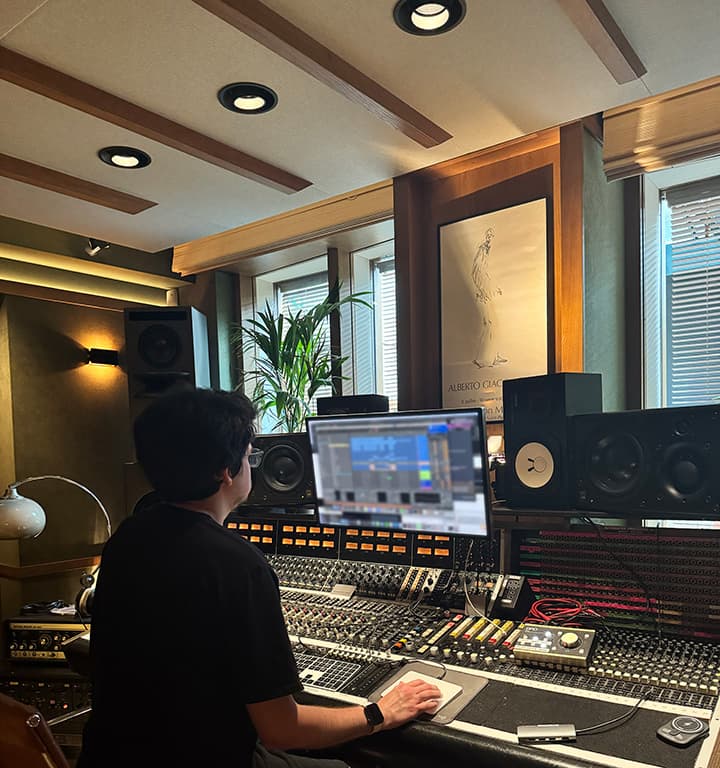
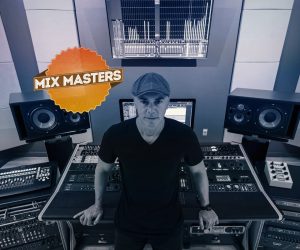
Norris conducts his stereo mixes from a room in his house in Los Angeles. “My monitors are PMC IB2S XBD-A. I spent 1000s of hours working with Skrillex on this model PMC speakers, and found it effortless to do great work on them. So I ended up buying my own. They’re awesome. I also have Sennheiser HD 650 headphones, which are amazing, as well as Apple AirPod Max’s. I mainly use the Max’s, walking around the neighbourhood.”
“My interface is a Lynx Aurora, and I have a Neve 1073 mic pre and a Tube-Tech CL-1B compressor, which I use if I want to get something slightly different. Like most things in my workflow, I like to keep things interesting for myself, so I don’t get caught up in a formulaic template approach. To have to think one-dimensionally kills creativity for me. Hardware is less popular in the modern era, but I still enjoy that little bit of unpredictability. That’s why I also have a DW Fearn VT7 stereo tube compressor with Pulse Width Modulation. I sometimes use that on the mix bus or on drums. Though it’s increasingly hard to fit hardware in my workflow, given the super high expectations from decision makers, asking for tons of revisions and needing them within an hour or something like that.
“I work mostly in Ableton now. I still use FL Studio sometimes, and I’ve also used Logic and Pro Tools, and have even done mixes in Presonus Studio One, but I switched to mostly using Ableton many years ago, mostly because Sonny [Skrillex] was using it. As we worked together for two years it made sense. One of the reasons I love Ableton is that everything can be collected in these audio effects racks. If I don’t like the automation moves I made, I can just turn them off, instead of having to delete automation data in-line.”
PLUGIN CREATOR
One very unusual aspect of Norris’ process is that he likes to create his own plugins. “I have always been interested in C++ and DSP programming. I chip away at making plugins over the course of months or years. It’s inherently iterative. I could throw together a plugin in a couple of days, especially because mostly what I’m doing is using existing DSP Lego blocks. I may be copying DSP from an academic papers or something like that.
“I’m definitely not a master of signal processing, but I can put things together and tweak a few things and put a GUI on it. I feel I can push my own plugins a bit further and without the unpredictability in the sound commercial plugins have. I know exactly how the signal paths work in my plugins, and my OCD appreciates that. Making plugins is fun and keeps things interesting, rather than just using the same stuff over and over again. The other thing that’s really useful about having your own plugins is that there’s no DRM, so I don’t have to worry about iLoks or any of that stuff.”
That is one thing all really good mixers have: the ability to connect with people, and figure out what their intention is
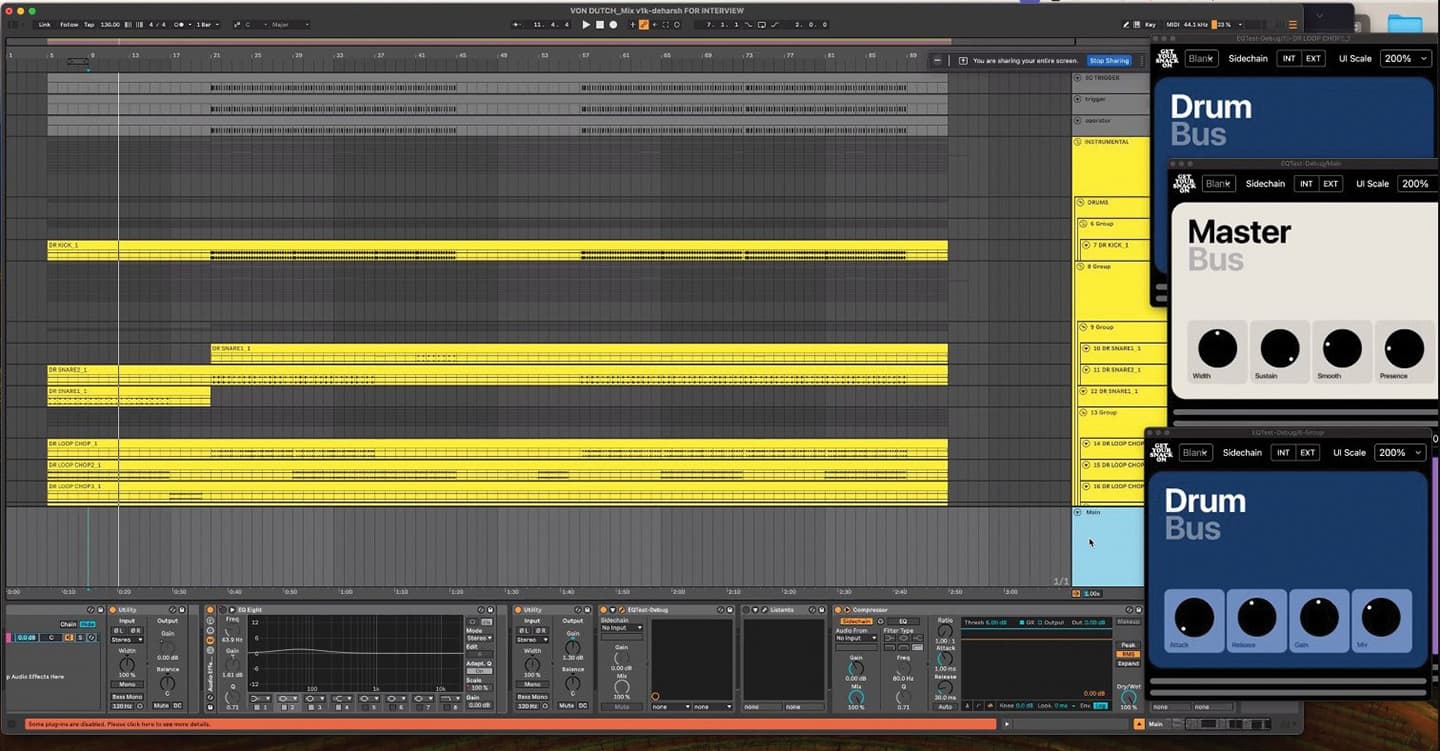
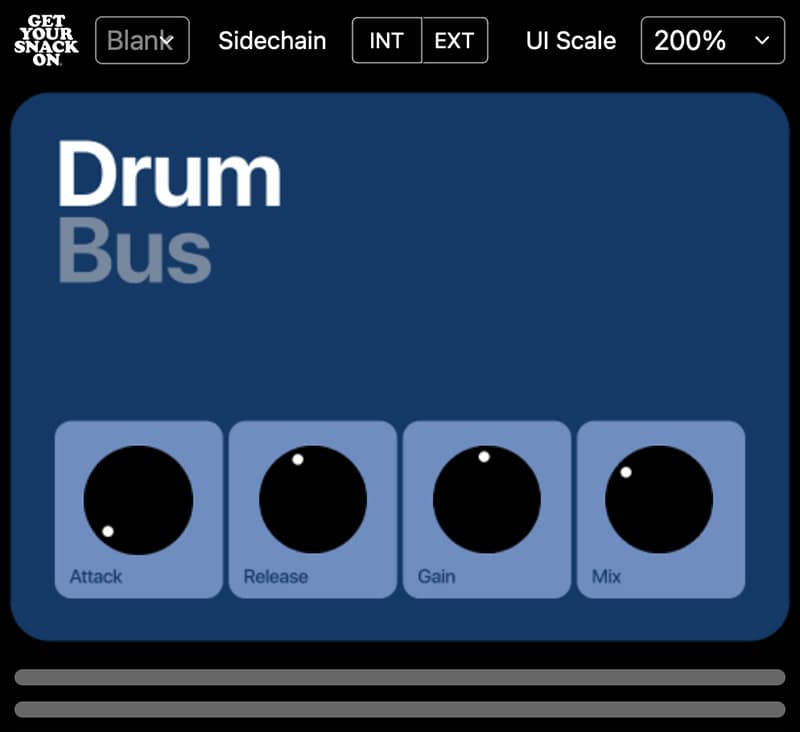
In the case of ‘Von Dutch’, Norris used three self-made plugins, called Vocal Bus, Drum Bus and Master Bus. “Sometimes it’s fun to pull up some black box processor and see what it does, but especially with this song, where the vibe was just oozing from the demo, I didn’t want to mess with that. I wanted plugins that just very cleanly enhanced what I had. That’s what I used these three plugins for. I think they are versions one, and I may have changed the GUI since then. I keep track of each update I do, so each session will recall the correct version, and not a newer version with different controls and/or processing, and it’ll all sound crazy.
“With these three (the Vocal Bus, Drum Bus and Master Bus), my aim was to have the overall compression exactly the way I wanted it. You can tweak commercial plugin compressors quite a lot, but most of them have a fixed knee profile, and/or other things that are predefined. With the Vocal Bus, let’s say that I get a song that has lots of vocal processing pre-baked in, and I need to make the vocals sit at the front of the music. That was the idea of this processor, and why there’s only Threshold and Volume buttons. I used these plugins throughout the Charli project, and have updated versions on projects I’ve worked on since then.”
WHERE TO START
Having discussed most of the mix tools at his disposal, Norris elaborates on his process, using his mix of ‘Von Dutch’ as an example. “I think the ‘Von Dutch’ session came in as a Logic file and stems. The first step, usually done by my assistant, is to recreate in Ableton exactly where the producer left off. I have a template with, for example, the same order and the same elements always in the same colours. So vocals are in different shades of pink, drums yellow, bass beige, synths in blue, and so on. Having these visual cues is really useful.
“I don’t really have a processing template, because every song is so different. As a mixer you first try to figure out what is already working about the song, including the signal chains. Sometimes you’ll get a song that is not great mix-wise, and in that case you start from scratch. But in most cases, and certainly with Charli XCX, things were already feeling pretty good. So I initially just rolled with what they had and then I was trying out ideas to see what worked and what didn’t.
“I tend to mix with everything in, all faders up. First doing the drums and then the bass and so on is not my standard approach, though if things aren’t working, I may go methodically through every track, to find what the issue is. Finn’s processing in ‘Von Dutch’ was very minimal. I wasn’t fighting nest chains of compression and limiting and so on. That can be an issue, because if you try to change the volume, everything stays the same because the limiting is clamping down on it. But in this case I could fairly easily do what I wanted.”
GIMME 30 MINS
When mixing, Norris initially works very quickly. “I’m pretty sure my first overall pass of ‘Von Dutch’ took 30 minutes. The song is only 2:44 short and relatively simple. After that I spent another three hours fine-tuning the details. I feel I need to upturn every stone to make sure I’ve tried everything. I then sent the mix off to Finn, who gave me that overall creative note about leaving the low end super big, so I corrected that. Everything else was iterative back and forth between he and I.
“The vocal in the intro of the song has a 100% wet room reverb on it. To make it grittier there’s also a SoundToys Decapitator. That’s part of the vocal sound in this song. In each section the vocal sound changes a bit, like in the post section there’s a Valhalla UberMod to add a chorus, but I replaced the Decapitator with a SoundToys Devil-Loc, as the song gets more intense. In general I’ll try to keep what’s there as long as I think it adds to the track. Creative effects are super-important because they’re a huge part of the vibe! Finn and I went back and forth a lot about how to get the vocals to cut through, while not changing what we already have. I automated the EQ on the bass and synth groups in places to create room for the vocal, without losing the low end.
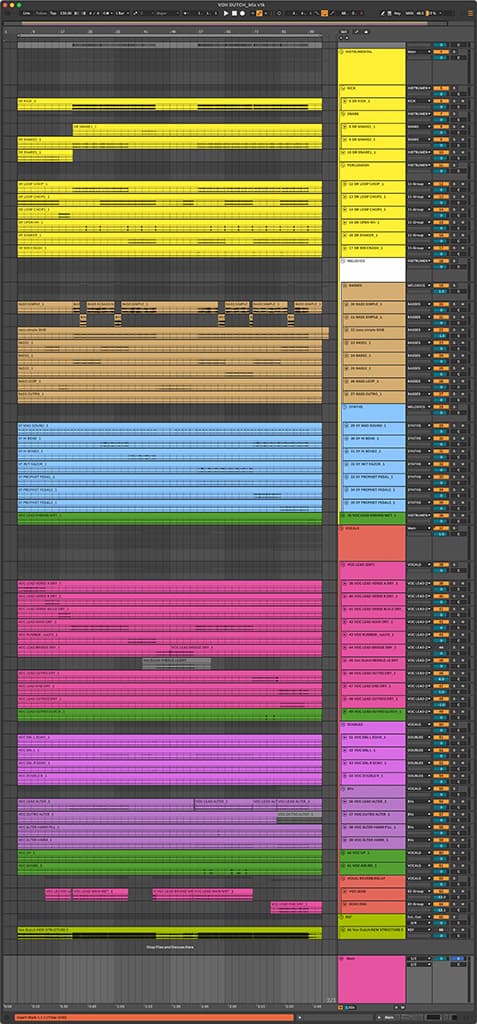


“Something I learned from Skrillex is to copy the dry vocal to a new track and add 100% wet processing, so it’s like a return. The vocal sends came as a stem, but I needed to recreate them. Finn had some overdriven small speaker-sounding short delay, and I have the Ableton delay with feedback at zero, so it’s like a Haas effect, and I’m using Ableton’s overdrive plugin. I’m EQ-ing this a little bit with the EQ Eight, and then I have Ableton’s echo, which is another one of their built-in delay effects, doing an eighth-note delay. As I mentioned, my Vocal Bus plugin brought the vocal more to the front, without affecting the sound.”

BIG BASS BALANCE
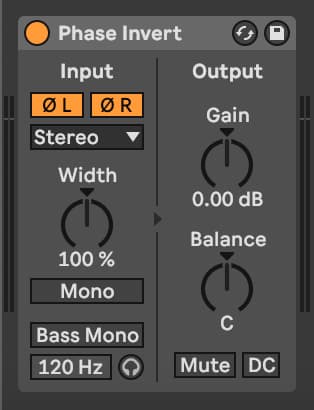
Balancing the low end was as straightforward as keeping it big, explains Norris. “The low end took most of the time in this session, because there are many different bass layers playing simultaneously. The typical EDM thing is to be very parsimonious and pick just one bass that’s going to be the sub. But in this case, because of the era of music that this was recalling, it just sounds weird if you only have a single sub part playing. So there’s a main bass part, and then there’s a supporting sine wave, and then there’s another kind of Moog-sounding bass part that comes in and out. It was definitely a puzzle to get the bass layers to work together. To get the main bass track to sit well, I copied parts of it to another track, and then inverted the phase, because sometimes the bass would add up and it would become a little bit overbearing.
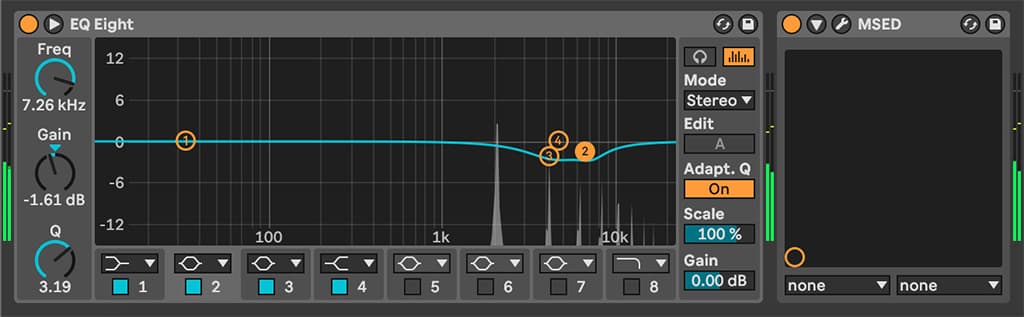
“Another issue I had to address were the synths, which were very aggressive sounding – intentionally so. Some of them were really high and piercing. I felt like this reduced the crank factor of the song, ie your ability to really turn it up loud without hurting your ears. These synths needed taming a little bit. However, it’s easy to just de-harsh everything and you end up making things sound foggy and dim, so I did light touches with EQ, to make sure you could turn the track up, without breaking that ceiling of pain, yet not taking away from the energy.
“I used my Drum Bus plugin to add emphasis to the kick and snare tracks. This is another experiment I’ve been working on. I like what transient shapers do, but sometimes they’re just a little bit too intense. I wanted to find a compressor that achieves the same, but brings things out in a nice way, without them becoming super pokey sounding. This plugin is my quest to find that happy medium.
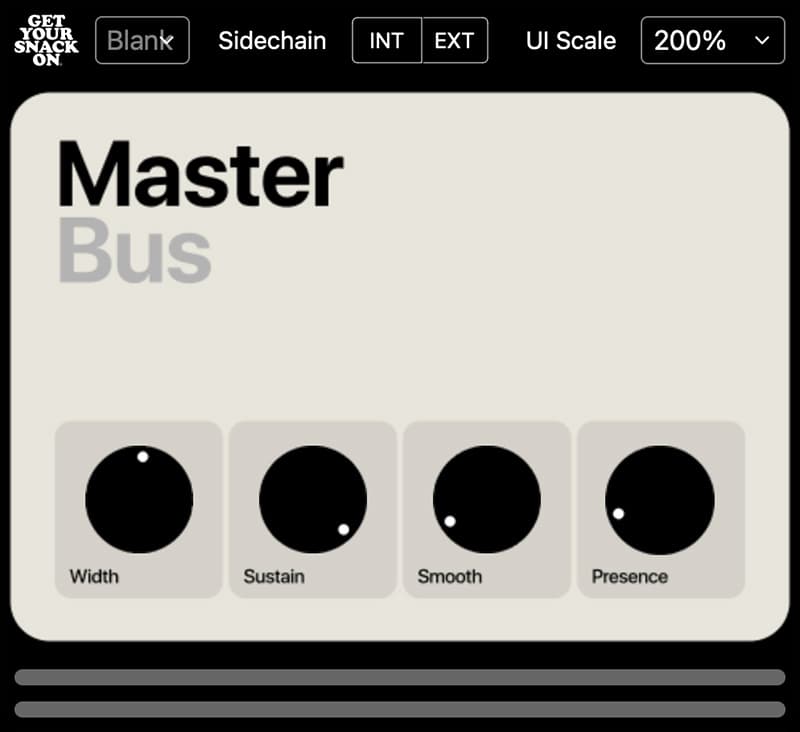
“The master track has my Master Bus plugin, which has controls for Width, Sustain, Smooth, Presence. It’s not to say that I can’t achieve what I want with plugins that already exist. I mentioned my OCD earlier, because that’s a real motivating factor for me, for better or for worse. I find it really, really important to know exactly how my tools are working, especially for things that are the most important to me which are the mix bus, the drums, and the vocals. Those are the three things that I care about the most.
“I’ve had enough experiences with unreliable third-party plugins that either stop working or crash or whatever. And there’s no way for me to debug them. I’m at the mercy of a developer or, in the case of hardware of an electronic circuit that circuits that I don’t know how to repair. But I am the master of my own destiny if I have plugins where I can just open them up and, compile a new version that fixes the problem that I was having.”
By all accounts, Norris is also the master of his own career, and more great things are bound to come from his mixing talents… and his plugins.






RESPONSES